

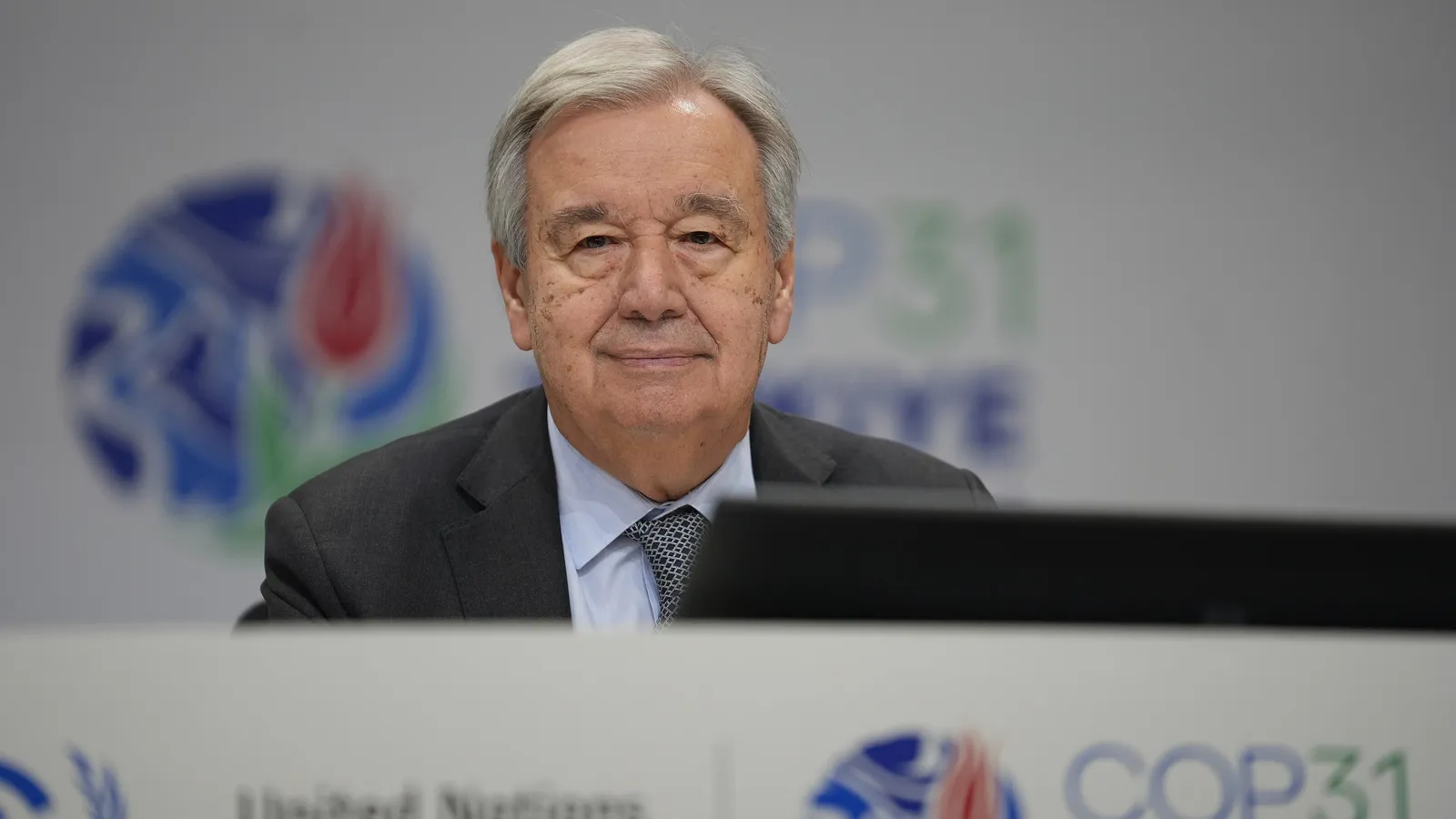
Negotiators at the COP31 climate summit in Antalya have published a slimmer draft agreement that says nothing about ending the use of fossil fuels, with the Friday deadline now one day away. The text, released on Thursday, is not expected to be final, but it is weaker than the first version on three of the conference’s central topics, Reuters reported: fossil fuels, electrification and the money to help poor countries adapt.
What changed between Monday and Thursday
| Topic | Monday’s first draft | Thursday’s revised draft |
|---|---|---|
| Fossil fuels | Two references to limiting their use | Both removed |
| Adaptation finance | A $120 billion target for developing countries | Target removed |
| Electrification | A firmer goal on electricity’s share of energy | “Global cooperation” to raise it to 35% by 2035, from about 23% now |
| 1.5C | Warning that warming could pass the limit | Kept |
| Emissions | Call for “deep, rapid and sustained” cuts | Kept |
| Carbon removal | Not reported | Efforts to scale up technologies that pull carbon from the air are encouraged |
Australia, which runs the negotiations jointly with host Turkiye, had said earlier that the opening text was meant to be broad and would be trimmed as talks went on.
The reaction
Mohamed Adow, who directs the Power Shift Africa think tank, said the text had “gone backwards” from Monday’s. Left as it is, he said, “it will be a ghost COP”, with nothing to show for the summit.
Jasper Inventor, who leads Greenpeace’s delegation, said the electrification goal does not explain how it would hasten the shift from fossil fuels. He also warned that the reference to carbon removal gives the fossil fuel industry a reason to keep raising output.
The “35 by 35” idea
The electrification target is Turkiye’s. The host wants countries to work together to lift electricity’s share of the world’s energy use from about 23% now to 35% by 2035. Proponents say it would cut emissions by reducing the burning of fossil fuels. So far only about 75 countries have backed it, and the earlier draft’s firmer wording ran into resistance from developing nations, which said it would need large funding.
Pakistan has taken a public interest in the idea. We reported that Prime Minister Shehbaz Sharif was due to speak at the 35 by 35 dialogue at the Leaders’ Summit, where the Foreign Office said he would highlight Pakistan’s rapid solarisation and ask for climate finance that is “predictable and accessible”.
Why the missing $120 billion matters
Adaptation finance pays for protection against damage that is already arriving: flood defences, early-warning systems, drought-resistant crops, heat action plans. Countries on the receiving end have argued for years that the money promised falls short of the need. With the $120 billion figure gone, the demand no longer has a number attached to it in the text.
For Pakistan the question is not abstract. A UN report this month linked heatwaves to lost fruit yields in Punjab, and the Asian Development Bank recently approved a $500 million contingent facility for disaster response, a reminder of how much of Pakistan’s disaster response now depends on outside lenders.
The shadow of the wars
Reuters noted that the talks are taking place while war and rising living costs compete with climate change for attention, even as heatwaves, floods and droughts grow worse. When the conference opened, we reported that oil prices, the wars in Iran and Ukraine and a lack of political will in Europe meant observers expected no big breakthrough. Last year’s COP30 also ended without naming fossil fuels in its final text.
What happens next
- Friday: the conference is scheduled to end. In recent years, the hunt for consensus among nearly 200 countries has often run more than a day past the deadline.
- The text: Thursday’s text is not expected to be the last version. Whether fossil fuels return in a later version will show which countries have the leverage.
- The test: a deal with no fossil fuel language and no adaptation number is the outcome Mr Adow called a “ghost COP”. Because nearly 200 countries have to reach consensus, final texts are often diluted to what everyone can accept, and the argument over this one will be whether that is enough.

Comments
Comments are reviewed by our editors before they appear. Please keep them civil and on topic. See our terms.
No comments yet. Be the first to share your view.