
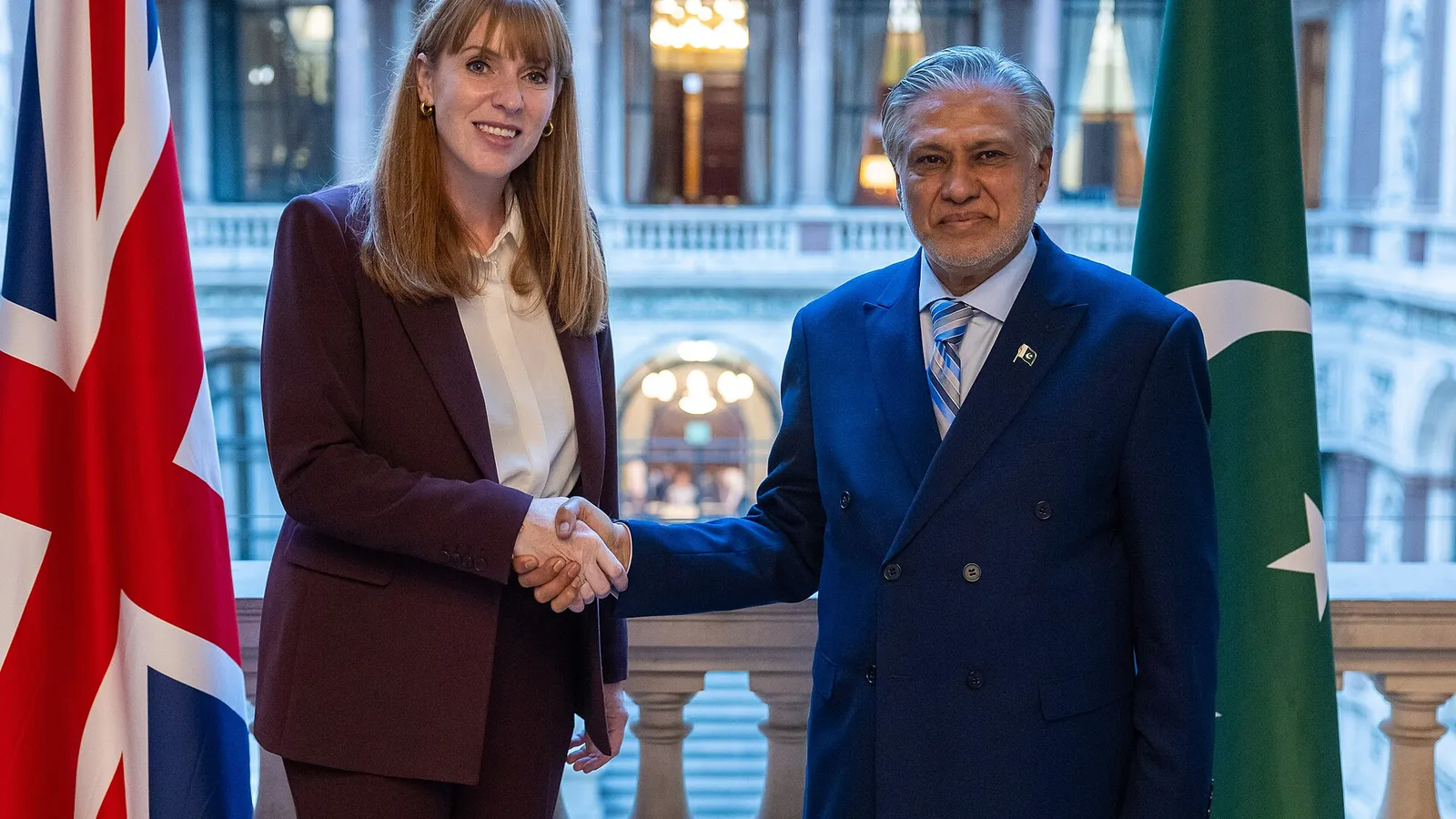
Deputy Prime Minister and Foreign Minister Ishaq Dar has said the Middle East needs a new security framework, and that the Makkah defence agreement could be the place to begin. He spoke to Euronews, and a statement on the interview was issued on Saturday.
Peace across the region, Dar told the channel’s World Conversation programme, now has to be built through a “special mechanism”, and countries must consider the new security architecture and what it means for the world economy beyond the Gulf.
The Makkah pact as a base
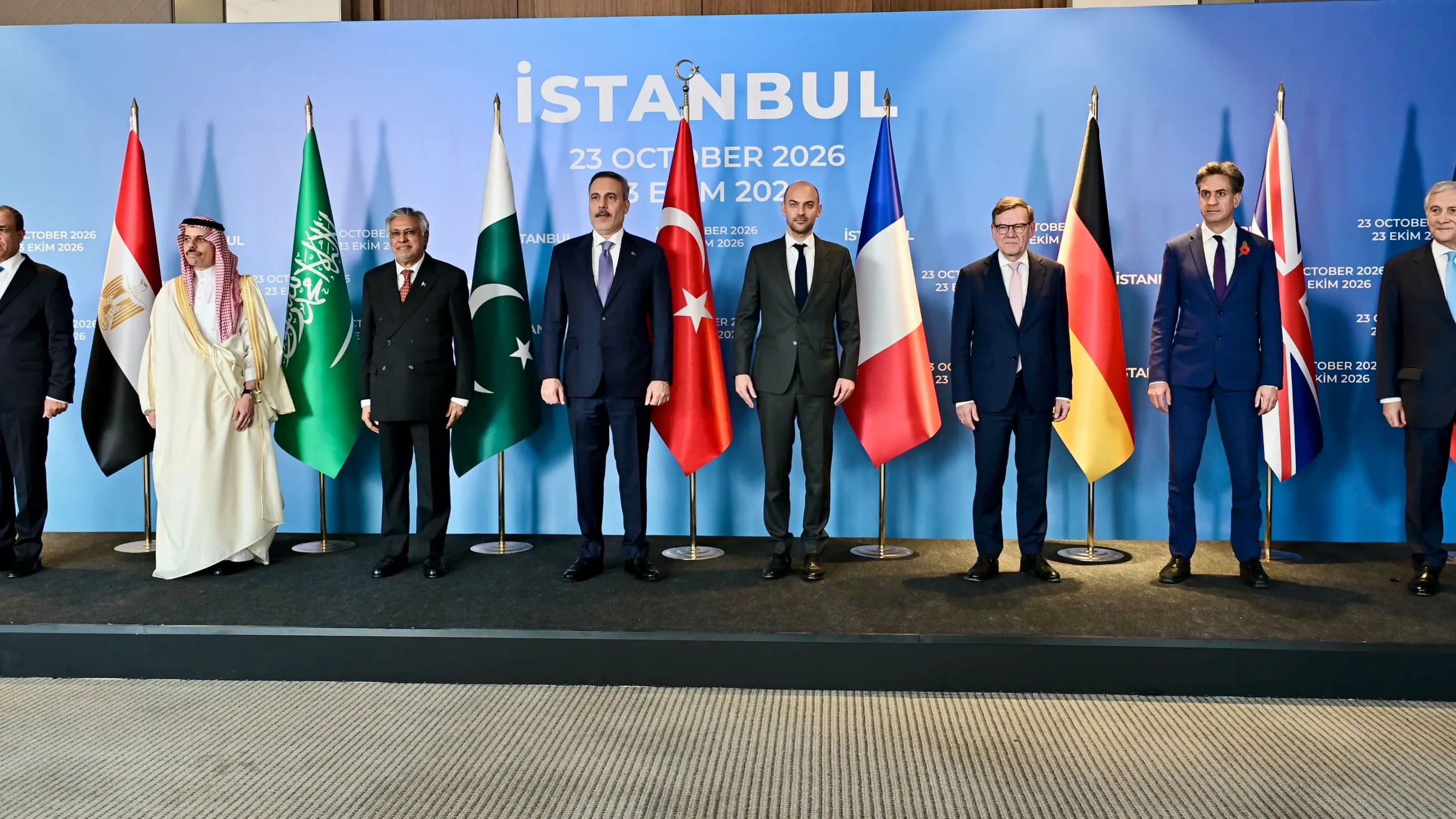
Dar said the agreement signed in August by Pakistan, Turkiye and Saudi Arabia could grow into something broader. He said Britain, France and Germany are engaging with the emerging framework and that Italy has shown interest in joining the dialogue.
He also said Germany plans to host a meeting in December of the R4, which groups Pakistan, Saudi Arabia, Turkiye and Egypt, together with the E4 countries. That follows the first joint meeting of the R4 and the E3 in Istanbul last month, when Dar travelled there for the talks. Our report on that meeting is here: Dar in Istanbul for first R4 and E3 foreign ministers’ meeting.
Hormuz and the Iran war
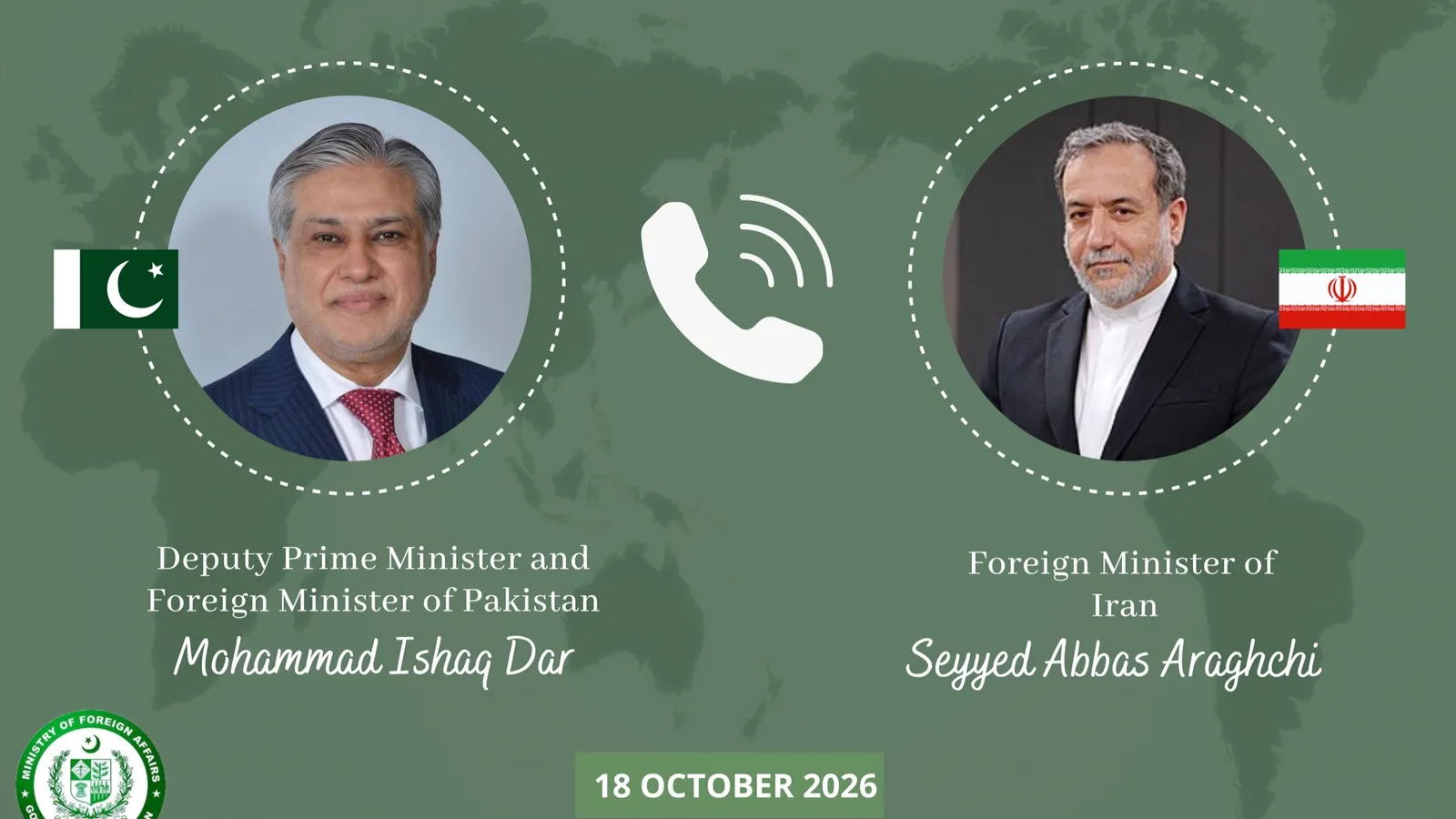
Dar gave his account of Pakistan’s mediation between Washington and Tehran. The fighting began on February 28. On its first day, he said, he phoned Iran’s foreign minister, Abbas Araghchi, and asked Tehran to hold back and avoid striking Gulf states. Pakistan then worked to bring both sides to the table, he said.
The talks in April led to the Islamabad memorandum of understanding, signed on June 18. A central principle, Dar said, was that ships would cross the Strait of Hormuz freely, with no charges, permits or other limits. He said breaches later brought the arrangement down.
Pakistan and China then put forward a five-point peace initiative, which Dar said won wide backing, including from the European Union and Britain. Pakistan, he said, has not given up on the idea that sea lanes must stay open, and he urged both sides to honour the June 18 agreement. For the latest round of Dar’s contacts with Tehran, see Dar tells Araghchi dialogue is vital.
The world, he said, cannot afford disruption to energy supply chains, pointing to price rises and the suffering they cause, including in Pakistan.
India and Afghanistan
Asked whether Pakistan could talk to India, Dar pointed to New Delhi’s 2019 move to end the special status of Jammu and Kashmir, territory the United Nations regards as disputed, and said he remains wary of it. He said the 2025 war rested on a false Indian narrative and called India’s suspension of the Indus Waters Treaty illegal, urging respect for international law.
On Afghanistan, he said Pakistan hopes Kabul will take verifiable action against terrorist groups that target Pakistan. Alongside that disagreement, he said, Pakistan is trying to improve conditions there, and has even proposed a regional electricity grid.
The economy
Dar argued that Pakistan’s debt-to-GDP ratio is considerably lower than those of the United States, Britain and Japan. “Our external debt is $130 billion,” he said, adding that his estimate of the country’s mineral and rare earth potential is $6 trillion to $10 trillion. He said he hoped political parties would agree on a “Charter of Economy” and voiced confidence that Pakistan could one day join the G20.
GSP+ review on Saturday
On the same day Dar chaired an inter-ministerial meeting on Pakistan’s trade status with the European Union, the Ministry of Foreign Affairs said. He directed officials to comply on time, coordinate across ministries and keep up diplomatic outreach before the next review milestones. Senior officials from the foreign affairs, commerce and information ministries, Pakistan’s envoy to Belgium and the EU, and federal and provincial departments attended.
GSP+ lowers or removes EU tariffs for developing countries that make progress on human rights, labour rights, the environment and governance. Pakistan sent 7.5 billion euros of goods to the EU under it in 2024, with utilisation above 95 percent, according to the EU’s fifth GSP report. The same report expressed grave concern about how human rights conventions are being implemented, naming freedom of expression and the media, extrajudicial killings and peaceful assembly, and asked for changes to laws including the Pakistan Electronic Crimes Act.
Why it matters
Dar’s remarks show how Islamabad wants to be seen: as a mediator that sits between Washington, Tehran, Riyadh, Ankara and Brussels, and not as a party to any bloc. Two things will test that claim. The first is whether the E3 and E4 countries take up the December meeting in Germany. The second is the GSP+ renewal, because textile exporters depend on it. We explained the timetable in Pakistan must apply afresh for EU GSP+ from January 2027.
What is not yet known is what form the “special mechanism” would take, who would be in it and whether the parties to the conflict would accept it. The excerpts reported so far do not say.
Comments
Comments are reviewed by our editors before they appear. Please keep them civil and on topic. See our terms.
No comments yet. Be the first to share your view.