

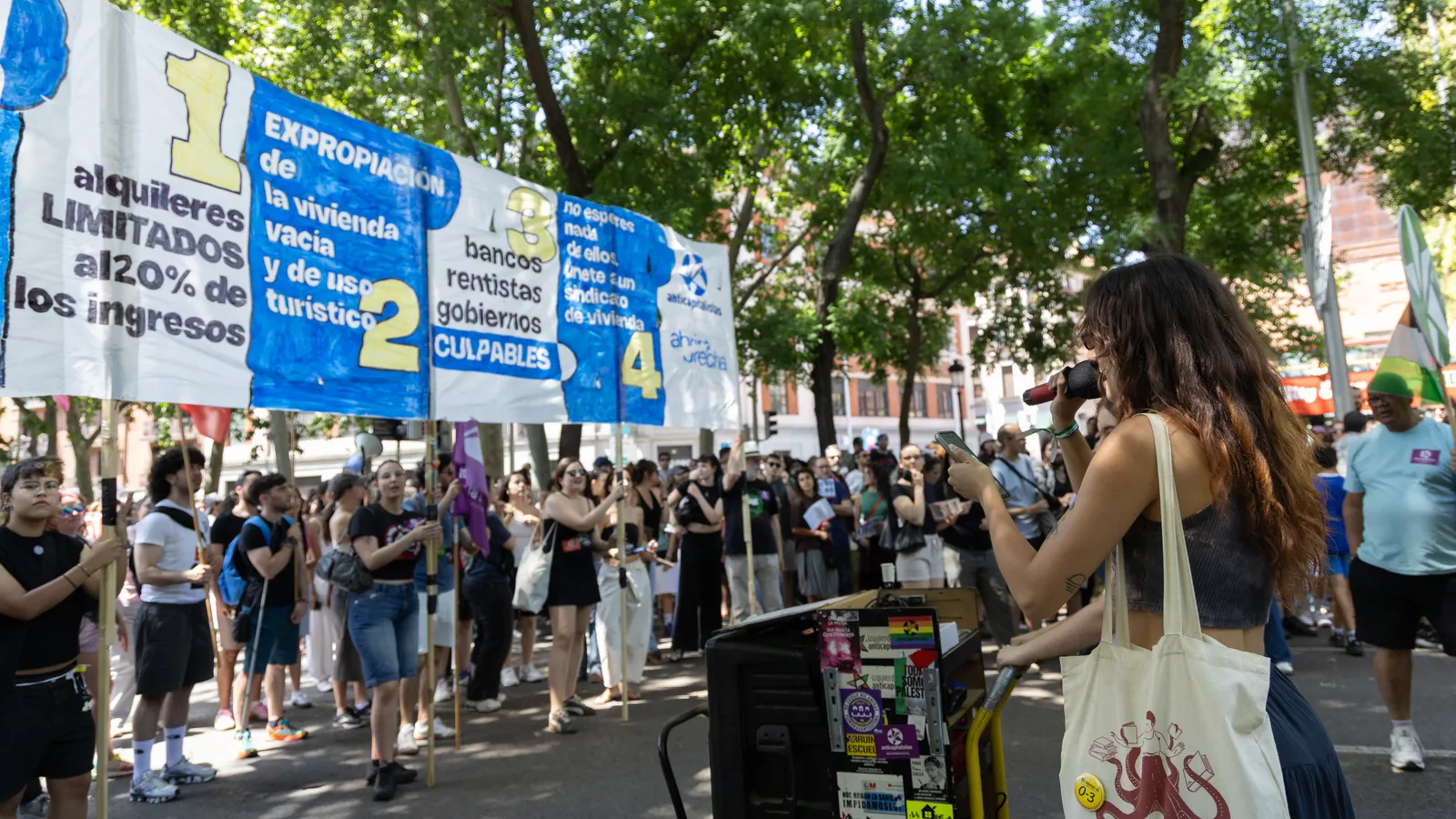
Spain stopped work on Wednesday. Unions said four million people joined a general strike against the cost of housing, the first in the country since workers walked out in 2012 against austerity during the euro zone debt crisis. It came less than three weeks before a snap general election on November 29, Reuters reported.
What happened on the day
The strike was backed by Spain’s two largest unions, UGT and CCOO, which together represent more than a million workers, and by tenants’ associations angry about rising rents and evictions. Unions called it a success, although turnout varied across the country and was strongest in coastal regions, where housing pressure is most acute. The tenants’ union said it expected five million people to take part by the end of the day. Spain has about 23 million workers, according to its statistics institute.
The effects were visible in several places:
- Industry. The unions said participation reached 90 per cent at ports and in the car industry, with total stoppages reported at Volkswagen’s plant in Navarre and SEAT’s in Barcelona.
- Power and transport. Spain’s grid operator, Red Electrica, said electricity demand fell by as much as 15.5 per cent between 10am and 11am. Barcelona’s metro said no trains would run outside peak commuting hours, and Madrid’s metro said peak-hour use was 42 per cent lower than a week earlier.
- Shops. On Madrid’s Gran Via, stores including Primark, H&M and Pull & Bear lowered their shutters as protesters shook sets of house keys over their heads. Many shops in Barcelona were boarded up in advance.
- Weather and policing. Two storms, named Charles and Bruna, threatened afternoon marches, and unions called off a demonstration in the port city of Cadiz. Police reported 40 arrests from 476 incidents by midday, including blockades and burning rubbish containers. The unions said they would file a criminal complaint over what they called a disproportionate police response, in which tear gas and batons left 20 protesters injured.
The numbers behind the anger
Rents are the sharpest pressure. The Youth Council of Spain says the average rent of 1,176 euros (about $1,315) is equal to roughly 98.7 per cent of a young person’s average monthly salary. By the central bank’s estimate, Spain is short of about 750,000 homes, and the gap will grow beyond one million by 2028. As fewer people can afford to buy, more rent, which pushes rents higher.
One protester, a 36-year-old hospital IT worker in Madrid, Jesus Gonzalez, told Reuters he still cannot move out on his own. Angela de Miguel, vice president of the business lobby CEOE, argued that the strike was counterproductive because small firms also suffer from the housing shortage, which makes hiring harder. She said the answer is to build more homes and cut taxes on construction and home buying.
How the strike led to an election
The strike follows weeks of demonstrations set off by the eviction, and later death, of an 87-year-old woman in Madrid. Last month parliament rejected government decrees aimed at limiting evictions and rent pressure. Prime Minister Pedro Sanchez then called the snap election. He hopes to turn voter resentment over housing into an advantage and shift attention from corruption cases involving people close to him and a deadly train crash last month. His Socialist Party still trails in the polls. We reported on the political fallout from the crash in our story on the transport minister’s resignation.
How big will the economic hit be?
Probably smaller than in the past. Miguel Cardoso, chief economist at BBVA Research, estimated the strike could cut 0.1 to 0.2 per cent from annual gross domestic product. More people can work remotely, and services, including hospitality and finance, now weigh more in the economy than they once did and are less unionised than public services and industry.
Why it matters
Housing is a problem across much of the world, but it is rarely strong enough to close ports and car plants. Spain’s strike shows how a cost-of-living grievance can turn into a national political event within weeks, and how a government can be forced to the polls by a failed housing law. For readers in Pakistan, where inflation and the price of fuel and gas have dominated politics, the parallel is that governments are judged on what households pay for the basics.
What to watch
- Whether the unions call further action before November 29.
- The outcome of the criminal complaint over the police response.
- Whether housing policy decides the vote, and whether the Socialists close the gap in the polls.




Comments
Comments are reviewed by our editors before they appear. Please keep them civil and on topic. See our terms.
No comments yet. Be the first to share your view.