

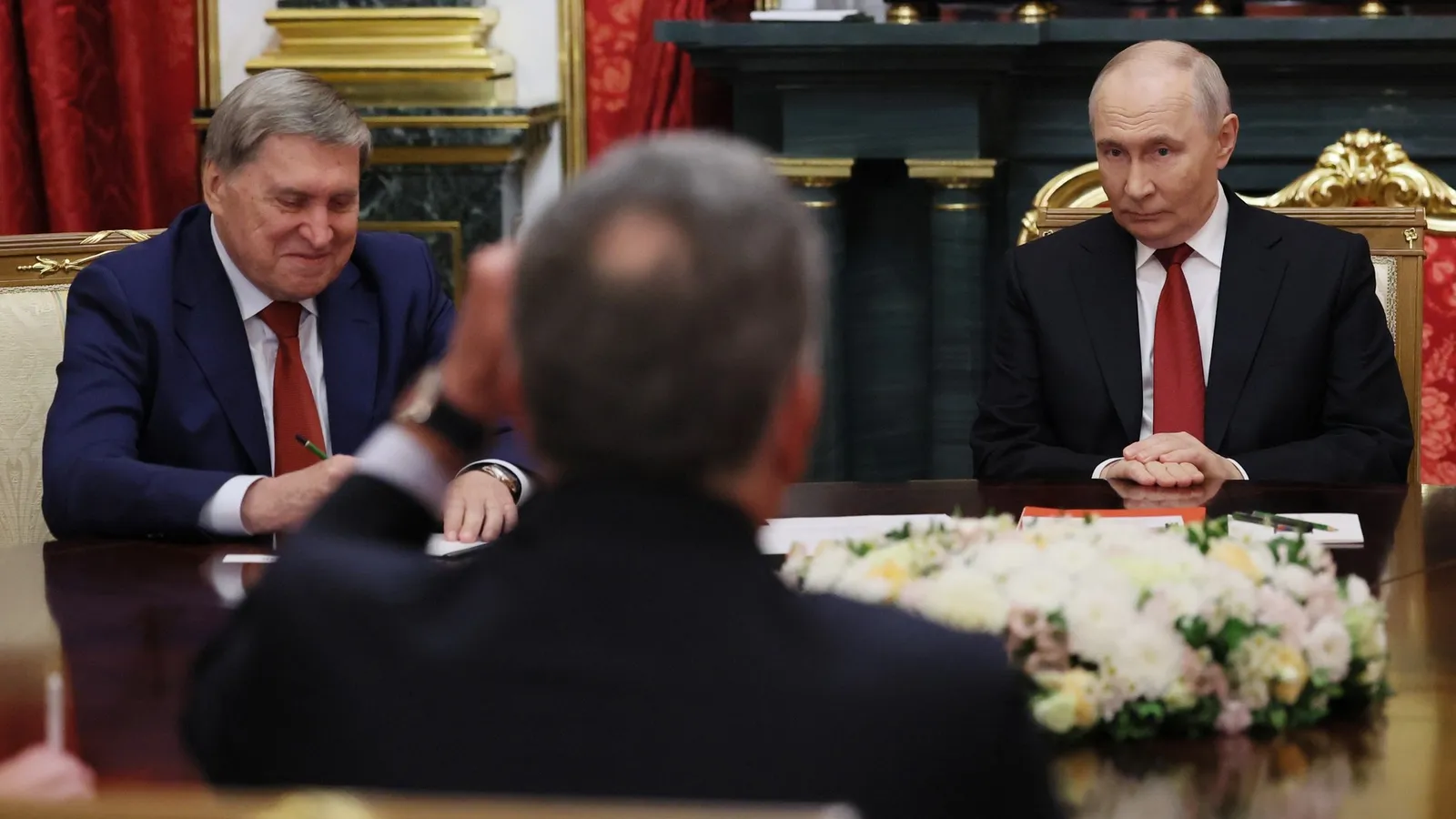
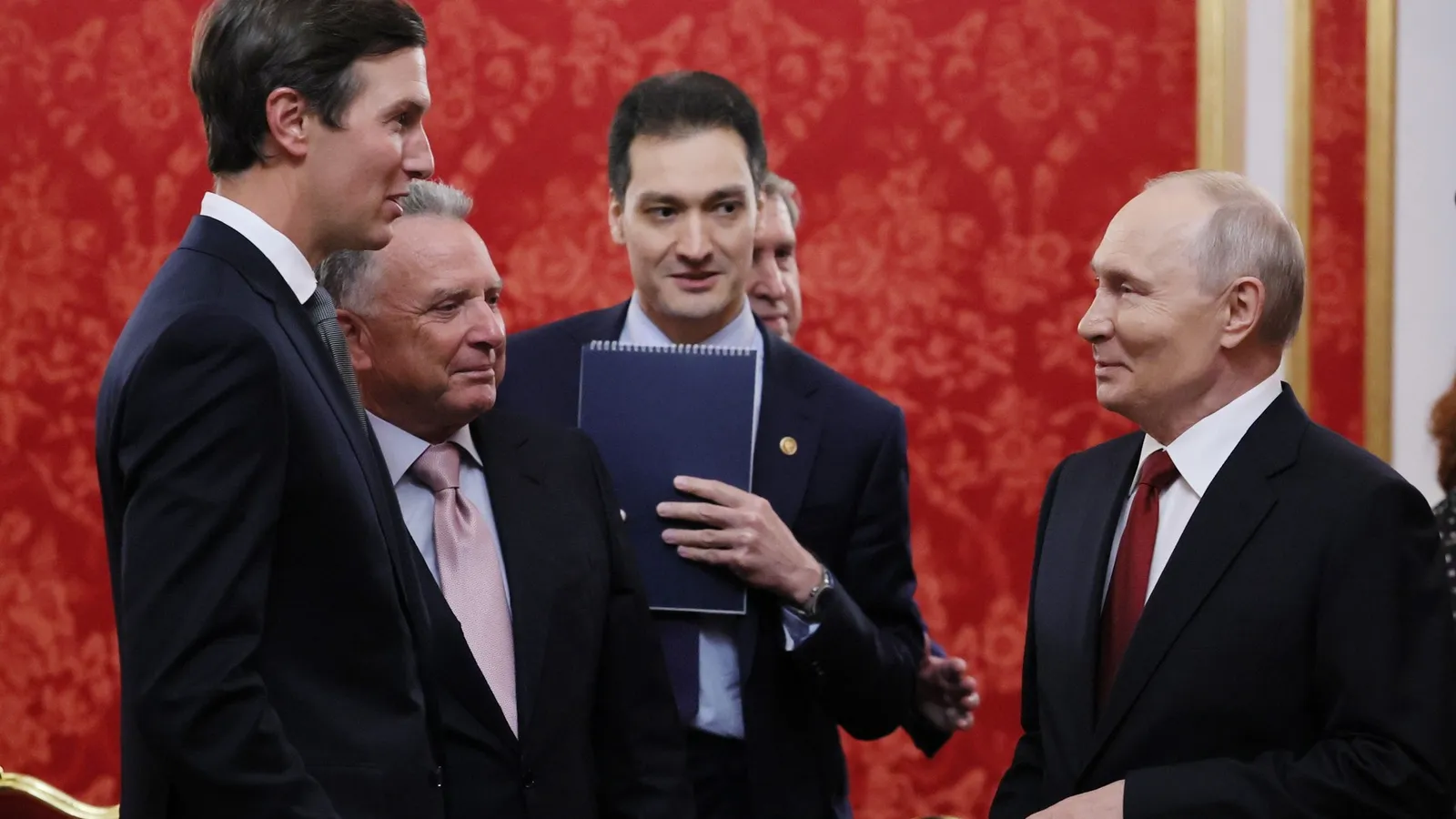
Russian President Vladimir Putin has made clear he will not compromise on his core demands to end the war in Ukraine, even while offering a short ceasefire in one frontline city. He spoke on Thursday at the Kremlin, where he received US envoys Steve Witkoff and Jared Kushner, who had come straight from two days of negotiations in Abu Dhabi, according to an agency report carried by Dawn.
The meeting was televised in part, which is unusual, and it gave a clear picture of the distance still to travel.
What Putin said
- Territory: he refused to soften his claim to the Ukrainian land Russia says it has annexed.
- Grey zones: he dismissed the idea of demilitarised “grey” areas between the armies. The only dividing line Russia accepts, he said, is “the state border”, because that would be “clear and obvious” to both sides.
- Peacekeepers: he ruled out foreign peacekeeping troops in Ukraine, saying such a deployment would be a “continuation of war”.
- Ceasefire: he proposed a brief truce in one important city on the front line. The agency report did not say which city, and we have not seen the terms.
Since the full-scale invasion of 2022 Russia has seized much of Ukraine’s east and south, and it annexed Crimea in 2014, the report noted.
The row over Europe
The Americans pressed Mr Putin to let Europeans take part in the next round. Mr Witkoff told Russian state television that Mr Putin had agreed, and called their participation “a very important moment” because the Europeans are partners of the US.
Mr Putin’s own words, as reported, were cooler. He said Washington should first find out from its European allies whether they want peace or more war. The two accounts do not match, and until the Kremlin confirms the seating the claim should be treated with care.
Moscow has also moved the debate from Ukraine to Europe’s security as a whole. Kyiv and European leaders have rejected what they call a new “Yalta”, recalling the 1945 agreement that split the continent into spheres of influence, and say Russia must stop attacking first. Our report before the Moscow visit covered the Abu Dhabi talks and the prisoner exchange, and the dispute over who speaks for Europe.
Zelensky in Dublin
The two Americans left the Kremlin on Thursday afternoon, bound for Dublin, where Ukraine’s president, Volodymyr Zelensky, was at a European summit. Speaking there, Mr Zelensky said new limits on the Starshield satellite internet service, which Ukraine relies on for front-line communications, make it harder to shoot down Russian jet-powered drones, so that “more of our people are killed”. That claim is his own. Our earlier report covers what the Wall Street Journal said about a Starshield slowdown and the US response.
Earlier Mr Zelensky had spoken of a “window of opportunity” for a result before 2027. Mr Putin’s remarks appeared to dampen hopes that a deal might be near, the report said.
Where the positions stand
| Issue | Putin’s position (as reported) | Other side |
|---|---|---|
| Territory | No dilution of demands over annexed areas | Ukraine seeks a ceasefire before any territorial talks |
| Peacekeepers | Ruled out | Not covered in the report |
| Grey zones | Rejected; “state border” is the only line | Not specified in the report |
| Europe’s seat | Washington must first learn whether Europe wants peace or war | US says Europeans will join next round |
| Local truce | Proposed a brief truce in one key city | Terms not published |
Why it matters
A prisoner exchange and a local truce are useful, but neither touches the questions that decide the war: land, security guarantees and who sits at the table. By ruling out peacekeepers and grey zones in front of cameras, Mr Putin has told Washington what he will not accept before the talks restart.
For Pakistan the effect is indirect. Its diplomats at the United Nations have pressed for talks to continue even while fighting goes on, and Thursday’s statements suggest that a deal is not close.
What to watch next: whether the Kremlin confirms that Europeans will attend the next round, which city the truce covers and when it would start, and whether Mr Witkoff and Mr Kushner report anything different from Mr Zelensky after they meet him.
Comments
Comments are reviewed by our editors before they appear. Please keep them civil and on topic. See our terms.
No comments yet. Be the first to share your view.