

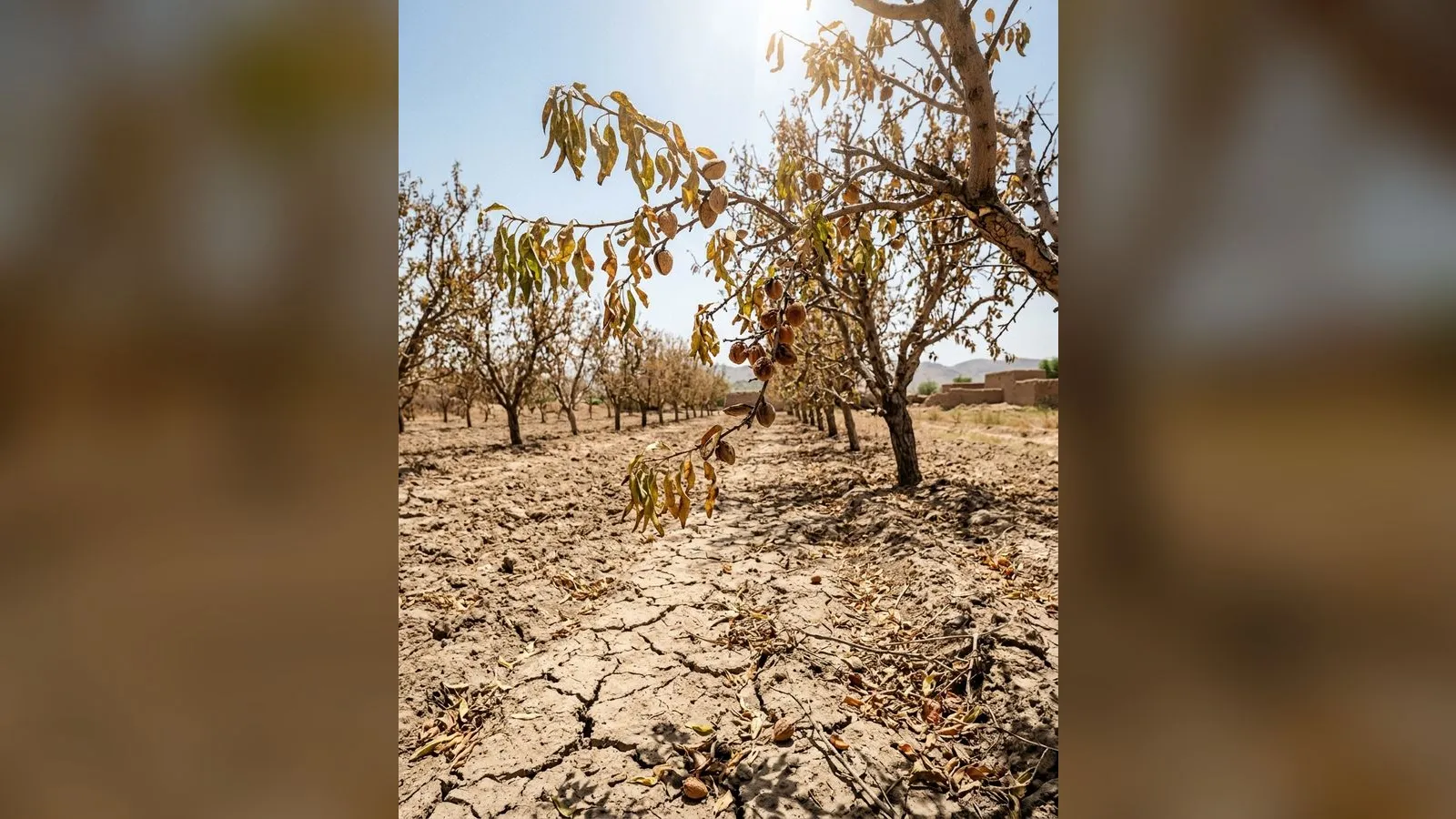
Heatwaves are eating into the incomes and diets of farming families in Punjab’s rain-fed areas, according to a new report by two United Nations agencies. The assessment, “Extreme Heat and Agriculture”, was published jointly by the Food and Agriculture Organization (FAO) and the World Meteorological Organization (WMO), and it draws attention to Punjab’s rain-fed rural areas as a place where extreme temperatures are already changing life on the land.
What the report found in Punjab
In the high-rainfall zones of Punjab, fruit yields have fallen by as much as 50 per cent, the agencies said. Animals are also suffering. Large animals such as cows and buffaloes give less milk when they are under heat stress, and small ruminants, such as goats and sheep, face more outbreaks of foot-and-mouth disease.
Heat also spoils what farmers do produce. Vegetables, dairy products and other perishable food go off faster in extreme temperatures, which cuts local supplies and pushes up market prices. The result, the report says, is a double burden for rural families. They grow less varied and nutritious food for themselves, and they earn less money with which to buy food from the market, so their access to healthy diets shrinks.
The burden on women
The report singles out women. They take a large share of the work of harvesting, collecting water and heavy household tasks, often outdoors for long hours, which raises their risk of heat illness. Pregnant and breastfeeding women are at the greatest risk, since their nutritional needs are higher and are often the first to be sacrificed when a household runs short of food.
The report cites research suggesting that every 1°C rise in temperature raises the chance of preterm birth by 4 per cent, and that during heatwaves the risk goes up to 26 per cent.
| Measure | Finding |
|---|---|
| Fruit productivity, high-rainfall zones of Punjab | Down by as much as 50% |
| Large animals | Lower milk output |
| Small animals | More foot-and-mouth disease |
| Preterm birth risk, per 1°C | Up 4% |
| Preterm birth risk during heatwaves | Up 26% |
Because many women do not own land or other assets, the agencies note, they find it harder to get credit and financial services to help them adapt. They also have less access to climate information and early warnings, and they often cope by eating less so that others in the family can eat, which further weakens their health.
The global picture
The FAO and WMO describe extreme heat as one of the most serious and sudden dangers to food production worldwide, and a “risk multiplier” that makes drought, wildfires and other hazards worse. Under high-emission scenarios, they say, nearly half of the world’s cattle could be exposed to dangerous heat by 2100, with yearly losses approaching $40 billion; under low emissions the impact from heat on livestock would fall by nearly two-thirds. Marine heatwaves have already caused mass deaths of fish and are pushing fish stocks to move to cooler water, and fruit and nut trees and forests face growing losses.
The report also describes a feedback loop. When heat reduces harvests, farmers may clear more land to make up the shortfall, and that releases more greenhouse gases, which feed more warming.
Why it matters for Pakistan
Pakistan’s economy is still tied closely to farming, and Punjab is its largest agricultural province. Falls in fruit and milk output affect rural incomes, and food prices in cities. The report’s figures are a reminder that adaptation is not only a matter of cities and flood defences: it also means shade, water, heat-tolerant crops and breeds, cold storage and early warnings in villages.
The findings arrive as the world’s governments gather in Turkey for the COP31 climate talks, where poorer countries are pressing for more adaptation money, as we report today. They also fit with the wider pattern we have followed this year, including warnings that El Nino could make 2026 the hottest year.
What to watch
- Whether Punjab and the federal government use the report’s findings in agriculture and health planning, including heat-health warnings for pregnant women.
- Whether COP31 produces any adaptation finance that reaches smallholder farmers.
- Next summer’s heatwave season, and whether farmers receive earlier and clearer warnings than this year.



Comments
Comments are reviewed by our editors before they appear. Please keep them civil and on topic. See our terms.
No comments yet. Be the first to share your view.