

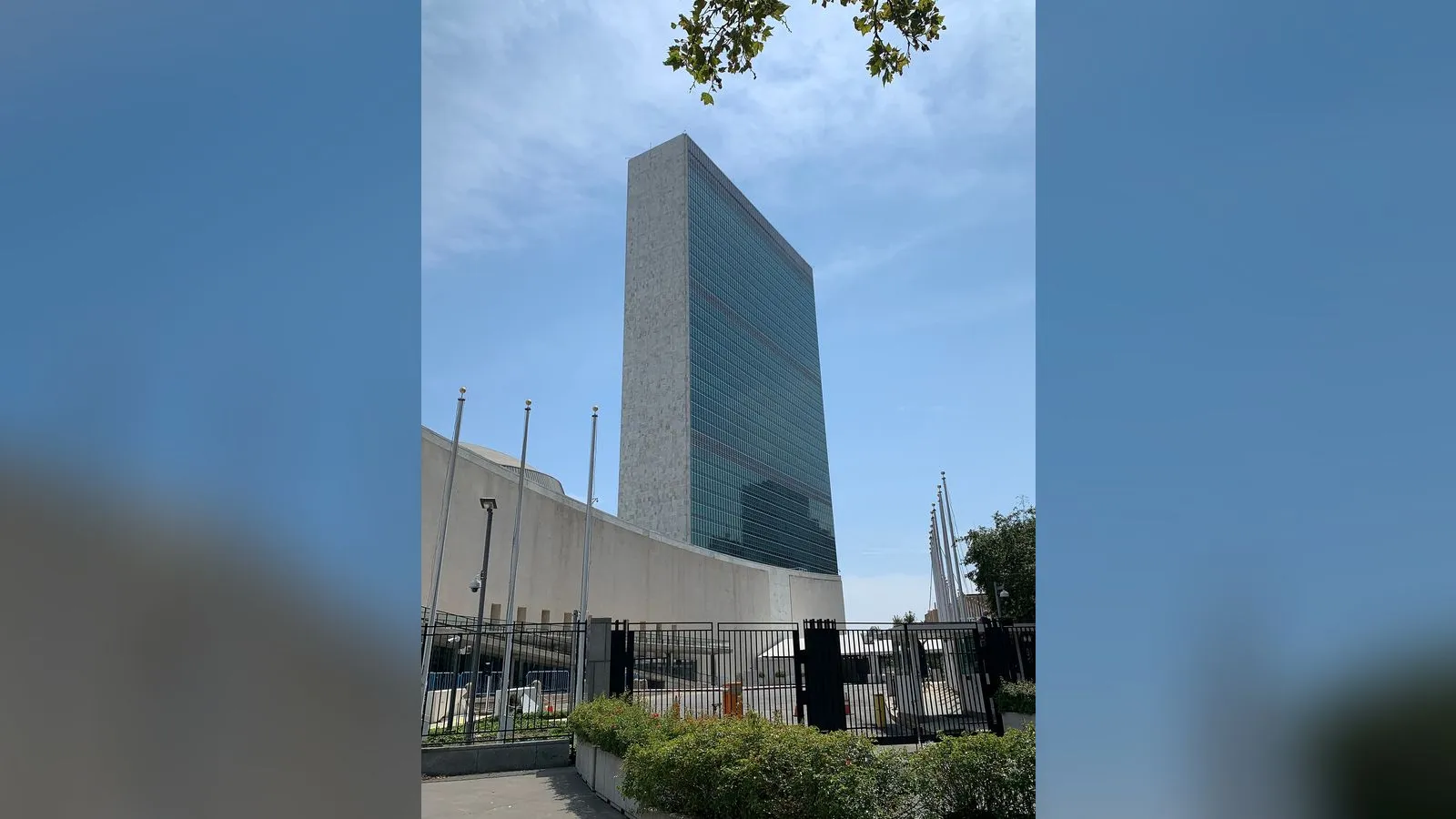
The United Nations has less than two months to find a successor to Secretary-General Antonio Guterres and no candidate has won agreement, so officials are drawing up plans for a world body with nobody at the top. Another secret ballot in the Security Council is expected this week, Reuters reported, but eight rounds have passed without its five permanent members settling on a name.
Mr Guterres leaves office on December 31. The UN Charter does not say what should happen if his term ends with no replacement, and in the UN’s history a secretary-general has never left without one.
Where the vote stands
- Rounds so far: eight. The Council needed six to pick Mr Guterres in 2016.
- Who decides: the five permanent members (Britain, China, France, Russia and the United States) each hold a veto, and they have not agreed.
- The frontrunner: Rebeca Grynspan, whom Reuters describes as having limited global name recognition.
- A complication: Lana Nusseibeh, a senior Emirati diplomat, is facing resistance because of claims that her country has supported Sudan’s paramilitary Rapid Support Forces. The UAE denies them.
- The rest of the field: mostly longtime UN insiders, Reuters said.
Why it has stalled
Analysts quoted by Reuters give two reasons. One is the process itself: closed ballots that are opaque and slow, the kind of deadlock the next secretary-general is supposed to fix. The other is deeper. The veto powers have become less willing to compromise, and the United States has increasingly sidelined the UN and is occupied by its own foreign entanglements.
Shamala Kandiah Thompson of the monitoring group Security Council Report said the lateness worries her most, because of what it means for assembling a leadership team.
Richard Gowan of the International Crisis Group called the prospect of ending the year with no choice “excruciatingly embarrassing” for the veto holders. It would strengthen the many member states that already say the five no longer deserve to run the organisation, he said.
How the choice is made
Under the Charter, the General Assembly appoints the secretary-general on the recommendation of the Security Council. In practice the Council does the work, in closed votes where each of the 15 members says whether it would encourage or discourage a candidate, and the permanent members’ veto decides the outcome. The permanent members got their seats as victors of the Second World War in 1945. The ten other members serve two-year terms elected by region.
Pakistan is one of those ten, so it is one of the 15 voices in these ballots this year, although the votes are secret and we do not know how it has voted. The five permanent members have long resisted changes to a structure many members say no longer reflects the world as it is. The leaders of the United States, China and Russia pledged in their Shenzhen declaration to advance UN reforms, as we reported earlier today, and our editorial explained why the UN still matters to Pakistan.
What a vacancy might look like
The Charter is silent on a leadership gap, so there is no rule to apply. Reuters said officials are rushing to prepare fallback plans. Whatever form they take, a caretaker arrangement would be improvised. The UN’s day-to-day work, from peacekeeping to humanitarian operations, would not stop, but nobody would hold the office’s authority to speak for the organisation.
Whoever wins will inherit wars the UN has had little success in stopping, smaller contributions from the United States, which has withdrawn from dozens of UN agencies, and growing demands for a leaner, faster and more accountable organisation. A late start would make it harder to assemble a leadership team before the new term begins.
What to watch
- The next ballot: any change in how members vote or in the number of candidates still standing.
- Contingency plans: whether the UN or the Council makes public how it would handle a gap after December 31.
- The Sudan question: whether the accusations against the UAE decide Ms Nusseibeh’s chances.
- The calendar: the Council has about six weeks. Whoever is chosen late will have little time to assemble a team before the new term begins.
Comments
Comments are reviewed by our editors before they appear. Please keep them civil and on topic. See our terms.
No comments yet. Be the first to share your view.