

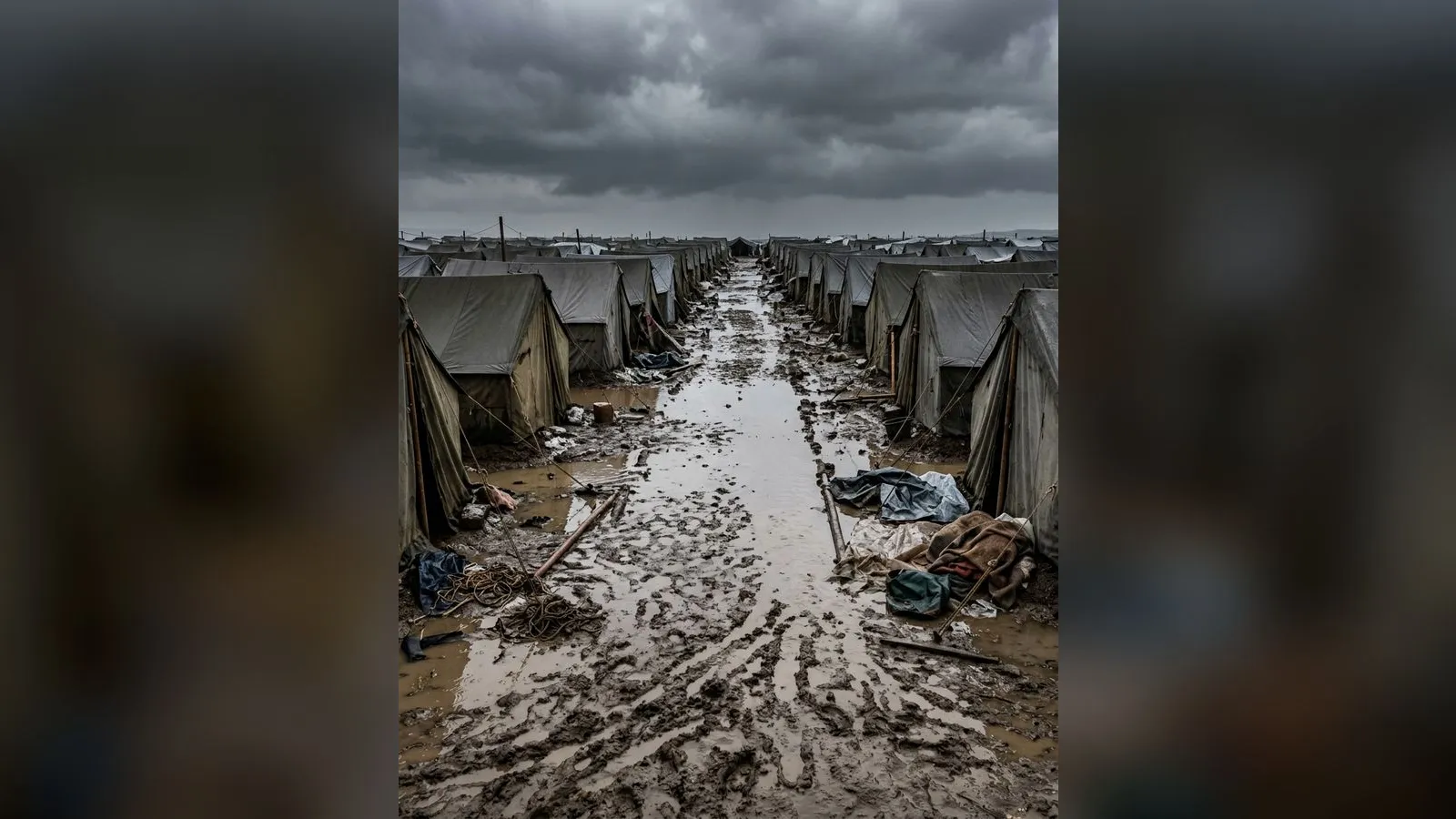
Children in Gaza City’s tent camps are now facing a danger that could have been prevented, the United Nations children’s agency says. Unicef told a Geneva press briefing that Israel has refused to allow in the equipment needed to fix a stormwater basin. The basin is already fouled with sewage and could spill over in heavy rain, sending water into the surrounding streets and tents.
The basin at risk
The facility is the Sheikh Radwan stormwater basin in Gaza City. According to Unicef’s James Elder, the basin is polluted with sewage and at risk of overflowing. He said the agency had spent a year working with Israeli authorities and with US President Donald Trump’s Board of Peace on a $3 million plan to repair it. In the past few days, he said, COGAT, the Israeli military body that oversees humanitarian affairs in Gaza, turned the plan down, citing security grounds.
Mr Elder warned that sewage could pour into the streets and tents of Gaza City, push families out of their shelters again and greatly raise the risk of disease, and said Unicef was “a bit baffled”. He asked for the work to go ahead before the basin becomes “another entirely preventable killer” of children. COGAT did not immediately respond to a request for comment, and the Israeli security reasoning has not been explained publicly.
Rain has already done harm
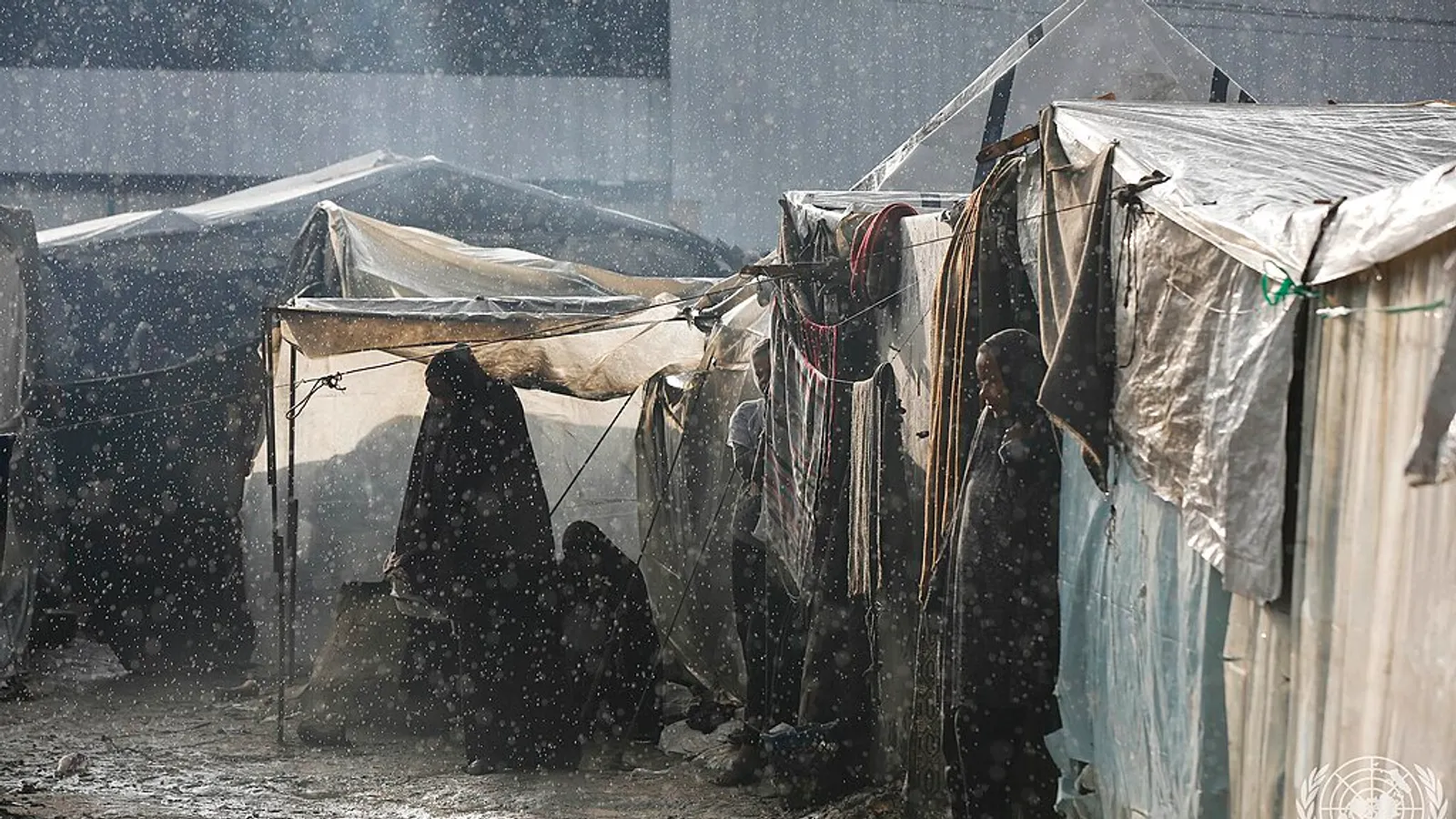
This week’s heavy rain flooded tens of thousands of tents across the Strip. Four people, three of them young children, were killed when a sand embankment gave way on top of their tents, a foretaste of the winter ahead. We reported on the flooding of about 70,000 tents and on Pakistan’s prime minister ordering a push for more aid.
Local authorities say Israel destroyed water infrastructure and the vehicles used to pump water during its military campaign. Most of Gaza’s more than two million people have been displaced and most now live in tent camps.
Speaking at the same briefing, the World Health Organization’s Christian Lindmeier said flooding, weak sanitation and poor health and water services create “significant” infection risks. By his count, close to a million displaced people in Gaza are now at medium or high risk of floods.
| Risk | Detail |
|---|---|
| Who is exposed | Nearly 1 million displaced people at medium or high flood risk (WHO) |
| The basin | Sheikh Radwan, Gaza City, contaminated with sewage |
| Repair plan | $3 million, in preparation for a year with Israeli authorities and the Board of Peace |
| Decision | Rejected by COGAT in recent days, on security grounds, according to Unicef |
| Recent deaths | Four, including three small children, when a sand embankment collapsed |
Background
The ceasefire that the US brokered last year envisaged rebuilding Gaza, yet little has moved because the sides cannot settle how Hamas would disarm or when Israeli troops would pull back. The aid agencies’ warnings have been consistent since autumn: we reported in October on UN alarm over halted goods deliveries ahead of winter.
Why it matters
A stormwater basin is plain infrastructure, and sewage-laden floodwater in a crowded tent camp is a direct health threat, particularly to small children, who are most at risk from diarrhoeal disease. Unicef’s point is that the cost of the repair is small, $3 million, and the risk is known in advance. The Israeli military’s reason, security, is general, and the equipment in question has not been identified in the reports.
The case also tests who has the authority to approve rebuilding work under the ceasefire framework. Unicef says it consulted Israel and the Board of Peace for a year and still received a refusal in the days before the rains.
What we do not know
- What equipment was blocked and what the specific security objection is.
- Whether COGAT will reconsider or explain its decision.
- How much time remains before the next heavy rain.
What to watch is any statement from COGAT, any change of decision on the basin repair, and whether more rain brings another round of flooding in the camps.

Comments
Comments are reviewed by our editors before they appear. Please keep them civil and on topic. See our terms.
No comments yet. Be the first to share your view.