

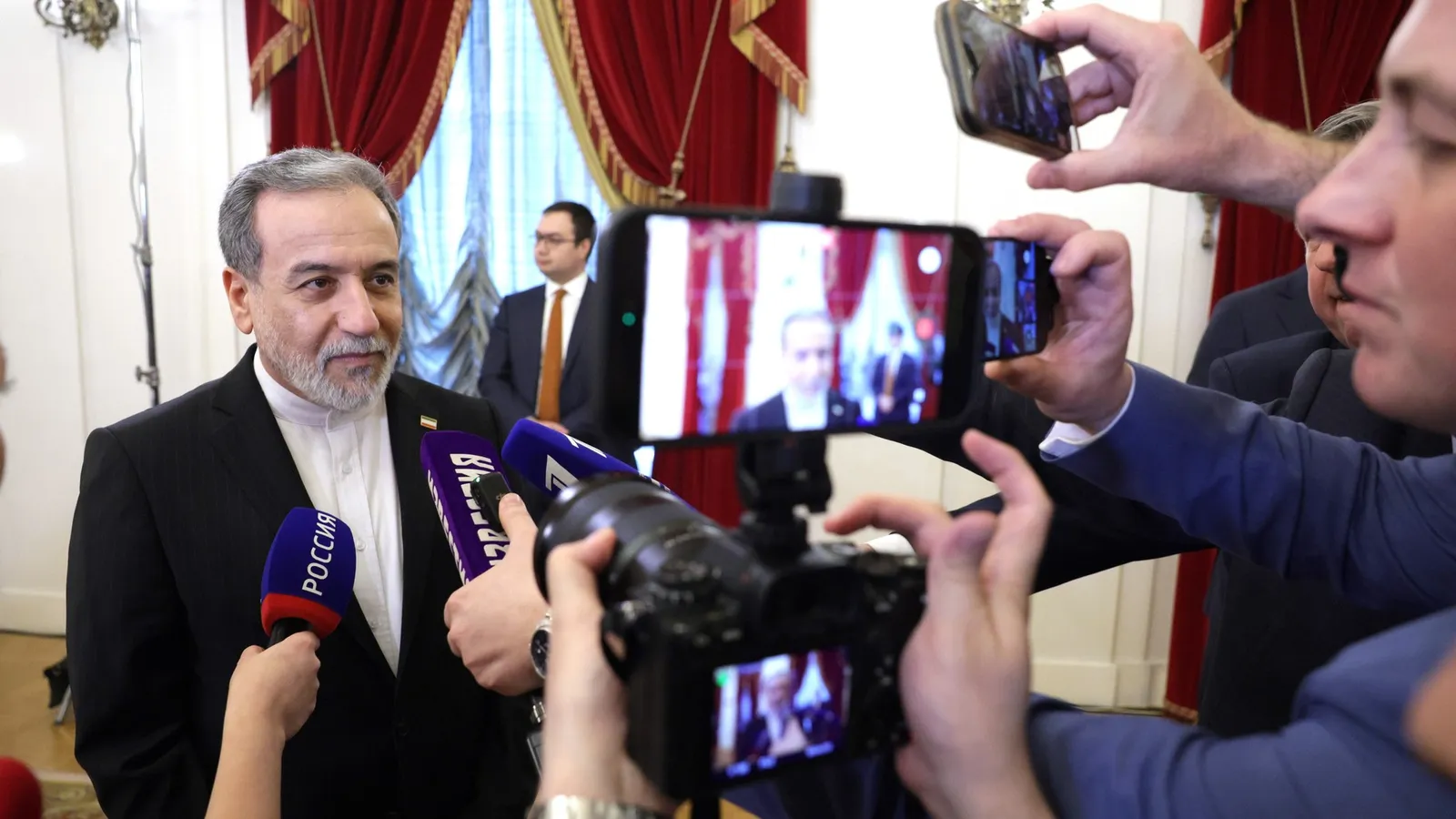
Iran and the United States are trading angry words and warning signals again, even as both say they are open to a deal. On Wednesday, Tehran condemned a US offer of a reward for information about its nuclear programme, a senior Iranian official said no enriched nuclear material would leave the country, and Iranian media reported that a tanker escorted by US fighter jets hit a mine in the Strait of Hormuz.
The $20 million reward
Last Friday the US military announced up to $20 million, plus “possible relocation”, for information on the facilities, equipment and personnel of Iran’s nuclear programme. On Wednesday, Iran’s foreign ministry called the announcement “repugnant and regrettable”. Foreign Minister Abbas Araghchi wrote to the UN Secretary-General, the Security Council and the head of the International Atomic Energy Agency (IAEA), urging each to condemn it clearly.
Iranian President Masoud Pezeshkian said the US had gone to war on the pretext of stopping Iran from getting nuclear weapons and was now using threats to pursue diplomacy, an approach he called “not a contradiction, but a disgrace”. The US says the war and its pressure are meant to prevent Iran from acquiring a nuclear weapon.
“Not a single particle”
Security chief Mohsen Rezaei told Lebanon’s Al Mayadeen that no enriched nuclear material, “not a single particle”, will be allowed out of Iran. Mr Rezaei said Iran is waiting for a US response to its seven conditions for peace talks, and he dismissed talk of any negotiations in the meantime, according to Al Jazeera.
These positions come a day after US Secretary of State Marco Rubio said the blockade and sanctions mean there is no need for major combat, as we reported in our story on the G7 meeting. Mr Rubio called Iran’s conditions “absurd”. The two sides are plainly far apart.
A second tanker in trouble
Iran’s state broadcaster IRIB reported that a second tanker passing through the strait, escorted by US fighter jets, struck a mine and caught fire, and that efforts to put out the blaze had failed. Iran’s army also said a tanker had struck a mine and burned. The US military said recently that all mines had been cleared from the strait. Iran has been targeting ships that transit without its permission, while the US has imposed a naval blockade on Iranian ports and helped tankers pass. The strait normally carries about a fifth of the world’s oil. None of this has been independently confirmed.
Data from the Washington Institute for Near East Policy shows 37 ships were attacked in October, the highest monthly total since the war began, and there is little sign of a drop in November.
| Oil benchmark | Price (by 2:34pm PKT) | Change |
|---|---|---|
| Brent | $92.77 a barrel | Up $1.28 (1.4%) |
| US West Texas Intermediate | $86.80 a barrel | Up 76 cents (0.9%) |
Both prices are up from two-month lows the day before, as markets swung between hopes for de-escalation and fears for shipping.
The price of the war
The insurer Allianz Trade estimated that the war will cost Gulf countries more than $200 billion in physical damage, mostly to energy infrastructure in economies locked in by Hormuz, and that economic losses could reach nearly four times that figure by 2030. More than 80 energy facilities were hit, mostly in Kuwait, Qatar and Bahrain, and about a third of them were severely damaged.
Inside Iran, the government has warned that war damage to gas processing facilities could mean gas supply cuts across the country this winter, including Tehran, if consumption is high. Parliament speaker Mohammad Bagher Ghalibaf wrote that China has an important role in ending the “neither war nor peace” situation and announced a steering body to coordinate cooperation with Beijing.
Why it matters for Pakistan
Pakistan sits between the Gulf and its own energy needs, and has tried to help the two sides talk. Prime Minister Shehbaz Sharif met President Pezeshkian on the sidelines of the COP31 summit in Antalya on Wednesday, as we report here. The risk to Pakistan is the same as for other importers: a ship hit in Hormuz, or a spike in oil, quickly shows up in fuel, gas and electricity bills.
What we do not know
- Whether the US and Iran will move from public conditions to talks.
- Who laid the mines, and how many remain.
- How the IAEA and the Security Council will answer Iran’s letter.
What to watch is any US reply to Iran’s seven conditions, further incidents in the strait, and whether Qatari mediation resumes after the political reset in Washington that followed the midterms.
Comments
Comments are reviewed by our editors before they appear. Please keep them civil and on topic. See our terms.
No comments yet. Be the first to share your view.