
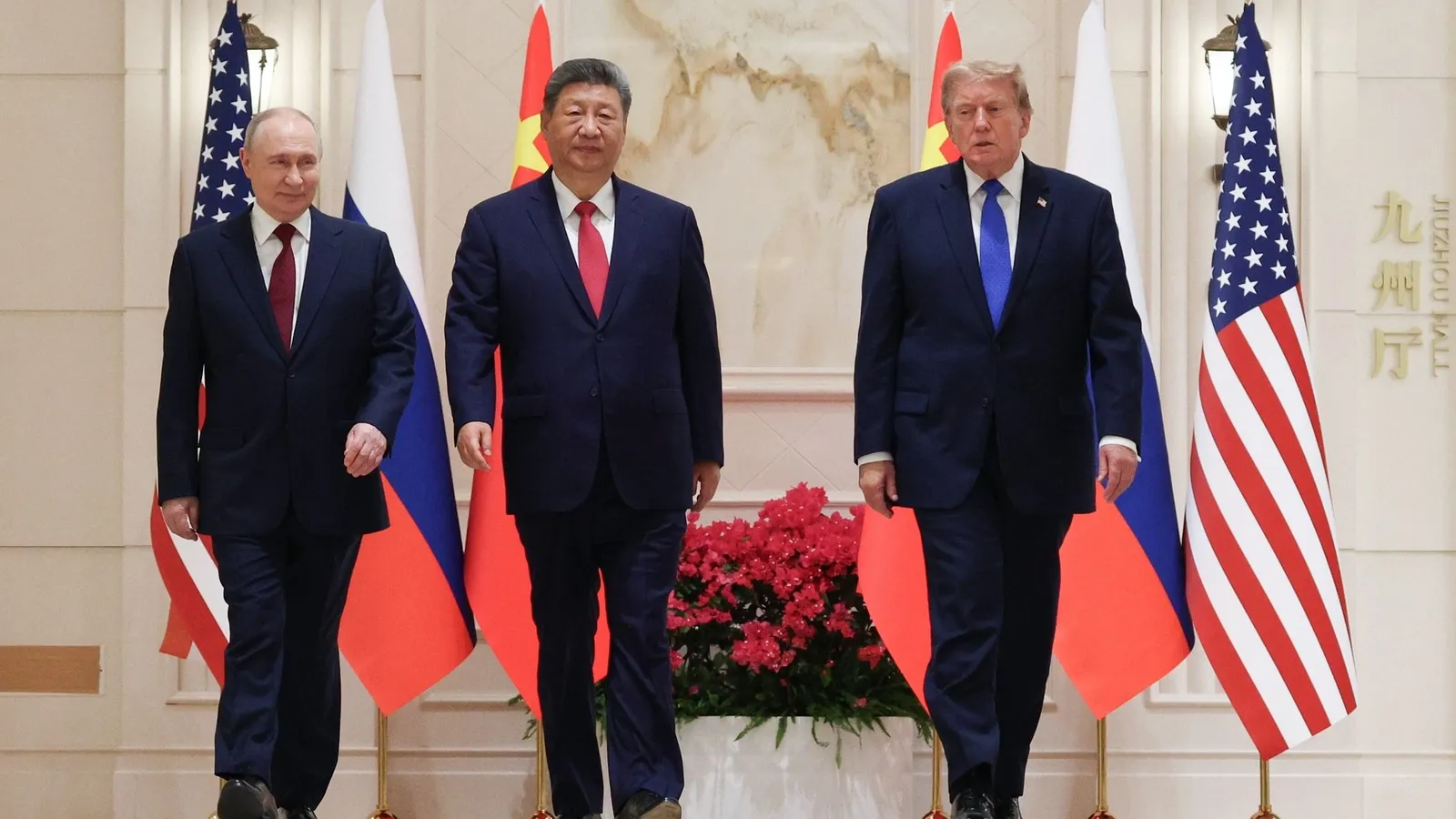
China’s Xi Jinping, Russia’s Vladimir Putin and America’s Donald Trump signed what they called a “peace declaration” at their first three-way meeting, in Shenzhen on Thursday, according to China and Russia, AFP reported. They restated that a nuclear war must never be fought.
Xinhua, China’s state news agency, and the Kremlin published the text. The three presidents made no statements straight afterwards, and Mr Trump flew home.
What the declaration says
| Pledge | Detail as reported |
|---|---|
| Nuclear war | Repeats that such a war must never be fought |
| United Nations | Push forward reform of the UN |
| Fuel | Raise the supply of refined oil products to every country |
| Courts | Protect the immunity that state officials have before international courts |
All of this is pledge language. The reports do not say how any of it would be done, by when, or how it would be checked.
What the leaders said in the room
Before reporters were sent out, Mr Trump told his guests they were “making history” and that peace has never come from turning down chances to talk. On nuclear weapons he said giving them up is hard. He had pressed for arms control to be central, even though China has repeatedly refused to join talks with Washington and Moscow, which hold far larger arsenals.
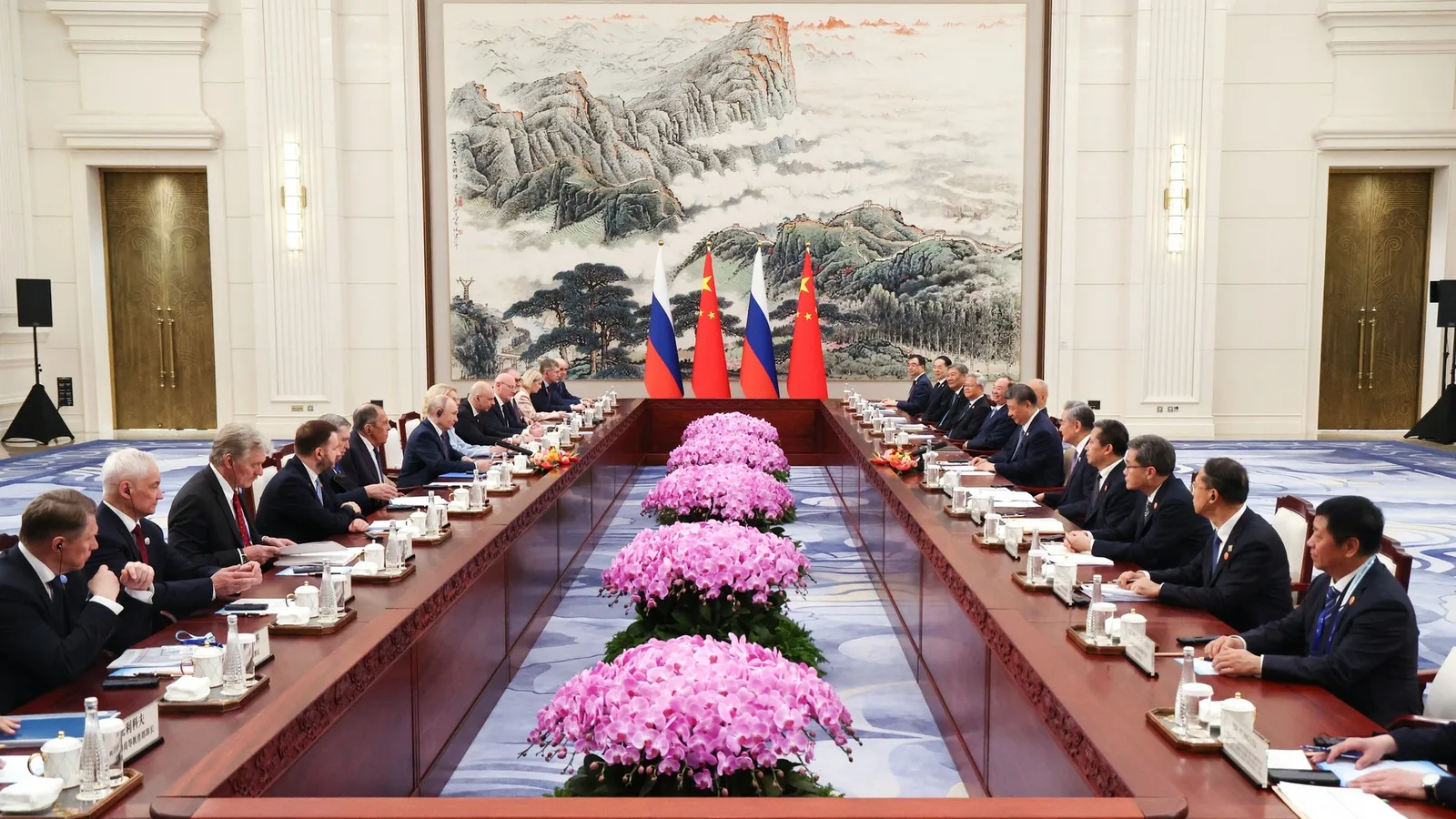
Mr Putin, who came to the summit just after a key bridge linking Crimea to Russia was crippled, said the three countries share many interests in ending regional conflicts, Ukraine’s obviously among them. Mr Xi did not mention Ukraine directly. He said that when major powers live in harmony the world is at peace, and when they clash it falls into turmoil, and that the three countries should encourage parties to conflicts to talk and settle disputes by political and diplomatic means.
Mr Trump also said he and Mr Xi both feel strongly that oil must keep moving through the Strait of Hormuz, where the Iran war has caused disruption. The meeting took place at the Kylin Villa, a lakeside villa in wooded hills with a long history of sensitive diplomatic meetings. Before the trilateral, Mr Trump had met Mr Xi and Mr Putin separately.
The doubts
AFP noted that the three are far apart on Ukraine, Iran, nuclear weapons and trade, so a lasting outcome is in doubt. Smaller countries fear their interests could be ignored. The summit also came while the US and China are managing a trade truce that was extended this month, and amid questions over reports of Nvidia chips reaching China through Southeast Asia.
Our earlier report on the Xi-Putin talks a day before set out the competing accounts of the agenda: Washington said Ukraine would not come up, then Mr Trump said it would.
What it could mean for Pakistan
Pakistan has no seat at this table, but the fuel pledge is the item that touches it most directly. Pakistan imports most of its energy, and the Iran war and disruption to Hormuz have kept fuel expensive. A promise to raise supplies of refined products could matter for prices if it is carried out, though a joint declaration does not itself add a litre of fuel. Pakistan has also been working to bring the US and Iran back to talks.
Why it matters
The declaration is a signal of intent from the three leaders with the most influence over a nuclear-arms race, a war in Europe and a conflict in the Gulf. Its weakness is that it is general. The things most likely to decide whether it counts, such as any arms-control talks involving China and any movement on Ukraine and Iran, are not in it, as far as the reports show.
What to watch: the full text and whether it mentions Ukraine; what Mr Trump, Mr Xi and Mr Putin say now they have left; and whether anything changes in the Gulf over the coming days.


Comments
Comments are reviewed by our editors before they appear. Please keep them civil and on topic. See our terms.
No comments yet. Be the first to share your view.