

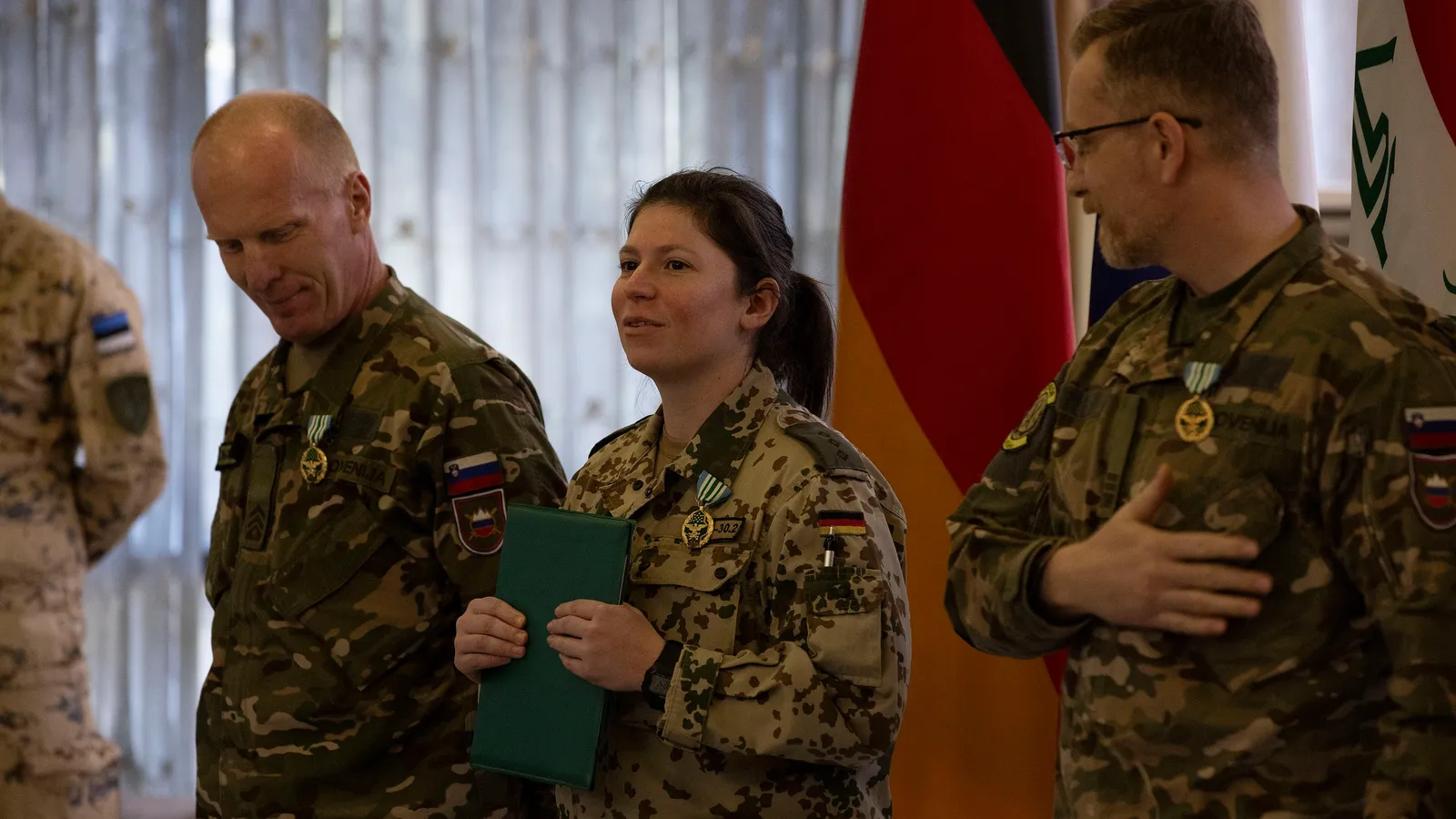
The US-led military coalition that was sent to Iraq to fight the Islamic State group has ended its mission, with its last troops due to leave the autonomous Kurdistan region on October 1, Dawn reported.
Iraqi Prime Minister Ali al-Zaidi said October 1 should be celebrated as “Sovereignty Day”, marking the “completion of Iraq’s path toward sovereignty”.
Twelve years in Iraq
The coalition’s mission, from start to finish:
- 2014: Coalition troops deployed to Iraq and Syria to fight the Islamic State group
- 2017: Islamic State defeated in Iraq
- 2019: Islamic State defeated in Syria
- 2024: Baghdad and Washington agreed to wind down the coalition’s presence
- September 30, 2026: Coalition forces completed a gradual withdrawal from bases across Iraq
- October 1, 2026: Final departure from Kurdistan
In its final phase, the coalition had already limited its presence to the autonomous Kurdistan region in the north.
Italy leaves too
Italy has also completed its withdrawal after 12 years. “From tomorrow, therefore, our military presence in Iraq will end,” Italian Defence Minister Guido Crosetto said, Anadolu Agency reported.
Thousands of Italian troops served in Iraq over that period, fighting Islamic State and training Iraqi armed forces and security personnel in the Kurdish region. The main Italian withdrawal was largely completed in March, and the last personnel, who had stayed on to recover and transfer equipment, left ahead of the September 30 deadline agreed with Iraq. Two Italian Carabinieri officers will remain with the EU Advisory Mission in Iraq, with the Iraqi government’s approval.
The US-led Operation Inherent Resolve and NATO Mission Iraq will continue to operate from other countries. NATO’s mission will move temporarily to its Joint Force Command in Lago Patria, near Naples. Italy says it will stay engaged with Iraq through military training exchanges and help in building up the capabilities of Iraq’s forces.
A presence that became contested
After Islamic State was defeated, the coalition’s continued presence became a source of tension in Iraq. Armed factions demanded that foreign troops leave and attacked US forces with drones and missiles, which led to retaliatory strikes.
Zaidi’s government wants the state to have a monopoly on weapons, but powerful armed groups have refused to disarm, saying they will do so only when foreign interference ends. The Kataeb Hezbollah group issued a warning: “A government that doesn’t work for the good of its people will be brought down by all possible means.”
Why it matters
The end of the mission closes a chapter that began when Islamic State seized large parts of Iraq and Syria in 2014. It gives Baghdad the sovereignty it has long demanded, but also leaves it to face powerful armed factions on its own, at a time when the region is shaken by the US-Iran war next door. How Iraq handles its armed groups without foreign troops on its soil will shape its stability in the years ahead. Read our report on the latest in the Iran-US war.
This article draws on reporting by Dawn and Anadolu Agency.

Comments
Comments are reviewed by our editors before they appear. Please keep them civil and on topic. See our terms.
No comments yet. Be the first to share your view.