

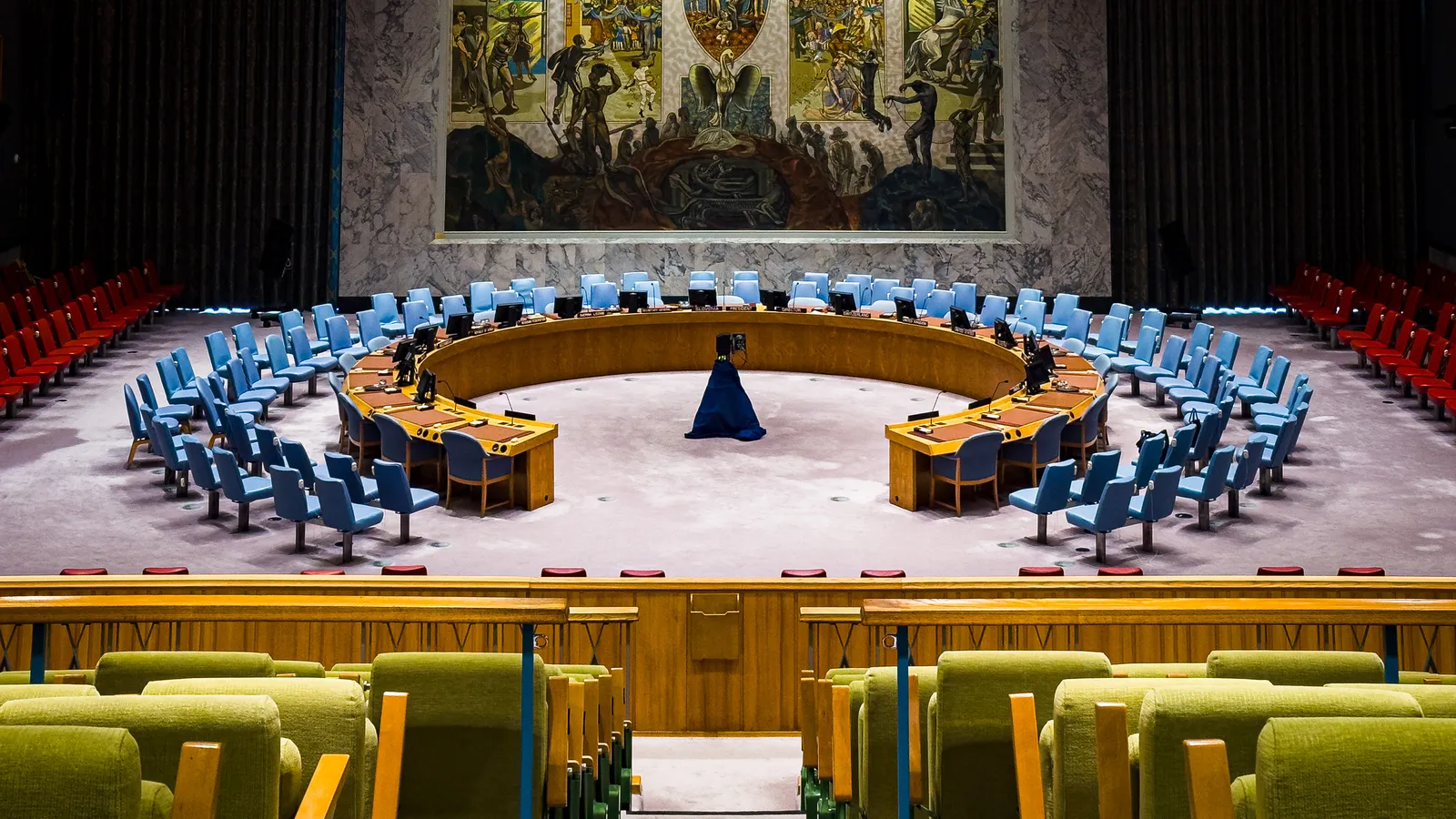
The United Nations Security Council on Thursday adopted a presidential statement started by Pakistan that asks countries to keep up diplomacy even after a war has broken out. Titled “The Role of Diplomacy during Active Hostilities”, it urges sustained efforts to secure ceasefires, stop wars from spreading and reach lasting political settlements.
The statement was adopted under the Council’s November presidency, held this month by Latvia’s ambassador, Sanita Pavļuta-Deslandes. Pakistan’s permanent representative, Ambassador Syed Haider Shah, welcomed it as an important contribution to efforts to settle conflicts peacefully.
What the text says
The Council says diplomacy is most needed when fighting is under way: it protects civilians, limits violence, stops conflicts from spreading and helps humanitarian aid get through. It calls on states to use mediation, good offices, and direct or indirect communication between warring parties to ease tension and create openings for talks, even while military operations go on.
The statement lists practical aims for such diplomacy:
- helping to bring about a halt in the fighting
- safe and unhindered humanitarian access
- protection of civilians
- reducing the risk that a conflict widens into a regional or international one
It also stresses that a ceasefire is not the finish line. Diplomatic and political engagement must continue afterwards, the statement says, to secure a lasting settlement.
The Council recognised the role of states that take diplomatic initiatives during wars and encouraged them to continue. It named regional and subregional organisations as important contributors and welcomed efforts to build up their mediation capacity and cooperation with the UN. It also backed the Secretary-General’s good offices, and those of his envoys and mediators, before and during conflicts, and asked him to keep promoting diplomacy and to report back as appropriate. Any diplomacy must stay within the UN Charter, international law and Council resolutions, the text adds, and it points to the International Court of Justice for disputes where states have accepted its jurisdiction.
Pakistan’s argument
Speaking to reporters after the adoption, Ambassador Shah said: “The message of this Presidential Statement is both simple and powerful: Diplomacy must not end when hostilities begin. Indeed, it becomes even more indispensable.” He said that through good offices, open channels and continued dialogue, diplomacy can be “a vital bridge from confrontation to de-escalation and peaceful settlement”. He described the text as a political reference point that gathers the Council’s experience of individual conflicts under one framework, and said it reflects Pakistan’s commitment to multilateralism, dialogue and the peaceful settlement of disputes.
Background: building on 2025
The statement follows Resolution 2788, which the Council adopted unanimously in July 2025 during Pakistan’s presidency of the Council. That resolution reaffirmed the importance of peaceful settlement of international disputes under the UN Charter. The new text goes a step further by focusing on the period after fighting has already started, when lines of communication between opponents often break down and the danger of escalation rises.
Why it matters
A presidential statement is agreed by the Council’s members and carries political weight, but unlike a resolution it is not legally binding, so its value depends on whether governments act on it. The timing gives it extra meaning for Pakistan. Islamabad has been an active go-between in the US-Iran war, and we reported on Field Marshal Asim Munir’s visit to Tehran and on Foreign Minister Ishaq Dar’s calls with his Iranian counterpart. The statement gives Pakistan a UN text to point to when it argues that talks should continue while fighting does.
What to watch is whether the language shows up in the Council’s handling of live conflicts such as the Gulf war, Ukraine and Gaza, and whether members who back the principle in New York act on it elsewhere.
Comments
Comments are reviewed by our editors before they appear. Please keep them civil and on topic. See our terms.
No comments yet. Be the first to share your view.