

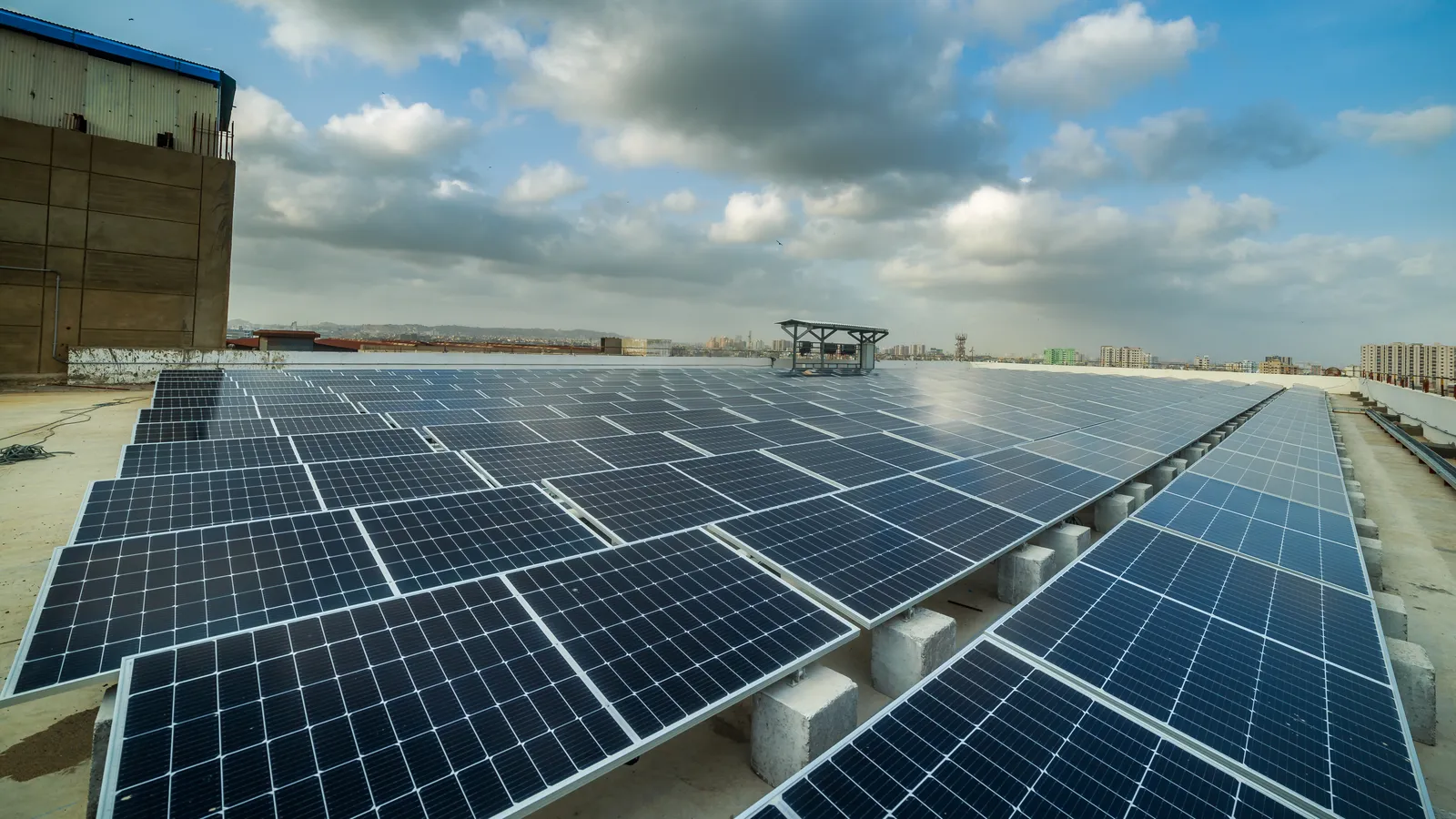
Solar power generated more electricity in Pakistan than nuclear power for the first time in 2025, even as the country’s nuclear plants produced a record amount, according to an international industry report.
Pakistan’s nuclear electricity production rose 3.7 percent to an all-time high of 22.5 terawatt-hours (TWh) in 2025, up from 21.7TWh in 2024, the World Nuclear Industry Status Report (WNISR) 2026 said, Dawn reported. But solar produced 36.3TWh, a figure the report described as “highly underestimated”.
“For the first time, solar power generation exceeded nuclear output, and by far,” the report said.
The hidden solar boom
The report explains why Pakistan’s solar revolution does not show up fully in official numbers. For a while, power consumption fell even though the economy was growing. Import data solved the mystery: millions of homes and businesses had installed private, unregistered solar panels, using their own electricity without drawing on the national grid.
- Total imports: more than 58 gigawatts (GW) of solar panels from China between early 2017 and mid-2026
- Recent surge: 40GW of that, or 69 percent, arrived in just two and a half years, from 2024 to mid-2026
- Global rank: Pakistan is now the second-largest single-country import market for solar panels, behind only the Netherlands, which serves as Europe’s hub
- China’s top customer: in 2025, Pakistan bought more Chinese solar panels than any other country
“Pakistan installed in five years about twice as much solar capacity as France did in a decade,” the report said. By summer 2025, solar had become Pakistan’s single largest source of electricity.
Pakistan’s nuclear fleet
Pakistan runs six nuclear reactors with a combined capacity of 3,262 megawatts (MW), all built by the China National Nuclear Corporation (CNNC):
- Karachi: two Hualong One reactors, Kanupp-2 and Kanupp-3, commissioned in 2022 and 2023
- Chashma: four reactors, C-1 to C-4, with a total capacity of 1,230MW
- Under construction: a fifth Chashma reactor, C-5, a 1,000MW Hualong One, expected by 2030. Concrete was first poured on December 30, 2024, and it is China’s only nuclear reactor currently being built abroad
The original Karachi reactor, the 90MW K-1, closed in 2021 after 50 years.
The cost of nuclear power
Citing the Pakistan Economic Survey 2025-26, the report noted that debt repayment makes up a large part of the cost of nuclear electricity, mainly because of the new Karachi reactors. Their 12-year repayment period is only 20 percent of their expected 60-year lifetime.
Where Pakistan stands globally
The US leads the world with 94 reactors and nearly 97,000MW of capacity, followed by France with 57 reactors and China with 63. Russia, the first country to connect a nuclear plant to the grid in 1954, ranks fourth.
Why it matters
High electricity prices pushed Pakistanis to take power into their own hands, and the result is one of the fastest solar booms in the world. That brings cheaper, cleaner energy for those who can afford panels, but it also leaves fewer customers paying for an expensive grid, including costly nuclear plants whose debts must still be repaid. How the government balances the two will shape power bills for years. Read our report on this month’s power tariff adjustment.
This article draws on reporting by Dawn.
Comments
Comments are reviewed by our editors before they appear. Please keep them civil and on topic. See our terms.
No comments yet. Be the first to share your view.