

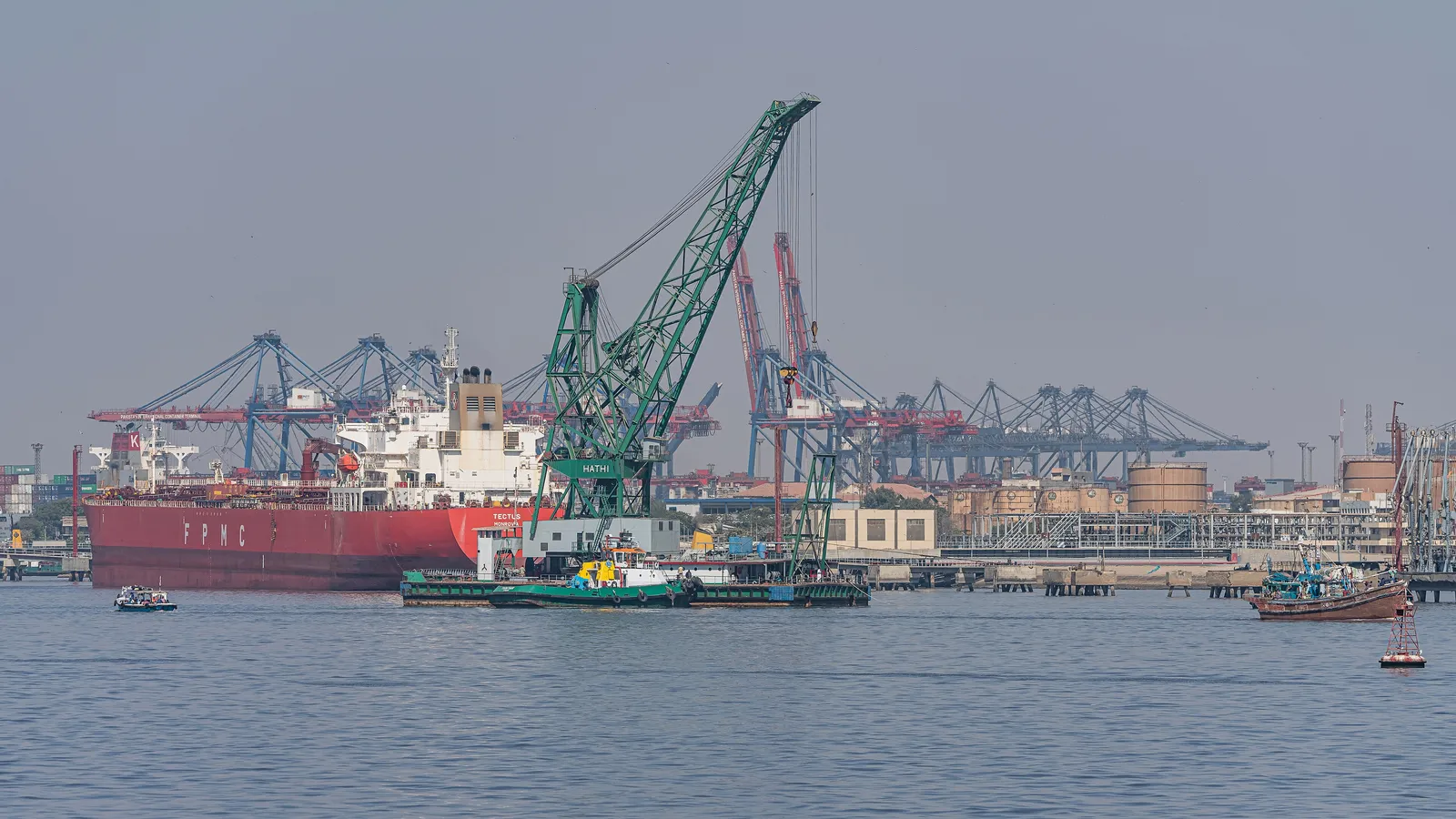
The Federal Constitutional Court (FCC) overturned high court judgments on Thursday that had backed the infrastructure cess charged by Sindh and Khyber Pakhtunkhwa, and held that the provinces had no legislative power to make the laws behind it, Dawn reported.
The bench, made up of Chief Justice Aminuddin Khan and Justice Aamer Farooq, heard 568 petitions from private parties against rulings of the Sindh High Court (SHC) and the Peshawar High Court (PHC).
The two laws
| Sindh | Khyber Pakhtunkhwa | |
|---|---|---|
| Law | Sindh Development and Maintenance of Infrastructure Cess Act, 2017 | KP Infrastructure Development Cess Act, 2022 |
| What it taxes | Goods moving into or out of Sindh to or from abroad by air or sea | The transport of goods within the province |
| Rate change | n/a | Raised from one to two per cent by the KP Finance Act, 2024 |
| High court ruling | SHC upheld the levy on June 4, 2021 | PHC dismissed 157 petitions on November 14, 2025 |
The Sindh controversy began in 1994, the report noted, before the 2017 Act put the levy on a statutory footing.
Who argued what
The petitioners said provinces cannot tax imports, exports or goods in the federal legislative field, and that the laws intruded on Parliament’s exclusive territory.
For the federal side, Hafiz Ehsaan Ahmad Khokhar, who appeared for the Revenue Division and the tax authority, the FBR, said the levies should be tested against Articles 141 and 142(a), together with Entries 27, 43 and 59 of the Federal Legislative List. Entry 27 covers imports and exports across customs frontiers, inter-provincial and foreign trade, and Entry 43 gives the federation customs duties, export duties included. He argued that a levy must be judged by its real nature, its taxable event, who bears it and how it is collected, not by its name, and that a charge that adds to the cost of imported or exported goods through customs clearance falls in the federal domain. A provincial power to tax trades and professions under Article 163, he said, cannot stretch to customs duties.
The additional attorney general backed the federation’s position. The Sindh and KP governments stood by their laws, saying the money funds infrastructure and roads, that it is not a customs or export duty, and that provincial assemblies can legislate on it under Article 142(c).
After hearing both sides, the court set aside the two high court judgments and declared the laws beyond provincial competence, according to the report.
What we don’t know yet
The report gives the outcome, not the reasons in full. These questions are still open:
- Refunds. Whether traders who paid the cess can claim it back, and how far back, is not stated.
- Provincial revenue. The report does not say how much the cess raised or how the two provinces will replace it.
- Reaction. Neither the Sindh nor the KP government had responded in the report.
- The detailed judgment. The reasoning will matter for other provincial levies on goods.
Why it matters
For importers and exporters, the cess was an added cost on goods that already pay customs duties. The ruling removes a charge that traders have contested in court for years. For the provinces, it removes a source of money for roads and infrastructure, and raises the question of how they pay for them. The principle behind the ruling is the larger point. The federation argued that the Constitution gives it the field of goods crossing the customs frontier, and the court declared the provincial laws beyond provincial competence. The report does not set out the court’s full reasoning.
The next thing to watch is the written judgment, and whether the provinces seek a review. Our earlier report on the Centre taking Rs34.8bn from the provinces shows how tight provincial finances already are.


Comments
Comments are reviewed by our editors before they appear. Please keep them civil and on topic. See our terms.
No comments yet. Be the first to share your view.