

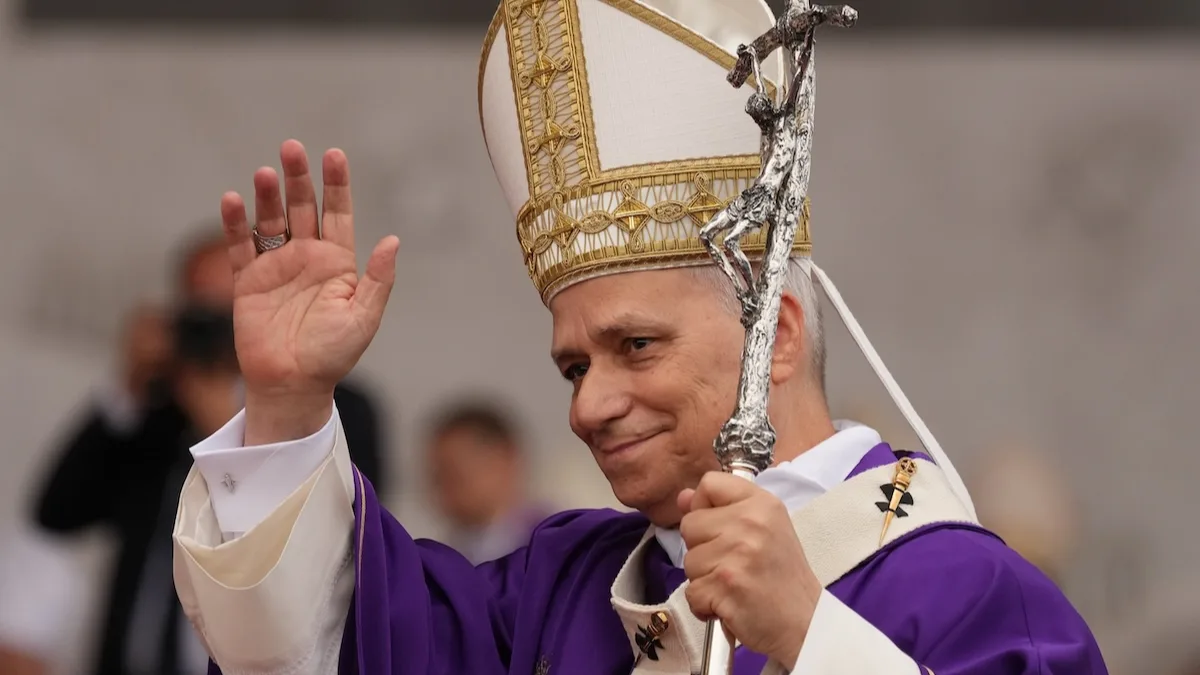
Pope Leo XIV pressed French Catholic leaders to sustain their fight against clerical sexual abuse on Sunday, delivering the message to bishops in Lourdes hours ahead of a private encounter with survivors, part of a four day tour through France that has already drawn some of the largest crowds of his papacy.
Speaking to bishops behind closed doors at the Sanctuary of Our Lady of Lourdes, Leo acknowledged what he termed the painful scourge of abuse committed against minors by clergy or within Church institutions. A text of his remarks distributed to reporters showed him praising the bishops for courageous steps already taken, while instructing them to stay the course and maintain the greatest vigilance going forward. He added that the clergy themselves also need ongoing support as the Church works through the crisis.
Later that day, before a crowd organizers estimated at 150,000 gathered in an open field near the shrine, Leo broadened his message, calling on the wider Church to confront its own history honestly and to heal what he described as deep wounds, infidelities and painful errors accumulated over time. He framed that healing as something achievable only by placing the institution humbly under what he called the Lord’s purifying gaze. Notably, he stopped short of naming France’s abuse scandals specifically during this more public address, reserving his more direct language for the earlier private session with bishops.
That private meeting followed a landmark 2021 investigation that documented an estimated 330,000 cases of child abuse committed by clergy and lay Church workers across France over roughly seventy years, a finding that badly damaged public trust in the institution and placed the country’s Church leadership under sustained pressure to show real reform rather than rhetorical apology.
Leo’s stop in Lourdes came on the third day of a visit that began in Paris, where he held talks with French President Emmanuel Macron and celebrated an outdoor Mass drawing crowds estimated between 700,000 and 800,000 people at the Place de la Concorde, with additional spectators lining the Champs-Elysees to watch him pass by in an open air popemobile. During that Paris Mass, he encouraged the faithful to let their belief extend outward to others rather than keeping it private, and he spoke directly to younger attendees, telling them they represent the Church’s present rather than only its future. The tour is set to conclude Monday with a stop in Metz, in the country’s northeast.
Beyond the abuse crisis, Leo used stops throughout the French trip to repeat warnings he has voiced elsewhere this year about the pace of global artificial intelligence development, a subject he has returned to consistently since taking office as the first pope from the United States.
Lourdes itself carries an uncomfortable layer of relevance to the abuse issue Leo addressed there. The shrine’s facade is decorated with large scale mosaics by Reverend Marko Rupnik, a religious artist with close Vatican connections who faces sexual abuse allegations from more than twenty women and has not publicly addressed the accusations. Five alleged victims sent the pope an open letter Thursday criticizing how the Vatican has handled Rupnik’s ongoing internal trial. The artwork, spanning several stories in height, was covered with yellow tarps ahead of the pope’s visit, a decision that drew attention of its own from observers following the trip.
Leo has taken a broadly similar approach to the abuse issue on past trips. During a visit to Spain in June, he told bishops there they needed to genuinely listen to survivors and provide them with reparations rather than symbolic gestures alone. Even so, some survivor advocates in France have voiced doubt that Sunday’s meeting will lead to concrete institutional change, reflecting a familiar pattern in which papal expressions of sorrow have not always translated into the accountability measures survivors have continued to demand from the Church over the years.
The pope’s scheduled private meeting with seven French abuse survivors, held out of view of press cameras following his public remarks, stands as one of the more closely watched moments of the French tour, and its outcome may determine whether this visit is remembered as a meaningful step toward addressing France’s abuse crisis or as another chapter in a long running cycle of apology without lasting structural reform.


Comments
Comments are reviewed by our editors before they appear. Please keep them civil and on topic. See our terms.
No comments yet. Be the first to share your view.