

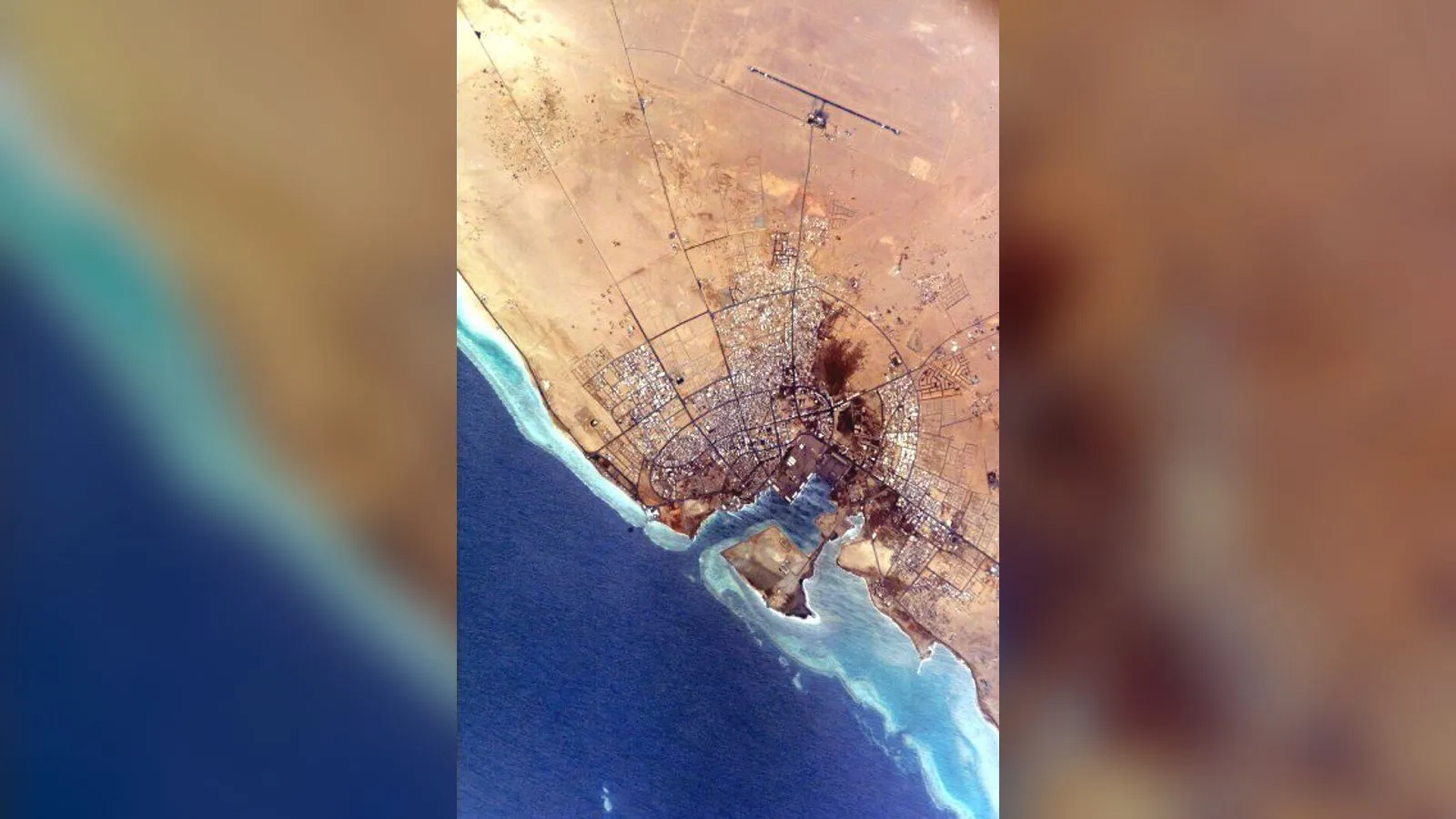
Saudi Arabia has resumed loading oil tankers at its Red Sea port of Yanbu after restarting the East-West Pipeline, which was shut down this month by drone attacks the kingdom blamed on Yemen’s Houthis, Dawn reported.
The recovery, together with a US offer to release oil from its emergency stocks, helped push world oil prices lower on Tuesday.
How much oil is flowing
The pipeline, which carries Saudi crude across the country to the Red Sea, was shut on September 11 after the attacks and restarted the following Tuesday:
- Loadings at Yanbu: about 2 million barrels a day since last week
- Pipeline flow: about 2 million barrels a day according to an industry source, or around 2.65 million according to ship-tracking firm Kpler
- Pipeline capacity: 7 million barrels a day
- Before the attacks: about 5.5 million barrels a day
Flows are expected to rise to 3 to 4 million barrels a day in the coming days, but a full recovery could take another month.
Seen from space
European Space Agency satellite images from September 27 showed Saudi Arabia loading nearly 10 million barrels of crude at the Yanbu and Al Muajjiz terminals. TankerTrackers.com counted 40 tankers there, including some loading refined products. Crude stocks at Yanbu rose by about 1 million barrels on September 22, the first increase since the attack.
Washington steps in
The United States is also trying to bring prices down:
- It offered to lend 40 million barrels from its Strategic Petroleum Reserve
- The White House urged the European Union to release its emergency diesel stocks
On Tuesday, Brent crude fell $1.38, or 1.3 percent, to $103.88 a barrel, and US crude fell $2.04 to $90.58.
Still a dangerous route
The risks have not gone away. On Monday evening, a vessel in the Strait of Hormuz was struck by a suspected projectile, starting a fire, the UK Maritime Trade Operations centre said; the crew were safe. And Iran’s parliament speaker, Mohammad Baqer Ghalibaf, warned this week that no country in the region would be able to sell oil if Iran could not.
Why Yanbu matters so much
With the Strait of Hormuz disrupted by the US-Iran war, the Red Sea route through Yanbu has become one of the most important ways for Gulf oil to reach world markets. That is why the drone attacks on the pipeline were so damaging, and why its restart is moving prices. But the route has its own risk: the Houthis have also threatened ships in the Bab al-Mandab, the narrow strait at the southern end of the Red Sea.
What it means for Pakistan
Pakistan imports most of its oil, and prices at home now follow world markets daily. Falling crude prices have already brought two cuts in petrol and diesel prices in two days. If Saudi flows keep rising, there could be more relief ahead, but a new attack on the Red Sea route or an escalation in the Gulf could quickly reverse it. Read more on the latest petrol price cut.
This article draws on reporting by Dawn and news agencies.



Comments
Comments are reviewed by our editors before they appear. Please keep them civil and on topic. See our terms.
No comments yet. Be the first to share your view.