
The Economic Coordination Committee (ECC) of the cabinet on Wednesday approved Rs275 billion in supplementary grants for priority water projects, as official figures showed the combined cost of three mega dams has climbed from Rs1.28 trillion to Rs3.5 trillion, The Express Tribune and Dawn reported.
The meeting, presided over by Finance Minister Muhammad Aurangzeb, also approved about Rs84 billion for armed forces projects. In all, the committee cleared supplementary grants of roughly Rs380 billion, according to Dawn.
How much the dams now cost
The Ministry of Water Resources gave the ECC revised estimates for the three projects. The Tribune put the cumulative rise at Rs2.3 trillion, or 176 per cent:
- Diamer-Bhasha Dam: up by Rs642 billion to Rs1.12 trillion, an increase of 134 per cent. The ministry blamed changes in foreign exchange rates and said a revised Planning Commission proforma had been submitted for approval by the Executive Committee of the National Economic Council.
- Dasu Hydropower Project: from Rs486 billion to Rs1.74 trillion, an increase of Rs1.254 trillion, or around 260 per cent.
- Mohmand Dam: reassessed by the Water and Power Development Authority (Wapda) at Rs666 billion. The government approved the project in 2018 at Rs310 billion with a deadline of September 2025. The estimated escalation is Rs356 billion, or 115 per cent.
The government also acknowledged sharp increases in petroleum and construction-material prices, which added to the burden of infrastructure projects, the Tribune reported.
Where the Rs275bn will go
Dawn counted five water projects covered by the grant: the Diamer-Bhasha Dam, the Mohmand Dam, the Greater Karachi Bulk Water Supply scheme (K-IV), the Chashma Right Bank Canal and the Kachhi Canal. The Tribune listed six, adding the Dasu project. The sum is well below the nearly Rs450 billion originally sought for the year. The money will be released gradually in line with Wapda’s payment plan, Dawn said.
The 2026-27 budget had set aside about Rs103 billion for these projects, but Wapda had complained that this was not enough. Its chairman, Muhammad Saeed, told a parliamentary panel that the allocation was insufficient and that the prime minister and the finance ministry had approved his requests for more funds.
A grant that depends on tax collection
The supplementary grants are financed from cash that the federal government secured from the provinces outside the National Finance Commission award. For this fiscal year the centre has asked the provinces for Rs1.035 trillion out of their total shares of Rs8.8 trillion. Delivery depends on the Federal Board of Revenue (FBR) collecting Rs15.264 trillion, and the Tribune noted that a shortfall is highly likely, given a gap of Rs95 billion in the first four months. Any shortfall automatically reduces the provincial contribution. A finance ministry official said the Rs275 billion had been approved but would be released only as revenue allows, with the remaining cash grants going to armed forces initiatives.
Other ECC decisions
- About Rs84 billion for the armed forces, including Rs31.3 billion for the Special Security Divisions, Rs11.9 billion for Pakistan Navy projects, Rs10 billion for internal security duty allowances and border fence maintenance, Rs29.1 billion for Project Istaqlal and Rs1.1 billion for a Lineage L-1000 aircraft.
- Gas supply to the Fatima and Agritech fertiliser plants continues until December 31, subject to availability.
- Restrictions on the import of camera-enabled smart glasses, with provinces asked to draw up workplace rules for such devices.
- A Rs1 billion grant for gasifying villages within five kilometres of gas fields in 2026-27.
- Rs15.625 billion in savings from austerity and fuel conservation moved to the Prime Minister’s Austerity Fund 2026.
Background
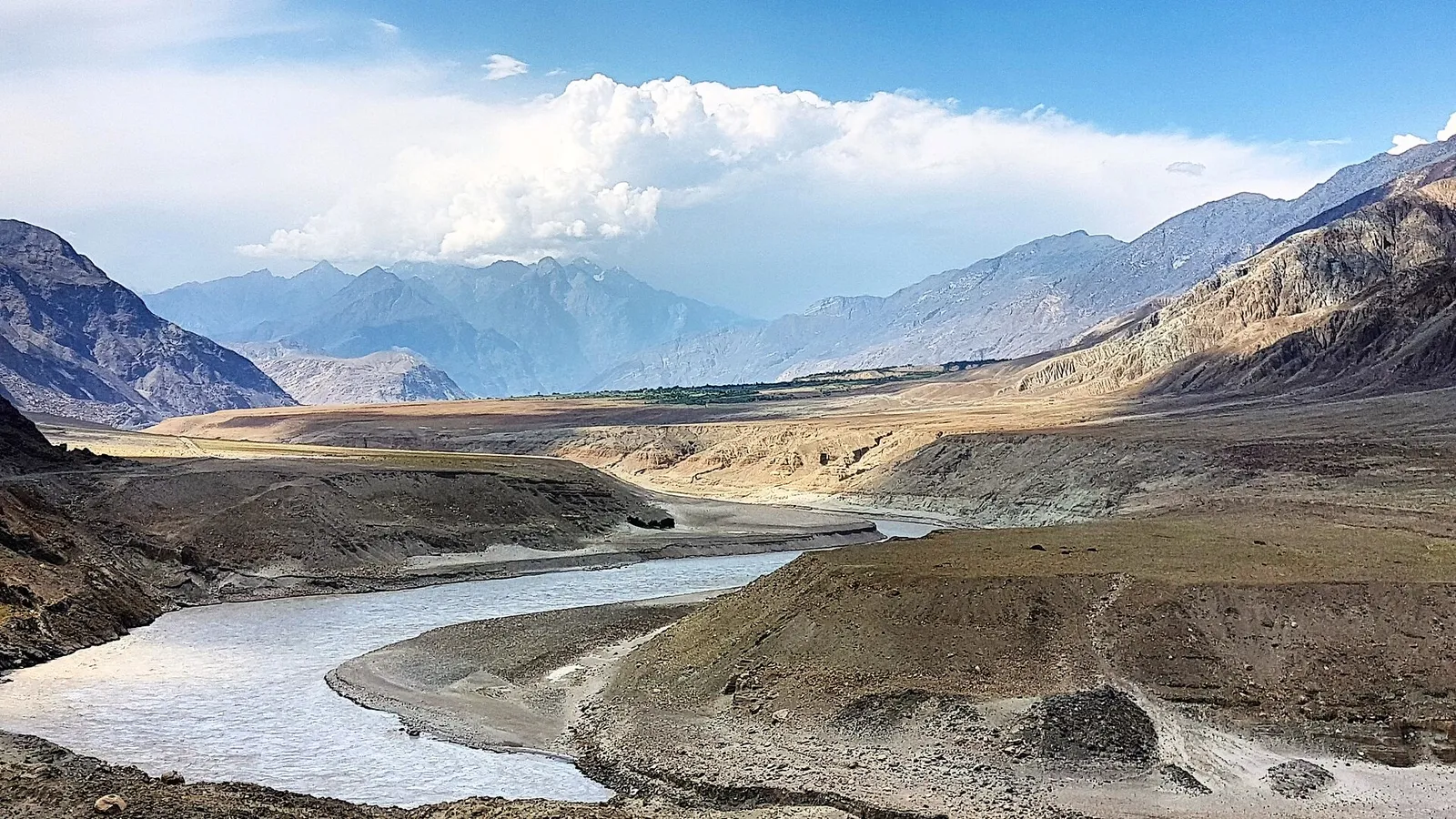
Diamer-Bhasha, on the Indus in Gilgit-Baltistan, is meant to add large water storage and hydropower to the national system. We reported earlier on work moving to the main dam structure, and on why water storage matters for the wheat crop.
Why it matters
A near tripling of the combined cost, on paper, means more public money must be found for projects that were approved years ago on far lower estimates. The ministry’s main explanation, for Diamer-Bhasha, is the exchange rate: a weaker rupee raises the rupee cost of foreign-financed work. The other open question is who pays. With provinces giving up part of their shares and tax collection already behind target, the grants may arrive late or in smaller amounts, which risks slowing construction further. What to watch is whether the revised Diamer-Bhasha cost is approved, how much of the Rs275 billion is released in the coming months, and whether the FBR closes its collection gap.
This article draws on reporting by The Express Tribune and Dawn.



Comments
Comments are reviewed by our editors before they appear. Please keep them civil and on topic. See our terms.
No comments yet. Be the first to share your view.