

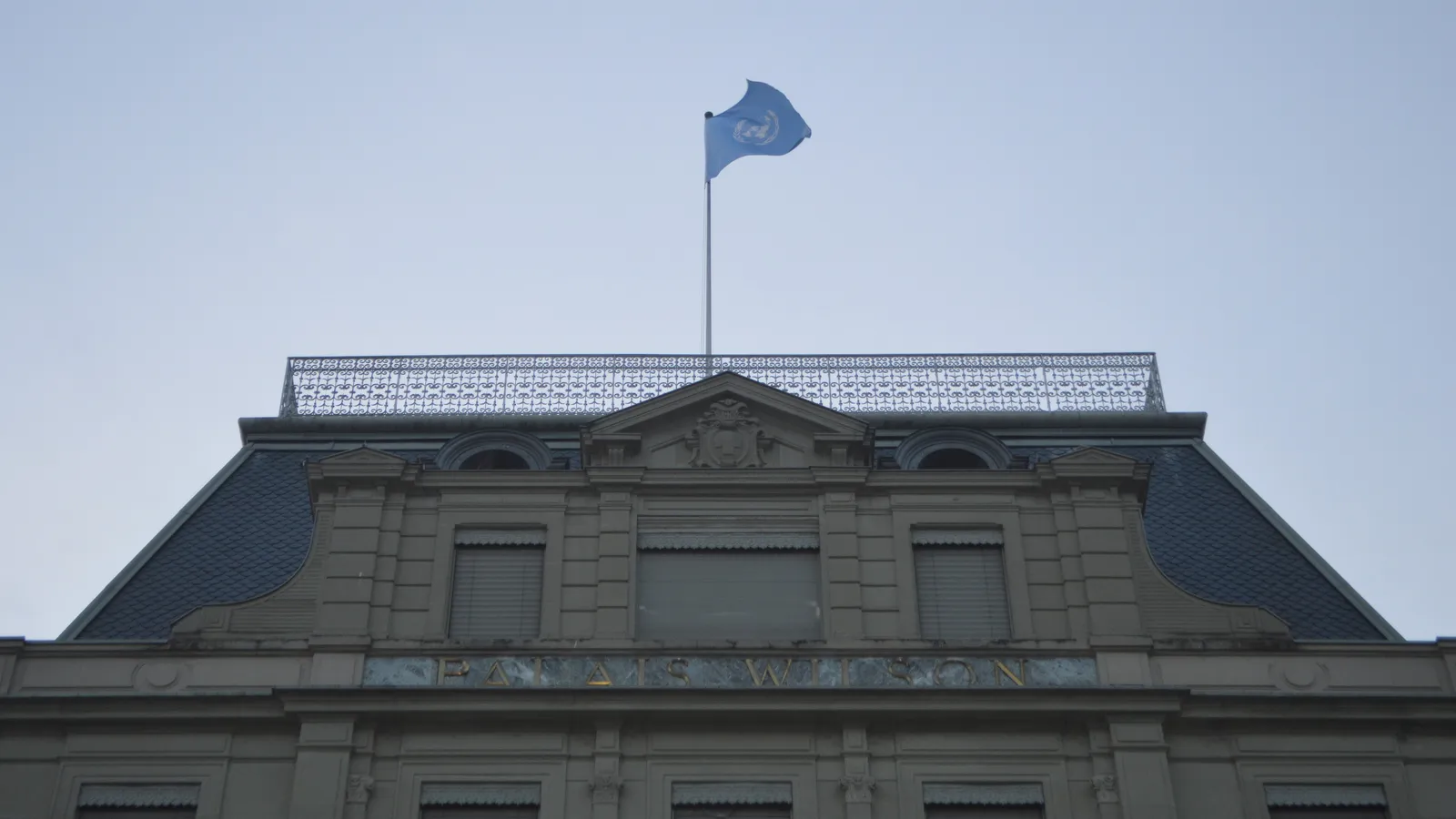
A United Nations rights committee on Wednesday welcomed Pakistan’s 2025 law raising the minimum age of marriage to 18, while questioning how the country is tackling child marriage, bonded labour and reconstruction after devastating floods, Dawn reported.
The UN Committee on Economic, Social and Cultural Rights concluded its review of Pakistan’s second periodic report under the International Covenant on Economic, Social and Cultural Rights. The committee meets in Geneva and checks how states are meeting the treaty’s commitments on issues such as work, health, education and housing.
Child marriage
Committee expert Michael Windfuhr, a member of the task force for Pakistan, welcomed the 2025 amendment to the Child Marriage Restraint Act 1929, which set the minimum age of marriage at 18 for both males and females. He said the committee was still concerned about the high number of child brides and asked about the impact of the measures taken to prevent child marriage.
Barrister Aqeel Malik, Minister of State for Law and Justice and head of the Pakistani delegation, told the committee that child marriage laws set the minimum age at 18 for boys and girls in Islamabad, Balochistan, Punjab and Sindh, and made child, early and forced marriages a crime.
Bonded labour
Expert Lazhari Bouzid said bonded labour remained common in agriculture and was also found in the informal sector, particularly brick making. Construction companies and government agencies were reportedly complicit by buying bricks made through debt bondage, he said, and asked how Pakistan had responded to such reports.
The delegation said the Constitution bans slavery and all forms of forced labour, and that the Bonded Labour System (Abolition) Act 1992 abolished the practice. It said Punjab had documented more than 210,000 kiln workers and set up district vigilance committees in many districts, and that labour inspectors had identified more than 2,900 victims of forced labour last year.
Floods and reconstruction
Windfuhr also asked how Pakistan had coped with the 2022 and 2025 floods, whether it could rebuild housing for those affected and restore their access to land or resources, and how many people remained displaced. The delegation said the government had set up a national emergency operations centre focusing on high-risk areas and launched a national flood protection programme. The programme aims to protect at-risk people, eight million acres of farmland and 2.2 million housing units. Each province is also carrying out flood protection measures. Of the 2.1 million homes destroyed in the 2022 floods, 600,000 had been rebuilt and work on the rest was under way, the delegation said.
What each side said at the end
Julieta Rossi, the task-force leader for Pakistan, said the delegation had described its processes for implementing economic, social and cultural rights, along with significant challenges and gaps between legislative progress and implementation. She said this information would be reflected in the committee’s concluding observations, which the panel hoped Pakistan would implement in good faith.
Malik said the delegation had set out its efforts to close the gap between constitutional guarantees and their realisation. “The country’s trajectory was toward the progressive realisation of covenant rights,” he said, adding that Pakistan had made considerable progress since its first review despite constraints. He said Pakistan hoped the committee’s “candour and rigour” would help towards the full realisation of these rights. The delegation included officials from the Ministry of Law and Justice, the Ministry of Human Rights and Pakistan’s permanent mission to the UN office in Geneva.
Background
Pakistan has faced repeated floods in recent years. We reported earlier on the UN warning that El Nino is going “off the charts”, a reminder of the climate pressures that make housing and food security harder to guarantee. The committee’s review is a periodic check, and its concluding observations are recommendations, not binding orders.
Why it matters
The committee’s praise for the marriage-age law and its questions on enforcement show where the work now lies: a law on paper does not reach girls in villages unless it is applied. The bonded labour figures presented, over 210,000 documented kiln workers in Punjab and more than 2,900 identified victims of forced labour, also show how large the problem is. For families still waiting for homes after the floods, the 600,000 of 2.1 million figure is the number to watch. What to watch is the committee’s concluding observations, when they are published, and whether Pakistan reports progress in its next review.

Comments
Comments are reviewed by our editors before they appear. Please keep them civil and on topic. See our terms.
No comments yet. Be the first to share your view.