

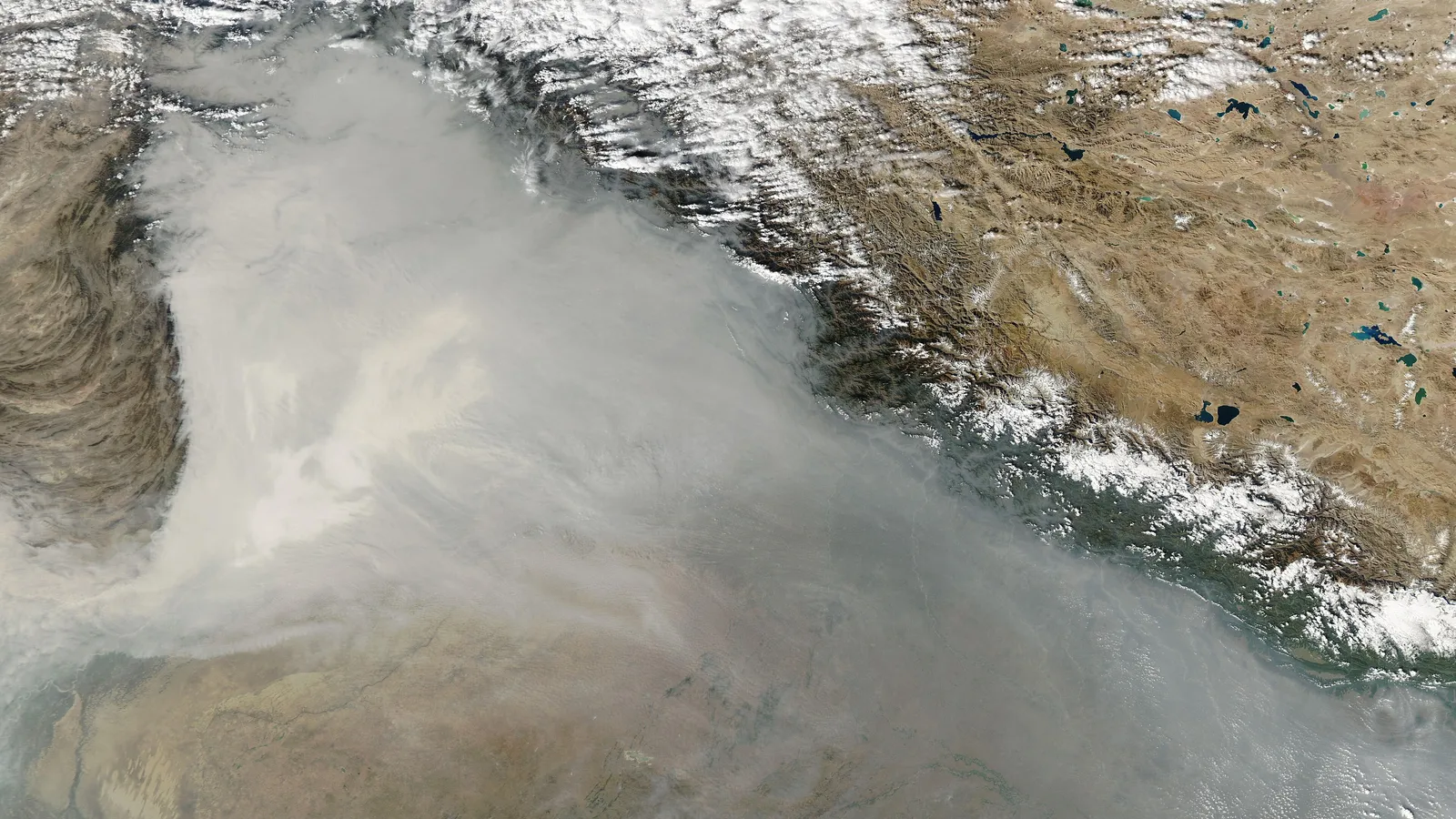
Air pollution is becoming a serious threat to Pakistan’s economy as well as its public health, with business and environmental experts putting its annual cost at about 6.5 per cent of GDP, The Express Tribune reported.
The Overseas Investors Chamber of Commerce and Industry (OICCI) said air pollution was one of the country’s most severe public health and economic challenges. It cited State of Global Air figures showing more than 248,000 premature deaths a year.
The numbers behind the estimate
- National average concentrations of fine particulate matter (PM2.5) rose by 7 per cent between 2013 and 2023, and ground-level ozone rose by 16 per cent between 2010 and 2020.
- 92 per cent of the population lives where PM2.5 exceeds the World Health Organization’s interim target of 35 micrograms per cubic metre, and the whole population lives in areas that breach national air quality standards.
- Children under five account for 18 per cent of air-pollution-related deaths.
- The cost, estimated at around 6.5 per cent of GDP, covers premature deaths, healthcare spending, lost productivity and the impact of lead exposure. The true burden could be higher because many pollution-related health cases go unreported.
- The World Bank estimates that environmental degradation, with air pollution its largest part, costs nearly 6 per cent of GDP a year. The University of Chicago’s Air Quality Life Index says air pollution cuts average life expectancy by 3.8 years, and by as much as seven years in the most polluted areas.
Pollution and investment
Net foreign direct investment fell 34 per cent to $1.64 billion in FY26, and total foreign investment, including portfolio flows, fell 74 per cent to $451 million. The State Bank of Pakistan has mainly blamed governance concerns and policy uncertainty for that weakness. Sajjeed Aslam, a partner at Sustainability LLC in the United States, said environmental conditions also influence investors. High pollution makes it harder for companies to persuade foreign staff to move to cities such as Lahore, he said, and recurring winter smog and the closures that come with it disrupt business. Funds with environmental mandates also check air quality when they decide where to put money.
Muhammad Toheed, acting director of the Karachi Urban Lab, said clean air was “an economic necessity”, not just an environmental demand. He warned against blaming vehicles alone: transport, power generation and industry burn fossil fuels, but household fuels, crop-residue burning, waste burning and industrial emissions also play a large part.
Where Lahore’s pollution comes from
In Lahore, vehicles account for 35 per cent of fine-particle pollution, heavy industry for 28 per cent and brick kilns for 17 per cent, and crop-residue burning adds to the load in winter, according to the figures cited. Experts said much of the country’s pollution comes from domestic sources, which makes targeted policy more likely to work.
They pointed to Beijing, which cut its annual average PM2.5 from 89.5 to 58 micrograms per cubic metre between 2013 and 2017. Studies attributed about 80 per cent of that improvement to emission reductions and not to favourable weather.
What is being done
A $300 million World Bank-backed Punjab Clean Air Programme aims to cut PM2.5 concentrations by 35 per cent over a decade, with measures including 600 electric buses and 5,000 super seeders to discourage the burning of crop residue. Experts called for Euro-5 fuel at all petrol pumps by 2027 and Euro-6 by 2030, mandatory continuous emissions monitoring at major industrial units and public disclosure of pollution data. The OICCI also called for stricter enforcement of industrial emission standards, faster adoption of cleaner transport and more help for private firms moving to sustainable production.
Why it matters
The figures link smog to jobs, investment and the budget, which gives the issue a stronger case for action beyond the winter season. Our recent reports show how acute the problem is right now: Lahore’s AQI passed 530 and Gujranwala hit 606, and Lahore topped the world’s pollution list again. The cost estimate was presented by business and environmental experts and the OICCI, and the 6.5 per cent figure includes lead exposure, so it covers more than air pollution alone. What to watch is whether the clean air programme meets its targets, whether the fuel-quality timetable holds, and whether data on pollution is made public.
Comments
Comments are reviewed by our editors before they appear. Please keep them civil and on topic. See our terms.
No comments yet. Be the first to share your view.