

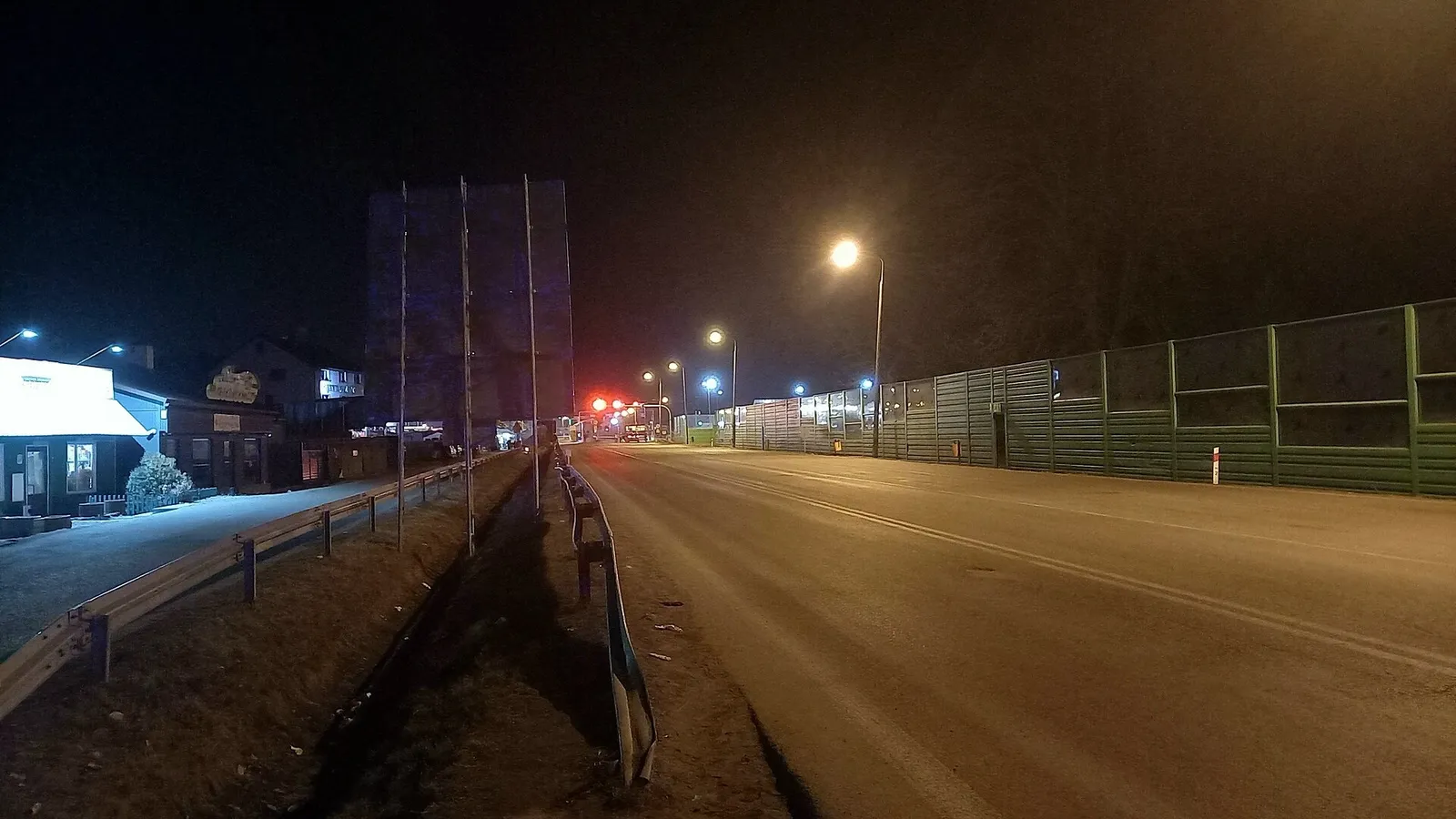
Three times in one day last week, phones in the Polish border village of Dorohusk lit up with the same warning: a drone or missile could cross from Ukraine, and residents should be ready to take cover.
Military helicopters rumbled overhead and vapour trails crossed the sky. Two kilometres away, traffic at the border crossing into Ukraine was suspended three times, and staff were evacuated once. Four and a half years into Russia’s war on Ukraine, the conflict has never felt closer for the people of eastern Poland, The Associated Press reported from the village.
‘The first time the sirens wailed’
The fear sharpened in the early hours of September 13, when two Russian drones exploded on the Ukrainian side of the Dorohusk-Yahodyn crossing. The blasts were clearly heard in the village.
“There is new restlessness and fear because you could hear those explosions very well on that night in our village,” said Mayor Wojciech Sawa. “We had never had something like that before. This was the first time the sirens wailed.”
Residents have lived in the shadow of the war for years. They watched Ukrainian refugees pour across the frontier in the first days of the 2022 invasion, and in July a Russian missile passed through eastern Polish airspace before crashing about 90 kilometres inside the country.
A warning from the prime minister
On September 17, Prime Minister Donald Tusk warned that Russia was planning “hybrid” strikes with drones or rockets on European countries that support Ukraine, including Poland, and that regions along the Ukrainian border would be especially vulnerable in the coming months. Other European leaders and intelligence services have issued similar warnings.
Defence Minister Wladyslaw Kosiniak-Kamysz visited the Dorohusk-Yahodyn crossing on September 22 and announced new air defences for the border region, adding that Patriot missile batteries had been deployed in the two Polish regions bordering Ukraine.
Lessons in the school basement
At the village school, the war is now part of daily life. Director Jaroslaw Wojcicki said staff, including the school psychologist, discuss safety with pupils “practically every day”. The school has already been evacuated once, with children sheltering in two basement rooms whose windows have been boarded up against flying glass.
“The older children had no problem at all,” he said. “You could see a little fear among the younger children, but they were well looked after by their teachers.”
Catching up on civil defence
Officials admit the country is only beginning to prepare. “We are at the beginning of the process of building civil resilience,” said Miroslaw Sokal, head of resident safety for the city of Lublin, 90 kilometres to the west. “We have to remember that over the past 40 years we thought we would be living in peace.”
His advice for an air threat is simple: go indoors and put two walls between yourself and any window. The mayor says most villagers live in houses with basements, and those without can shelter with neighbours.
But on the streets, confusion is common. Irena Popek, in her 80s, said her basement was flooded: “I simply have nowhere to hide, and that’s it.” Another resident, Krzysztof Rulka, said alerts about attacks somewhere in Ukraine came so often that people no longer knew what to do. “What am I supposed to do now? Run to Germany?” he said.
Why it matters
The fear in Dorohusk shows how Russia’s war is spreading anxiety beyond Ukraine’s borders and into NATO territory. A stray drone or a deliberate strike on European soil remains one of the most dangerous ways the conflict could widen, which is why Poland is rushing air defences to its eastern frontier. Across Europe, the war is reshaping old policies: in Switzerland, voters this weekend rejected a plan to bar sanctions without UN approval, a result seen as backing its sanctions on Russia. For the people living there, the question is no longer whether the war can reach them, but how ready they are when it does.
This article draws on reporting by The Associated Press.




Comments
Comments are reviewed by our editors before they appear. Please keep them civil and on topic. See our terms.
No comments yet. Be the first to share your view.