

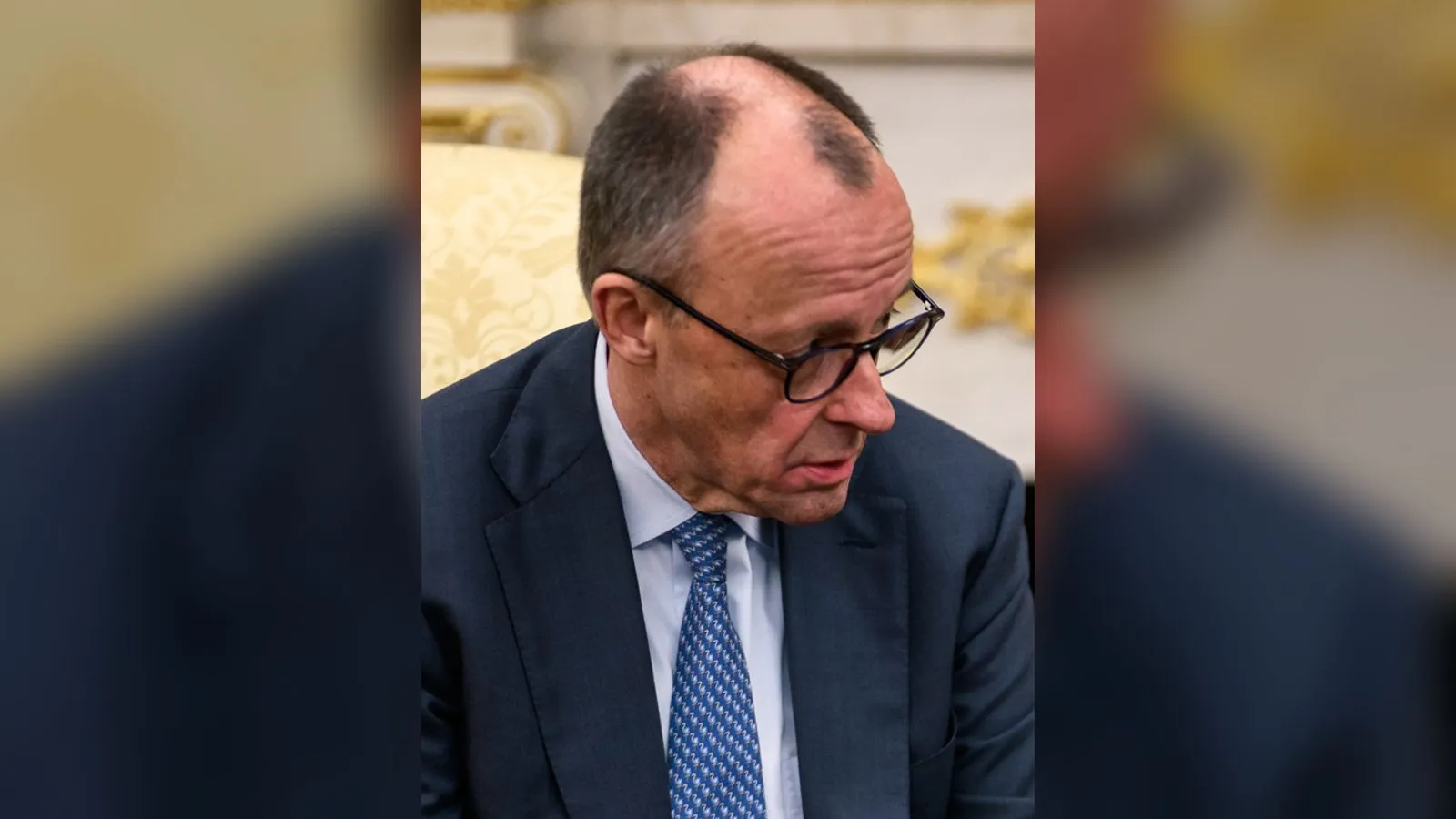
German Chancellor Friedrich Merz arrived in Kyiv on Sunday with the bosses of German defence companies, a day after Russia told diplomats and foreigners to leave the Ukrainian capital ahead of what it called “massive” new air attacks.
Merz will announce €1 billion in military aid and €350 million to repair Ukraine’s energy grid, German officials said, The Express Tribune reported, citing Reuters. The visit is also expected to finalise a deal to produce drones jointly.
“I travelled to Kyiv today because Ukraine needs all our support in the coming weeks,” Merz said. “If Russia is not stopped, sooner or later its war machine will turn against us.”
The drone deal
Merz is travelling with Economy Minister Katherina Reiche and executives from Siemens Energy, Hensoldt, Diehl Defence and Quantum Systems. The deal is expected to cover:
- Interceptors: fast production of drones that can shoot down Russia’s high-speed jet drones, which have been hitting Ukrainian targets daily since the summer
- Long-range weapons: joint development of weapons with a range of more than 1,000 kilometres that Ukraine could use deep inside Russia
- Software: missiles, drones and related software
In April, Quantum and Ukrainian manufacturer WIY Drones set up a joint venture, Quantum WIY Industries, to produce the Strila interceptor drone. German officials said the closer cooperation would also bring money and technology back to Germany, where defences against drones targeting critical infrastructure can be strengthened.
Merz is also expected to press Ukraine on reforms, including fighting corruption. On Thursday, he said Germany would not be intimidated by the rising number of Russian hybrid attacks on European countries.
Russia’s warning
On Saturday, Russia’s Foreign Ministry told diplomats and foreigners to leave Kyiv, warning that “individuals are knowingly exposing themselves to mortal danger”. It said responsibility for “any potential negative consequences rests entirely with those who ignore this warning”, Dawn reported.
The warning came hours after a Russian strike on Kyiv’s Northern Bridge wounded two people. Mayor Vitali Klitschko said the city was in a “very dramatic situation” and should be on a war footing, as Russia was “tearing Kyiv apart” with strikes on bridges and power plants.
A city under siege
- Air raid sirens sound almost round the clock for Kyiv’s estimated three million people
- Traffic chaos: long queues of cars and buses clogged roads, with some commuters forced to walk
- Power cuts hit several regions as colder weather arrives
- Black Sea: a Russian attack on a Liberian-flagged cargo ship in the Odesa region killed one person
Last winter, heating and power were cut for days as temperatures fell to -20C. Ukraine’s air defences have been stretched since the start of the Iran war.
Zelensky hits back
President Volodymyr Zelensky accused Russia of tearing up the rules of war with attacks on civilian areas, which the Kremlin denies. He said Ukraine would step up its attacks on Russian oil refineries in response.
US-brokered peace efforts are effectively frozen. The New York Times reported that talks have expanded to include a multibillion-dollar oil deal involving Russian energy group Lukoil.
Why it matters
With Russia threatening Kyiv and NATO, and Europe stepping up arms production, the war in Ukraine is entering another dangerous winter. Read our report on Russia’s nuclear warning to NATO.
This article draws on reporting by The Express Tribune, Dawn, Reuters and AFP.
Comments
Comments are reviewed by our editors before they appear. Please keep them civil and on topic. See our terms.
No comments yet. Be the first to share your view.