

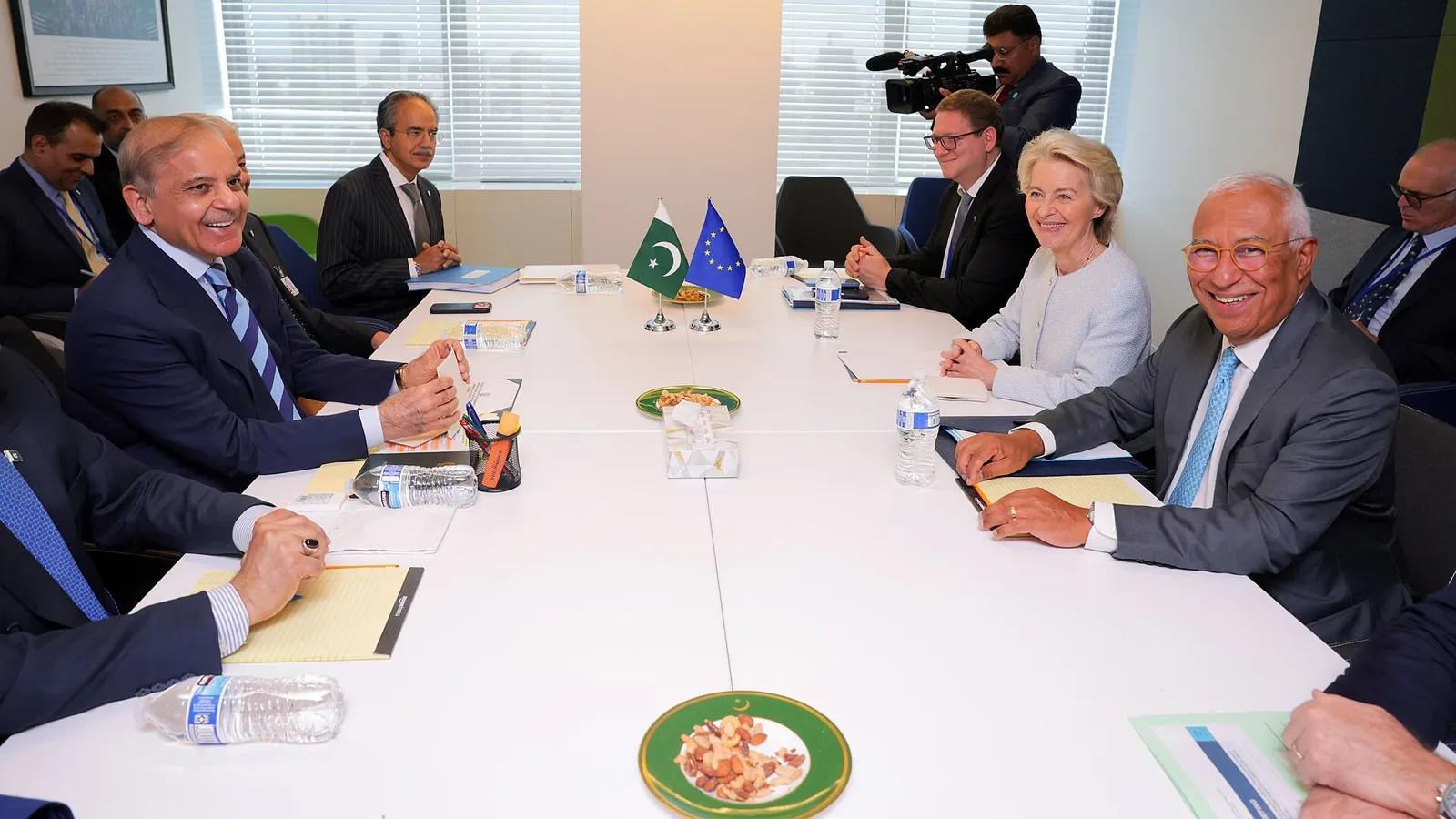
Prime Minister Shehbaz Sharif used Pakistan’s address to the 81st session of the United Nations General Assembly to call for the world’s key shipping routes to stay open, to defend the new Makkah defence alliance, and to warn India that any attempt to cut off Pakistan’s share of the Indus waters would be treated as an act of war.
The speech in New York came during one of the most tense General Assembly sessions in years, with war in the Gulf, Houthi attacks on Saudi Arabia and sharp exchanges over the Middle East dominating the week.
‘Arteries of the global economy’
At the heart of the prime minister’s message was the safety of two maritime chokepoints: the Strait of Hormuz, gateway to the Gulf’s oil, and Bab al-Mandab, the passage between the Red Sea and the Gulf of Aden.
“The Strait of Hormuz and Bab al-Mandab are arteries of the global economy,” he said. “They must remain open, connecting nations, not becoming choke points of confrontation.”
For Pakistan, the issue is not abstract. The country imports around 70 per cent of its oil and gas, and disruption to Gulf shipping feeds directly into fuel prices and inflation at home, as analysts have warned this month. Noting what he called a “dangerous surge” in hostilities, the prime minister said that amid the roar of missiles, drones and guns, “the voice for diplomacy must echo even louder and stronger”.
Solidarity with Saudi Arabia
The prime minister condemned what he called “deplorable” Houthi attacks on Saudi Arabia, saying the interception of a Yemeni drone over the holy city of Makkah had “outraged Muslims across the globe”, and expressed Pakistan’s complete solidarity with the Saudi people.
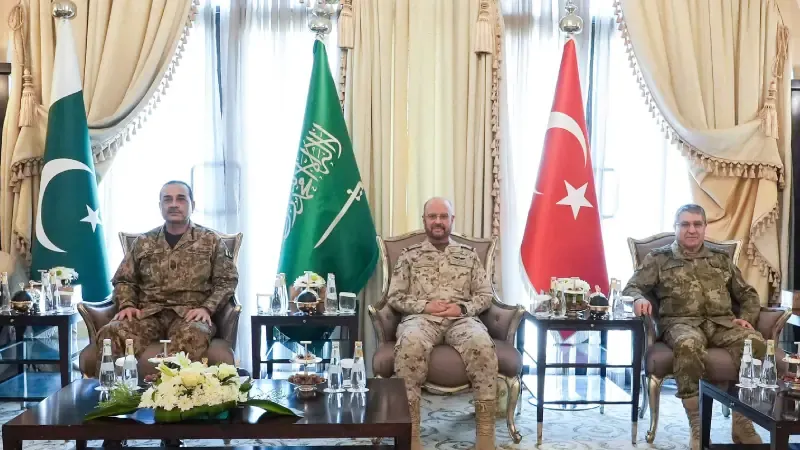
He also addressed the Makkah Joint Defence Agreement signed by Pakistan, Saudi Arabia and Türkiye in August, and sought to reassure the wider world about its purpose.
“This alliance is not directed against any country,” he said. “It is a collective commitment for defence, stability and peace in the region and nothing more.”
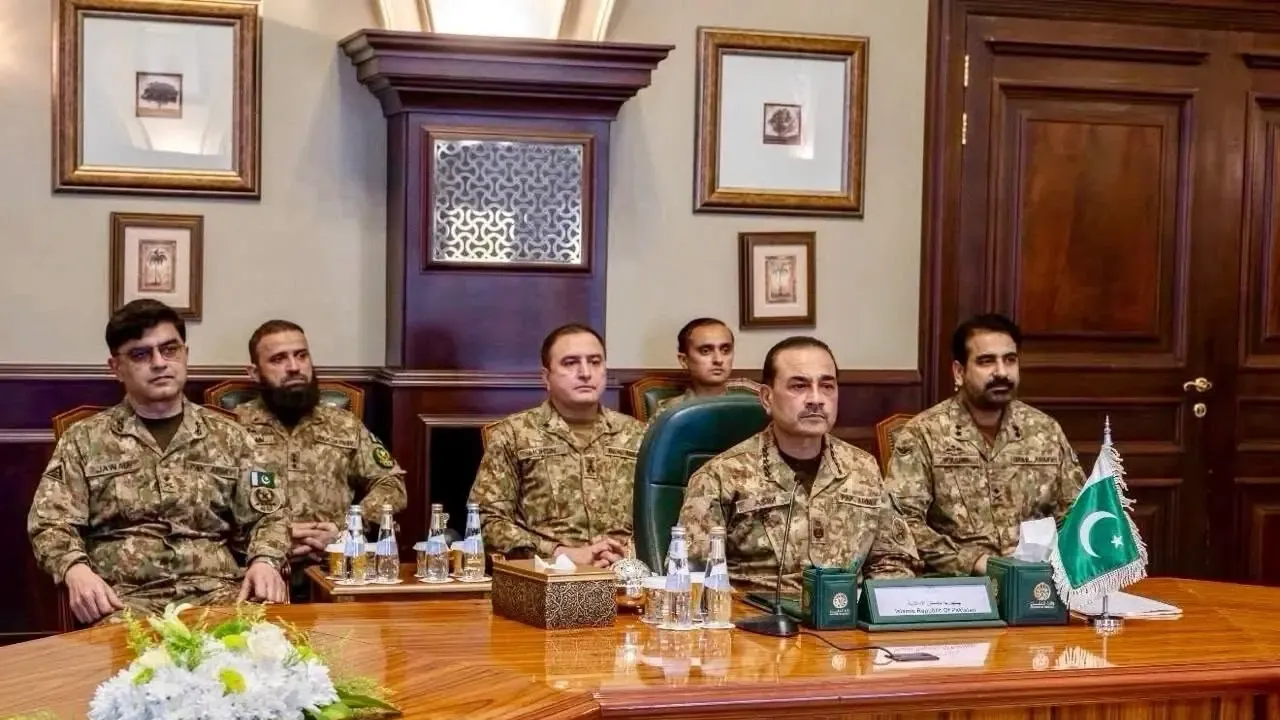
The message matters because the pact is moving quickly from promises to practical planning. On the same day as the speech, the three countries’ military chiefs met in Riyadh and pledged to begin military cooperation “immediately”, as our analysis explains.
A clear warning on water
The prime minister’s firmest words were reserved for India. He told the Assembly that any attempt by India to stop, impede or divert Pakistan’s share of water would be treated as an “act of war”.
He said India’s decision to hold the Indus Waters Treaty “in abeyance” had no legal basis, and that India’s position had been rejected by UN experts and by the Permanent Court of Arbitration. The treaty, brokered by the World Bank in 1960, has survived several wars and governs the rivers on which Pakistan’s agriculture, and much of its economy, depends.
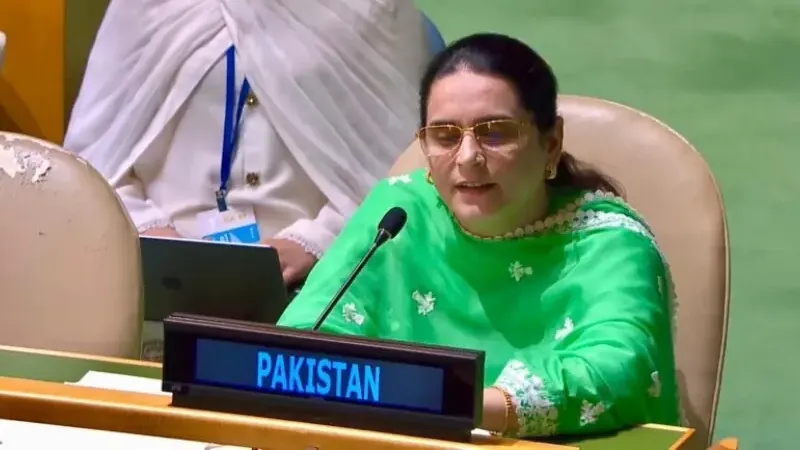
Pakistan’s delegation followed up the next day, using its right of reply to accuse India of “weaponising water” and sponsoring terrorism, as we reported.
UN chief praises Pakistan’s role
On the sidelines of the Assembly, the prime minister also met UN Secretary General António Guterres. According to the Prime Minister’s Office, Guterres commended Pakistan’s “leading role and strong voice at the UN”, its contribution to international peace and security, and in particular its mediation efforts to help resolve the conflict in the region.
The two leaders discussed the Middle East and Afghanistan, and Shehbaz reaffirmed Pakistan’s commitment to multilateralism and to the central role of the UN, a theme Pakistan has pressed throughout the session, including at the Security Council’s debate on artificial intelligence.
Why it matters
Pakistan came to this year’s General Assembly as an elected member of the Security Council and as a country playing an active diplomatic role in the Gulf. The prime minister’s speech set out three priorities clearly: keeping global trade routes open, standing with Saudi Arabia without escalating the region’s conflicts, and defending Pakistan’s water rights under international law. On each, Pakistan chose to make its case at the United Nations, a reminder of how central the UN remains to the way Islamabad pursues its interests.
This article draws on reporting published by Dawn and statements from the Prime Minister’s Office.
Comments
Comments are reviewed by our editors before they appear. Please keep them civil and on topic. See our terms.
No comments yet. Be the first to share your view.