

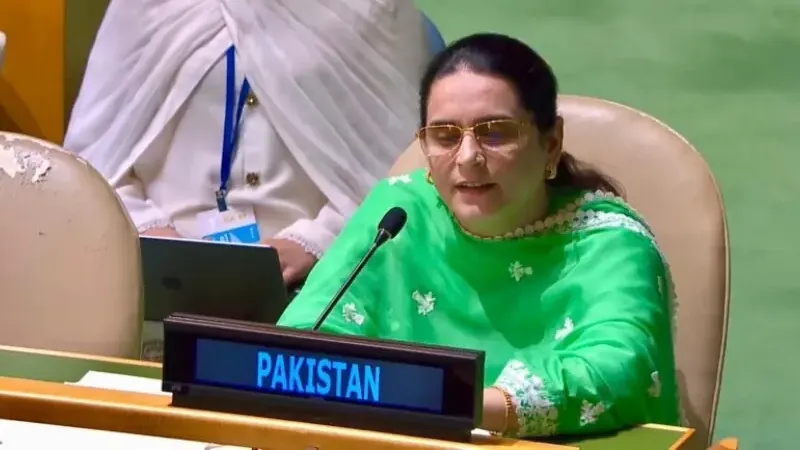
Pakistan has accused India of turning propaganda into statecraft and using terrorism “as an instrument of policy”, in a sharply worded reply at the UN General Assembly in New York on Saturday.
Pakistan’s Counsellor Saima Saleem was responding to remarks made by India’s representative during the general debate of the Assembly’s 81st session. India’s remarks were not set out in detail in the reports of the exchange. Such replies are a routine but often heated feature of the annual debate, with both countries regularly using their right of reply to answer each other.
‘Exports terrorism, imports sympathy’
Saleem described India as a state that had “elevated propaganda into statecraft, embraced disinformation as diplomacy” and “exports terrorism as an instrument of policy”. She said India “exports terrorism and violence while trying to import victimhood and sympathy”.
She said Pakistan had lost nearly 100,000 lives to terrorism since the turn of the century, with generations scarred and billions of dollars drained from the economy, and that its counter-terrorism sacrifices had been recognised internationally.
Pakistan, she said, had presented the international community with extensive evidence of Indian financing and support for militant groups targeting Pakistanis, including the Tehreek-i-Taliban Pakistan (TTP), the Balochistan Liberation Army (BLA) and the Majeed Brigade. She added that Pakistan was still waiting for India to unequivocally condemn attacks that kill Pakistani civilians.
Arguing that India’s “terrorist exports have gone from regional to global”, she cited Kulbhushan Jadhav, the former Indian naval officer convicted in Pakistan of terrorism and espionage, and Nikhil Gupta, who pleaded guilty in the United States over a plot to kill a Sikh leader that US prosecutors alleged was directed by an Indian government official. She also referred to others implicated in killings in Canada.
India has consistently rejected Pakistan’s allegations of sponsoring terrorism.
Kashmir
On Kashmir, Saleem said Jammu and Kashmir “never was, neither is, nor will ever be an integral part of India”, describing it as an internationally recognised disputed territory under Indian occupation for nearly eight decades in violation of UN Security Council resolutions.
She contrasted Azad Jammu and Kashmir, where she said Kashmiris enjoy political rights and freedom of expression, with Indian-administered Kashmir, where she said people have endured repression and denial of their right to self-determination. “Rights exercised cannot be equated with rights denied,” she said.
Minorities and ‘Hindutva’
The counsellor accused India’s ruling BJP and its ideological parent, the RSS, of institutionalising Hindutva ideology in state policy. She said Muslims were demonised, Christians persecuted, Dalits dehumanised and Sikhs disenfranchised, calling it “the largest hypocrisy in the world”, and pointed to past violence against Muslims in Gujarat and Delhi and to discriminatory citizenship laws.
Water as a weapon
On the Indus Waters Treaty, Saleem said that by holding the treaty “in abeyance” and disregarding its legal obligations, India had “stooped to a new low of weaponising water”, a lifeline, she said, for Pakistan’s 240 million people.
She also referred to the military conflict between the two countries in May 2025, which Pakistan calls Marka-i-Haq, saying India had lost credibility internationally.
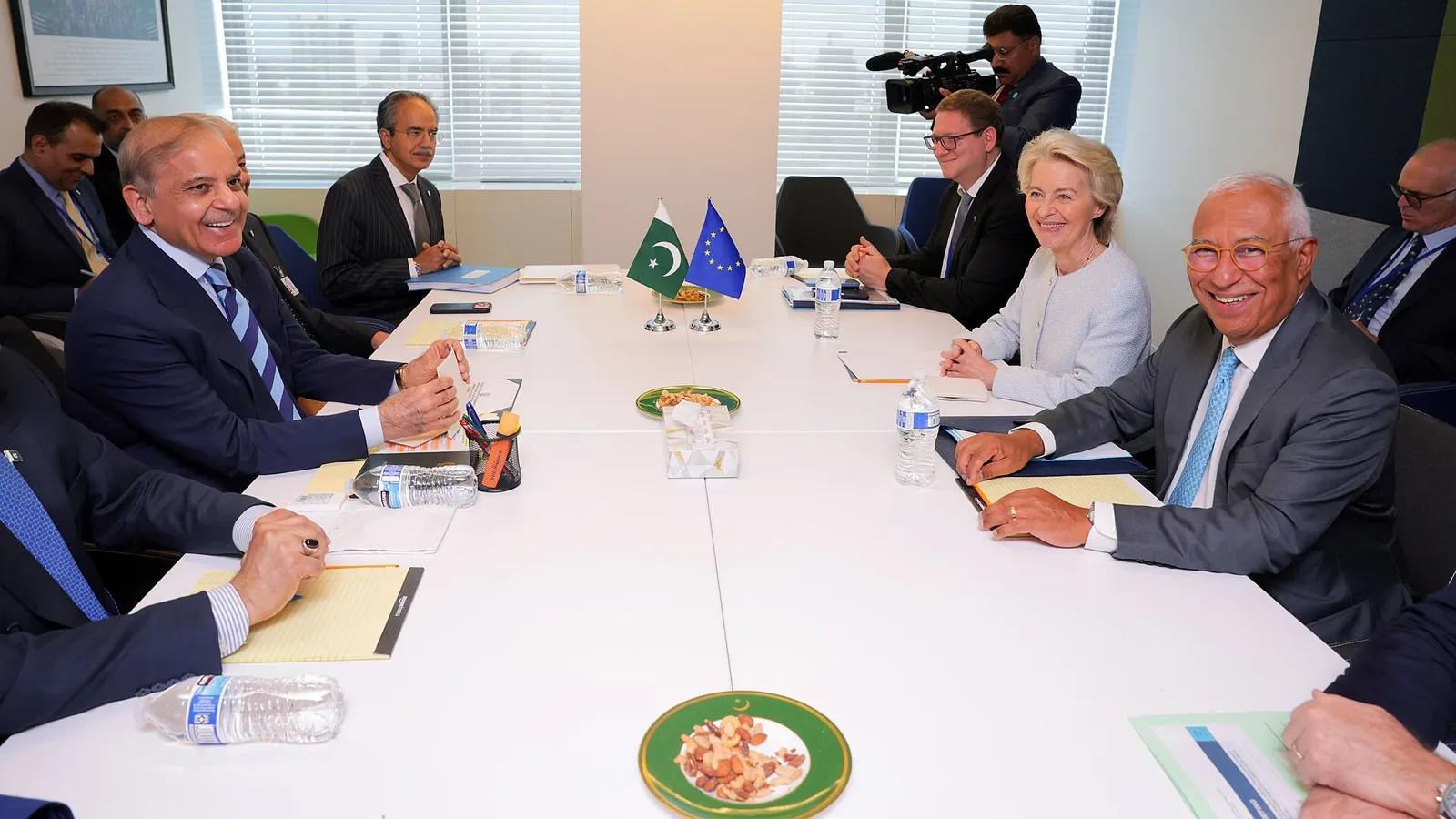
The day before, Prime Minister Shehbaz Sharif had warned the Assembly that Pakistan would regard any Indian move to block, obstruct or redirect its share of the Indus waters as an “act of war”. He said India’s decision to hold the treaty in abeyance had no legal basis and that its position had been rejected by UN experts and the Permanent Court of Arbitration.
Peace, with a warning
Saleem closed by saying Pakistan remained committed to peace, dialogue and the peaceful settlement of disputes, and saw itself as a peacemaker and mediator. “We will defend ourselves whenever aggression is imposed upon us,” she said, “but we will never abandon the path to peace.”
Why it matters
The exchange shows how far relations between the two nuclear-armed neighbours have deteriorated since the May 2025 conflict. The water dispute in particular raises the stakes: the Indus Waters Treaty has survived wars since 1960, and Pakistan’s warning that interference with its share of water would be an “act of war” makes the issue one of the most sensitive in the region.
This article draws on reporting published by Dawn and statements from Pakistan’s Permanent Mission to the UN.
Comments
Comments are reviewed by our editors before they appear. Please keep them civil and on topic. See our terms.
No comments yet. Be the first to share your view.