

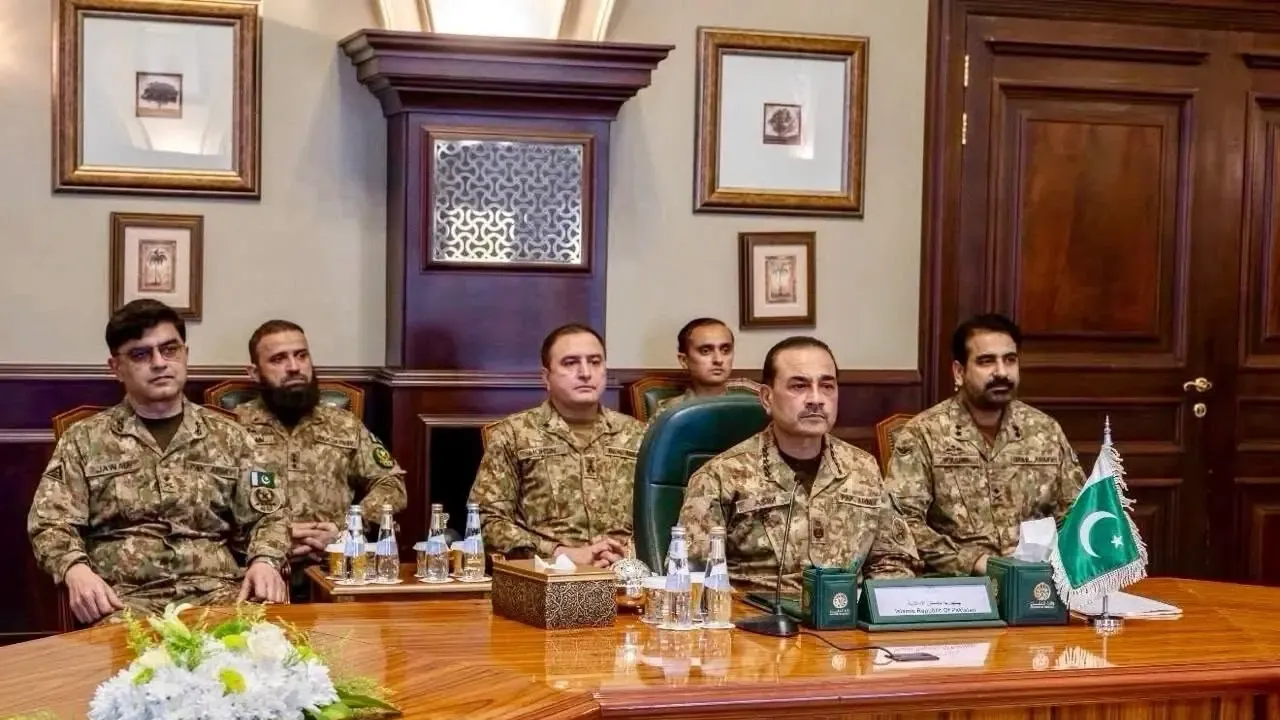
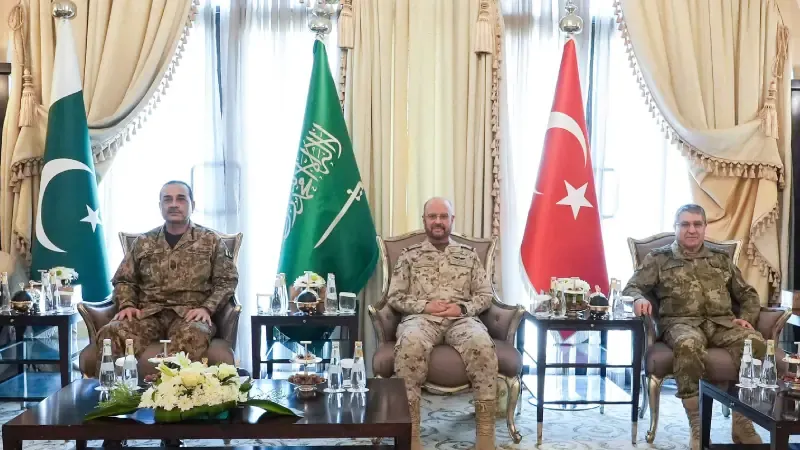
A hastily arranged meeting of the military chiefs of Pakistan, Saudi Arabia and Türkiye in Riyadh on Friday, followed by separate talks between Pakistan’s Chief of Defence Forces and Chief of Army Staff, Field Marshal Asim Munir, and Saudi Defence Minister Prince Khalid bin Salman, suggests the Makkah Joint Defence Agreement is moving quickly from political pledges to practical military planning.
Two statements issued in the early hours of Saturday stop short of announcing any joint strikes or ground operations against Yemen’s Houthi movement, formally known as Ansar Allah. But they signal a clear shift in tone from just two weeks ago.
A change in language
When the agreement was signed in Makkah on August 7, its central promise was political: an attack on one member would be treated as an attack on all. As recently as two weeks ago, Pakistan’s Foreign Office described the pact as a defensive alliance still being institutionalised, and said there had been no discussion of Pakistani participation in strikes on Houthi targets in Yemen.
Friday’s trilateral statement goes considerably further. The three chiefs said they had discussed strengthening “intelligence cooperation, military coordination, and capability integration”, and expressed their “shared determination to immediately begin translating the commitments” of the agreement “into effective military cooperation”.
The words “immediately” and “effective military cooperation” point to the three militaries now working out how their forces can operate together, not merely restating a principle.
Why now
The acceleration follows repeated missile and drone attacks on Saudi Arabia from Yemen, including strikes threatening civilian and economic infrastructure and, most seriously in Riyadh’s eyes, one said to have been directed towards the vicinity of Makkah.
Notably, the trilateral statement condemned the attacks and praised the Saudi armed forces for their “vigilance and professionalism”, but made no mention of retaliation, offensive operations or strikes. It did not name the Houthis, Ansar Allah or Yemen at all.
What ‘capability integration’ could mean
The emphasis on intelligence, coordination and integration points first to strengthening Saudi Arabia’s ability to detect, intercept and deter attacks. In practice, that could involve:
- Closer intelligence sharing and early-warning arrangements
- Technical personnel and air-defence specialists
- Sensors, electronic warfare capabilities and other equipment added to Saudi Arabia’s existing defences
- Liaison officers and a joint planning cell to coordinate responses
“Capability integration” is the most significant phrase. The three countries could cooperate while keeping entirely separate systems, but integrating capabilities would require far closer planning and command-and-control arrangements. That is a challenge in itself: Pakistan and Türkiye have different equipment and military systems from Saudi Arabia, and each country’s contribution will need to be defined.
Türkiye has already signalled readiness to meet Saudi requirements, particularly on technical matters. Pakistan has long-standing military ties with Saudi Arabia and personnel already serving in the kingdom, an established channel for any additional support.
The Pakistan–Saudi bilateral track
The separate meeting between Field Marshal Munir and Prince Khalid bin Salman, the only publicly known bilateral meeting the Saudi defence minister held with a member of the alliance, added another layer. According to the Saudi statement, the two sides discussed how to respond to attacks on the vicinity of Makkah and on civilian and economic facilities, and stressed continuing “joint efforts to confront these attacks”.
That language is more urgent than the trilateral statement. One reason is that Pakistan and Saudi Arabia already have a mature bilateral security relationship, including the 2025 Strategic Mutual Defence Agreement, under which aggression against one is regarded as aggression against both.
The make-up of the delegations was also telling. The Saudi side included the national security adviser and the defence minister’s adviser for intelligence affairs, while Field Marshal Munir was accompanied by the Director General of Military Operations. That suggests the talks ranged beyond a routine follow-up.
Not yet a declaration of war
It would be premature to read the Riyadh meetings as preparation for Pakistani or Turkish involvement in offensive operations in Yemen. No such decision has been announced, and the statements remain focused on defending Saudi Arabia’s security, sovereignty and territory, wording that allows Pakistan and Türkiye to strengthen Saudi defences without committing to a wider war.
But the building blocks of defence (shared intelligence, a common picture of threats and coordinated forces) are also the building blocks of any future offensive response. For now, that remains a possibility rather than a policy.
What to watch
The likely next steps are intelligence and threat assessments, identification of Saudi requirements, and the integration of additional capabilities, with possible deployment of personnel or equipment later. How far it goes will depend on the scale and persistence of the Houthi attacks, and, crucially, on what Riyadh asks its partners to do.
This article draws on analysis and reporting published by Dawn, and official statements from the Saudi government.

Comments
Comments are reviewed by our editors before they appear. Please keep them civil and on topic. See our terms.
No comments yet. Be the first to share your view.