

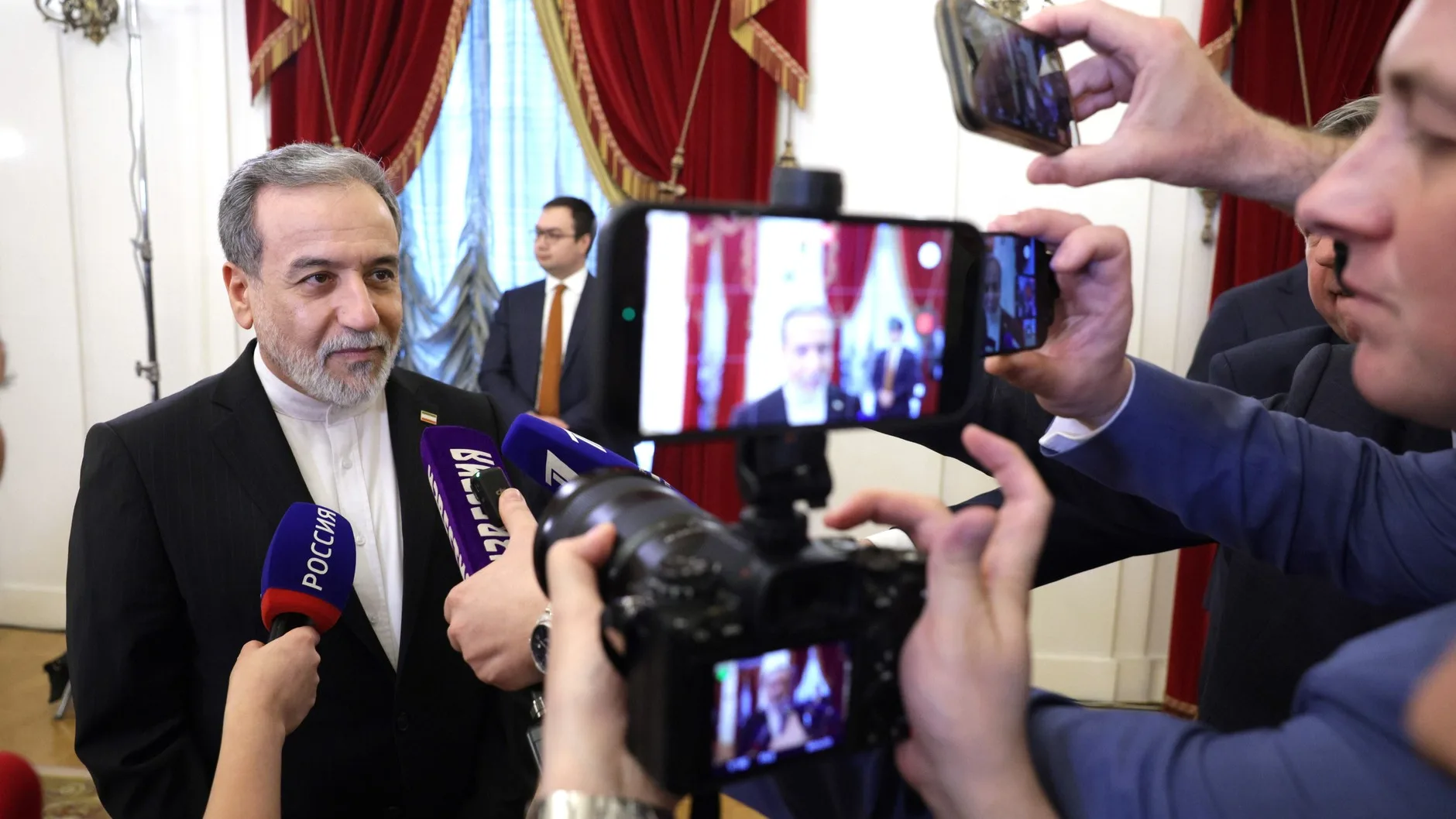
Iranian Foreign Minister Abbas Araghchi has said that negotiations with the United States are continuing “without interruption” through mediators such as Pakistan and Qatar, the Iranian news agency IRNA reported on Wednesday, according to The Express Tribune.
Araghchi made the remarks to Iraqi media, according to Iranian reports. Tehran has said it will not hold direct talks with Washington while it is under threat.
What Tehran told Field Marshal Munir
The comments follow a visit to Tehran by Chief of Defence Forces and Army Chief Field Marshal Syed Asim Munir, who was accompanied by Interior Minister Mohsin Naqvi. It was his fifth visit to Iran in recent months. He met President Masoud Pezeshkian, Parliament Speaker Mohammad Bagher Ghalibaf, Araghchi and General Mohsen Rezaei, the representative of Iran’s Supreme Leader and secretary of the Supreme National Security Council.
Iranian readouts, quoted by the Tribune, set out Tehran’s positions:
- Enriched material: Rezaei said “not even a single particle of enriched nuclear material will leave the country”, describing it as a national asset for domestic use. He said Iran would not enter negotiations until Washington took steps to restore trust by meeting Iran’s conditions.
- No new offer: Ghalibaf said Tehran had “nothing new to say” to Washington and that the US could not regain Iran’s trust without meeting the seven conditions Iran presented in New York. He accused the Trump administration of violating what Tehran calls the “Islamabad understanding” and said later US threats had deepened distrust. “Threats and military manoeuvres cannot influence the strategic decisions of the Islamic Republic of Iran,” he said.
- Thanks and conditions: Pezeshkian thanked Munir and the Pakistani government for their efforts, but said pressure, threats and sanctions would have to be removed before negotiations could resume.
The readouts also said Munir received what was described as a “clear, serious and explicit” Iranian response to a message from the Americans. Neither the message nor the reply has been disclosed. The Pakistani side had issued no official statement when the Tribune filed its report, but an official familiar with the visit said the talks went “very well”.
Border reopened
During the visit, the Pakistan-Iran border was reopened. Iranian readouts quoted Munir as telling Rezaei that the issues concerning the border “have been resolved” and that it had reopened that morning. He described the earlier border problems to Ghalibaf as “temporary and technical”. The reopening matters for trade and for communities along the long frontier.
Hormuz and Washington’s position
Iran’s Revolutionary Guard Corps (IRGC) deputy commander, Major General Mostafa Izadi, claimed on Tuesday that Iran’s armed forces control the battlefield in the Strait of Hormuz and will do so for as long as Tehran wishes. He also claimed that American forces had moved about 700 kilometres away to avoid IRGC missiles. These are Iranian claims, and they have not been independently verified.
US Secretary of State Marco Rubio said Washington was engaging with several countries about possible negotiations with Iran, but that any agreement must prevent Tehran from getting a nuclear weapon, Al Jazeera reported. Speaking in India, he also said it was “very difficult to make a deal with” Tehran.
Pakistan’s balancing act
Munir’s latest trip differed from earlier ones, which were mainly about easing tensions between Iran and the United States. This time it took place as Yemen’s Iran-aligned Houthis repeatedly attacked Saudi energy and airport infrastructure. Pakistan has pledged to defend Saudi Arabia under the Makkah Joint Defence Agreement, while it keeps close contact with Tehran and tries to revive the stalled Iran-US diplomacy, the Tribune noted.
Araghchi said on Tuesday that Iran had received no reply from Saudi Arabia or the Houthis to its offer to help broker talks to end the fighting between them. “Any foreign intervention would complicate matters,” he said, when asked about Egypt possibly joining Saudi Arabia against the Houthis. Egypt’s parliament has delayed a vote on possible military action until October 26.
Separately, Iraq has closed the Sheeb border crossing with Iran to review security and install detection equipment, an Iraqi border official told Reuters.
Why it matters
Both sides say talks are alive, yet their public positions remain far apart: Tehran demands that sanctions and the US blockade end first, while Washington wants the nuclear question settled. Pakistan remains one of the few channels both can use. Read our report on Field Marshal Munir’s arrival in Tehran.
This article draws on reporting by The Express Tribune, IRNA, Al Jazeera and Reuters.
Comments
Comments are reviewed by our editors before they appear. Please keep them civil and on topic. See our terms.
No comments yet. Be the first to share your view.