

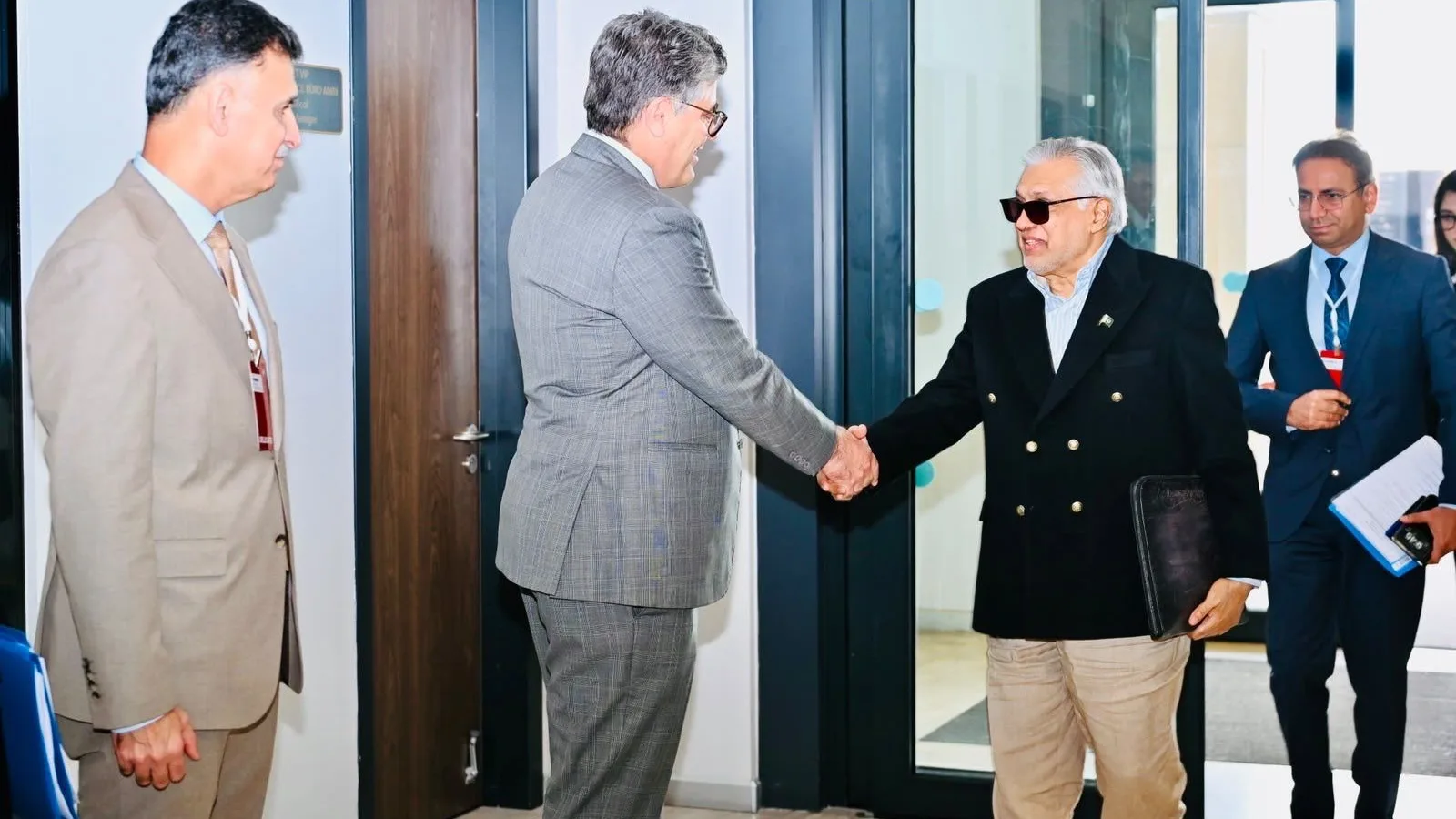
Deputy Prime Minister and Foreign Minister Ishaq Dar has arrived in Istanbul for a meeting of the R4 group of foreign ministers, to be followed by the first meeting of the seven countries in the expanded R4+E3 format, the Foreign Office (FO) said on Friday, according to Dawn and The Express Tribune.
Dar was received at the airport by Cihad Erginay, a director general at the Turkish foreign ministry, along with Pakistan’s chargé d’affaires and consular officials. He is attending at the invitation of Turkish Foreign Minister Hakan Fidan.
Who is meeting
The R4 group is made up of Pakistan, Egypt, Saudi Arabia and Turkey. It emerged in March and has focused on regional security and on mediation between the United States and Iran, Dawn reported. The E3 is a European grouping of France, Britain and Germany, set up more than 20 years ago to coordinate diplomacy on Iran’s nuclear programme.
“This will be the first meeting of the seven countries in this format,” the FO said in a statement. The ministers expected in Istanbul include Germany’s Johann Wadephul, Britain’s Ed Miliband, France’s Jean-Noel Barrot, Egypt’s Badr Abdelatty and Saudi Arabia’s Faisal bin Farhan, besides Fidan and Dar, The Express Tribune reported.
The FO said the meetings would “focus on key regional developments and explore coordinated diplomatic approaches to address shared challenges and advance regional peace and stability”. Dar is also due to hold bilateral meetings with his counterparts. “Pakistan’s participation reflects its continued commitment to constructive diplomacy, regional cooperation and the peaceful resolution of disputes,” the FO added.
What is on the table
A Turkish diplomatic source told Reuters that Ankara took the initiative for the meeting as wars involving Iran, Yemen and Ukraine threaten shipping routes and regional security. The ministers are expected to discuss:
- the Israeli-Palestinian issue;
- the latest situation in the Strait of Hormuz;
- developments in Yemen, where Houthi attacks on Saudi Arabia have escalated;
- efforts to end the Russia-Ukraine war; and
- ways for the regional and European countries to cooperate more closely.
Fidan is expected to argue that regional security cannot be achieved through military means alone, that disputes must be settled through dialogue, and that both the Strait of Hormuz and the Bab el-Mandeb must stay open, the sources said. He is also expected to repeat Turkey’s support for Saudi Arabia’s security against Houthi attacks under the Makkah Joint Defence Agreement, which Pakistan, Turkey and Saudi Arabia signed on August 7. The pact treats an attack on one member as an attack on all of them.
A rare forum
The Tribune noted that the line-up is itself significant: four major Muslim-world powers sitting with Europe’s three most influential diplomatic players, on conflicts that affect both sides. The Iran-US confrontation has put Hormuz at the centre of international security concerns, the Houthi strikes on Saudi Arabia have added a dangerous new front, and the security of the Bab el-Mandeb and other sea routes is a worry for global trade and energy supplies.
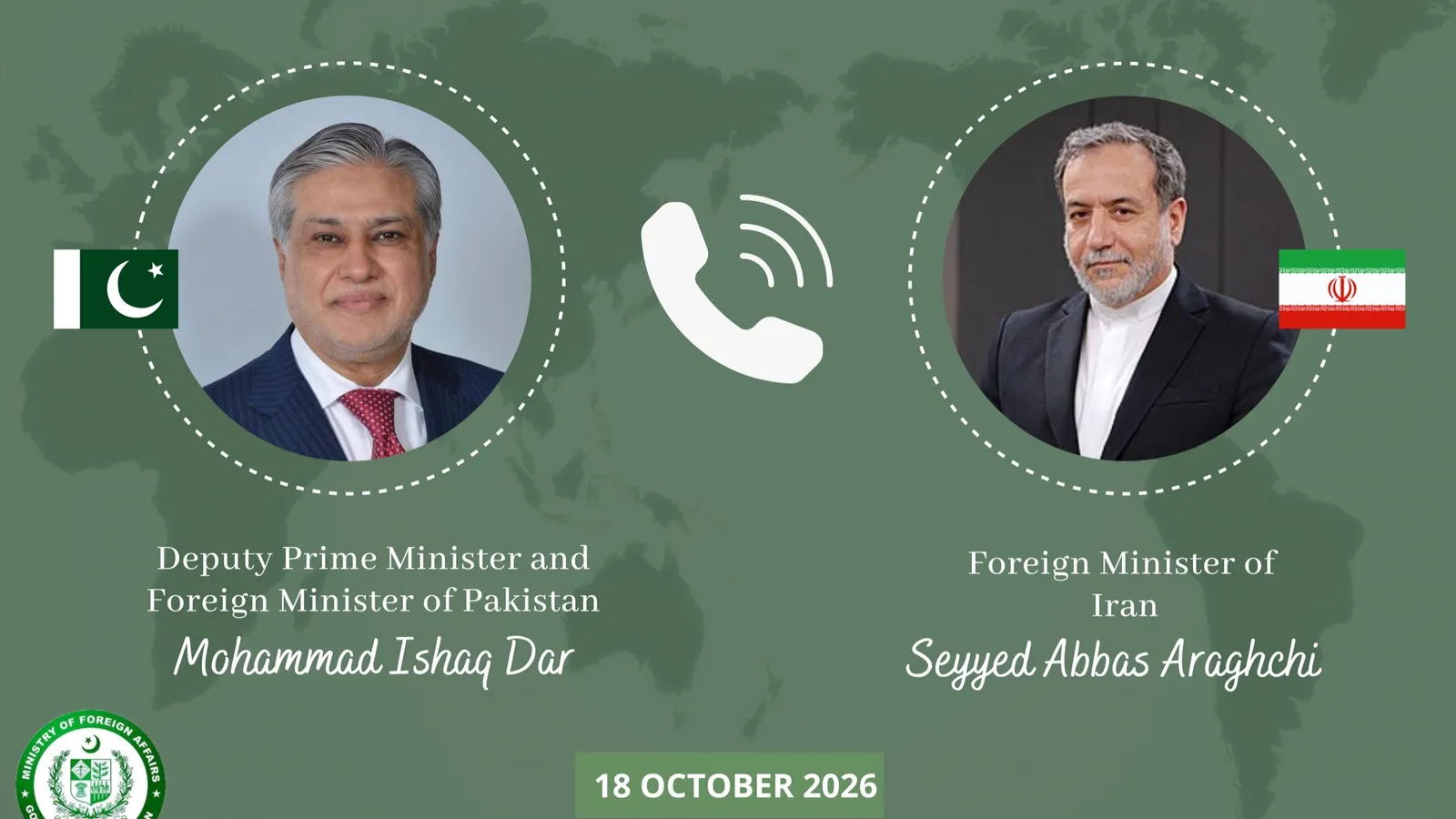
Pakistan has played a central role in efforts to ease the US-Iran confrontation. Field Marshal Asim Munir visited Tehran earlier this week, and Iran’s foreign minister said on Wednesday that talks with Washington are continuing through mediators including Pakistan and Qatar. Read our reports on Iran’s account of the talks and on Turkey’s plan to seek a mandate for personnel in Saudi Arabia.
Why it matters
The meeting brings the countries that are trying to mediate and defend Saudi Arabia into one room with the three European states that have long handled the Iran file. Whether it produces a shared position on Hormuz and Yemen, or only a list of concerns, will show how far regional and European diplomacy can move together while the fighting continues. For Pakistan, which is balancing its defence commitment to Riyadh with its mediation role between Tehran and Washington, the Istanbul talks are a test of how much influence that dual position carries.
This article draws on reporting by Dawn, The Express Tribune and Geo News.
Comments
Comments are reviewed by our editors before they appear. Please keep them civil and on topic. See our terms.
No comments yet. Be the first to share your view.