

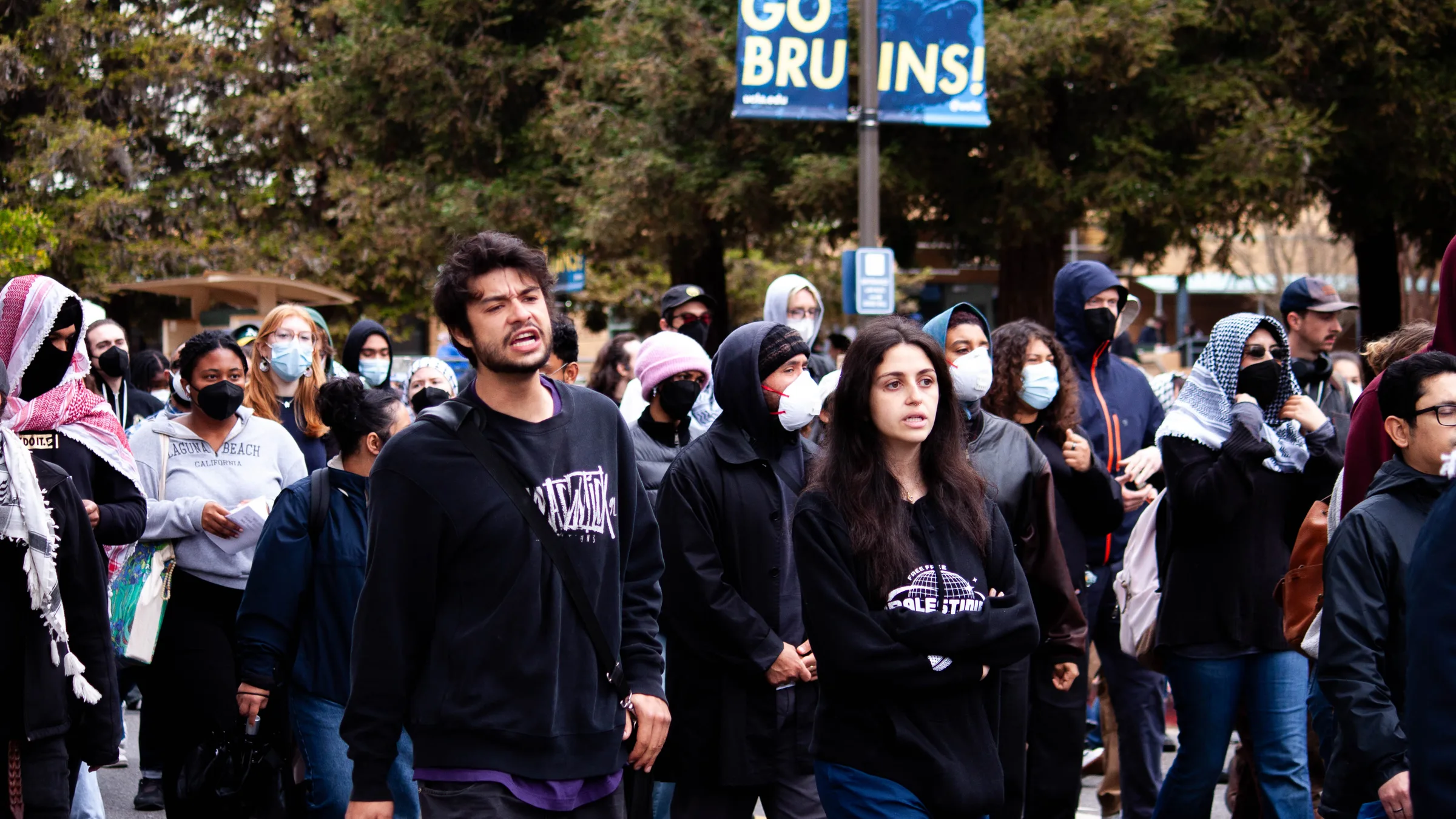
Mahmoud Khalil, who became the face of resistance to President Donald Trump’s crackdown on pro-Palestinian student activism, says the movement has succeeded by changing how Americans see Palestinians. “The American public is finally changing, is finally looking at the Palestinian as an equal human,” the 31-year-old said in an interview a week before the US midterm elections, Dawn reported, citing AFP.
From Columbia to detention
Khalil helped lead demonstrations at Columbia University in New York, the centre of the protests against the war in Gaza that swept American campuses in 2024. He is a permanent US resident who was born in a Palestinian refugee camp in Syria. Immigration authorities detained him and held him for three months without a criminal charge, so he missed the birth of his first child. He recounts the experience in his memoir, “No Land to Stand On: Notes from Detention”.
He described a Louisiana jail where he faced constant fluorescent light, cold and poor food, and likened the conditions to torture. “I never imagined that such cruelty is happening on US soil,” he said of the deportation drive run by Immigration and Customs Enforcement (ICE). “I came to a country that supposedly champions liberty, justice, rule of law, only to be shocked when I entered these detention centers that all my rights were left outside.”
“I was doing something right”
Khalil said the administration wanted to make an example of him. The president celebrated his arrest on social media, saying it was the first of many to come. “It was clear to me that this administration just wanted to make an example out of me, so people wouldn’t speak out for Palestine,” he said. He added that the fact that the president “came after me, a random student, means that I was doing something right.”
The administration’s position is different. The Trump administration says it is fighting anti-Semitism and illegal immigration, and it has used both arguments to justify measures ranging from detentions of activists to cutting funding for elite universities where pro-Palestinian protests took place. Khalil said that strategy had backfired.
Signs of change he points to
AFP notes that polls show historic growth in American support for Palestinians, and Khalil named candidates as further evidence. He mentioned Abdul El-Sayed, a Muslim running for the US Senate in Michigan, and New York Mayor Zohran Mamdani, who was elected last year. Both are critics of Israel, which marks a departure from the traditional defence of the US ally by both Republicans and Democrats. “This gives me hope,” Khalil said in his New York apartment. “We can see on the ground that we have more progressive candidates being elected into Congress and positions of power.”
He has been free for well over a year, but the Trump administration is still pushing for his deportation while he raises his son, now 18 months old, in New York with his wife. He called the emotional cost hard to bear.
Why it matters
The interview came as Israel held its own election this week, which left Prime Minister Benjamin Netanyahu’s bloc ahead but short of a majority; see our report on the Israeli election deadlock and the Arab parties’ gains. In the United States, the midterms on November 3 will test Khalil’s argument. A handful of candidates is not a shift in policy, and the interview does not show that American support for Israel in Congress has weakened. Still, polls cited in the report point to a more sympathetic public than at the start of the Gaza war, and the Palestinian cause now has a place in electoral politics that it did not have a few years ago. The next thing to watch is how the candidates he named fare, and whether his own deportation case moves.
This article draws on reporting by Dawn and AFP.
Comments
Comments are reviewed by our editors before they appear. Please keep them civil and on topic. See our terms.
No comments yet. Be the first to share your view.