

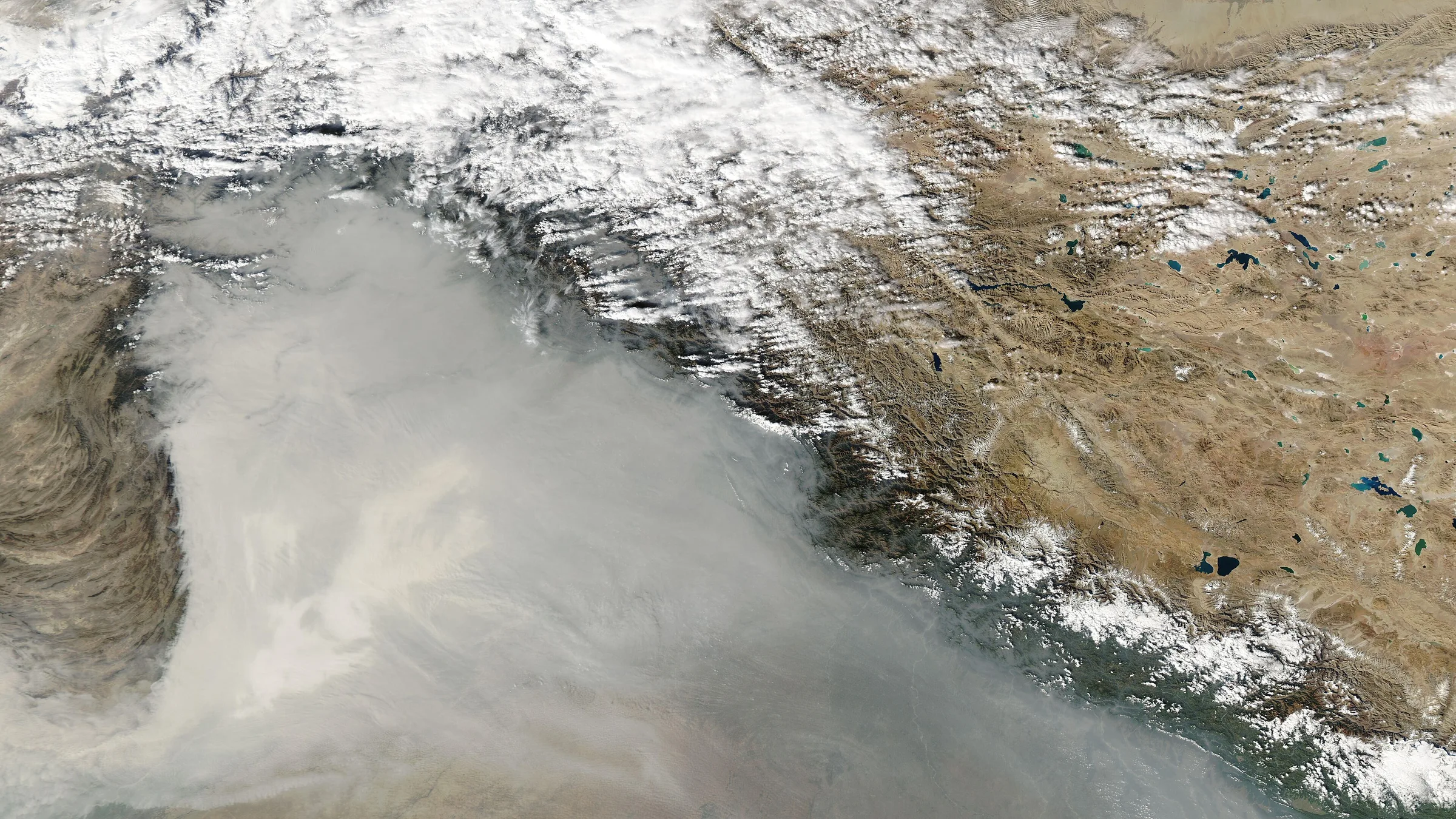
Lahore was ranked the world’s most polluted major city on Wednesday morning as smog thickened over the city with the onset of colder weather, Dawn reported, citing the live ranking of the Swiss air quality platform IQAir.
The ranking
At 10am on October 28, Lahore recorded an Air Quality Index (AQI) of 296, the highest on IQAir’s list of major cities. Cairo was second with 289 and Delhi third with 272. Tashkent stood fourth on 186 and Karachi fifth on 173. Lahore, Cairo and Delhi all fell in the “very unhealthy” category on the US AQI scale, which applies to readings between 201 and 300. At that level, Dawn said, air pollution can threaten health, especially for children, older people and anyone with respiratory or heart conditions.
The thicker smog came with colder early mornings, when it cut visibility. Residents were advised to limit long periods outdoors when pollution is high, particularly people with asthma and other breathing problems.
What the authorities say
Sajid Bashir, a spokesperson for the Punjab Environment Protection Agency (EPA), told Dawn that the authorities were watching industries and had put in place devices to record pollution levels. He said changing weather was contributing to smog and that steps were being taken to stop stubble burning.
He also said easterly winds had steadily pushed polluted air from India’s border regions into Lahore, making the smog worse across central Punjab. That is the agency’s explanation, and Dawn did not give figures to support it. Development work in Lahore and other cities was adding to the pollution too, Bashir said.
On equipment, he said the government was buying and installing 30 more modern fog cannons mounted on electric trucks, and that anti-smog guns were being sent first to areas with higher readings, especially of coarse particles known as PM10. The machines also spray roads and nearby areas to keep dust down. Punjab Climate Watch is working in three shifts to monitor industries in Lahore, with teams checking violations, registering cases and imposing fines. “Measures were being taken to combat smog, but the process would take time,” Bashir said.
How it has moved this month
Lahore also topped IQAir’s list last week, when its air was classed as “hazardous”; our report is here: Lahore ranked the world’s most polluted city, AQI hazardous. On October 2 it was first with an AQI of 167, which is classed as “unhealthy”, and Chief Minister Maryam Nawaz said then that the government was trying to deal with environmental problems. On October 1 an analysis by the EU’s Copernicus Atmosphere Monitoring Service placed Lahore among cities with “extremely poor” ozone levels. See also our earlier reports on Lahore’s air quality before the smog season and on anti-smog squads and crop burning.
What to watch
Dawn describes air pollution as one of the most pressing public health and environmental crises in Pakistan, caused mainly by industrial emissions, traffic, stubble burning and the movement of air. Several things will show whether this winter is any different: how many of the new fog cannons are in place and where, whether the fines on industries are enforced, and whether readings fall once the first strong winds come.
This article draws on reporting by Dawn.

Comments
Comments are reviewed by our editors before they appear. Please keep them civil and on topic. See our terms.
No comments yet. Be the first to share your view.