
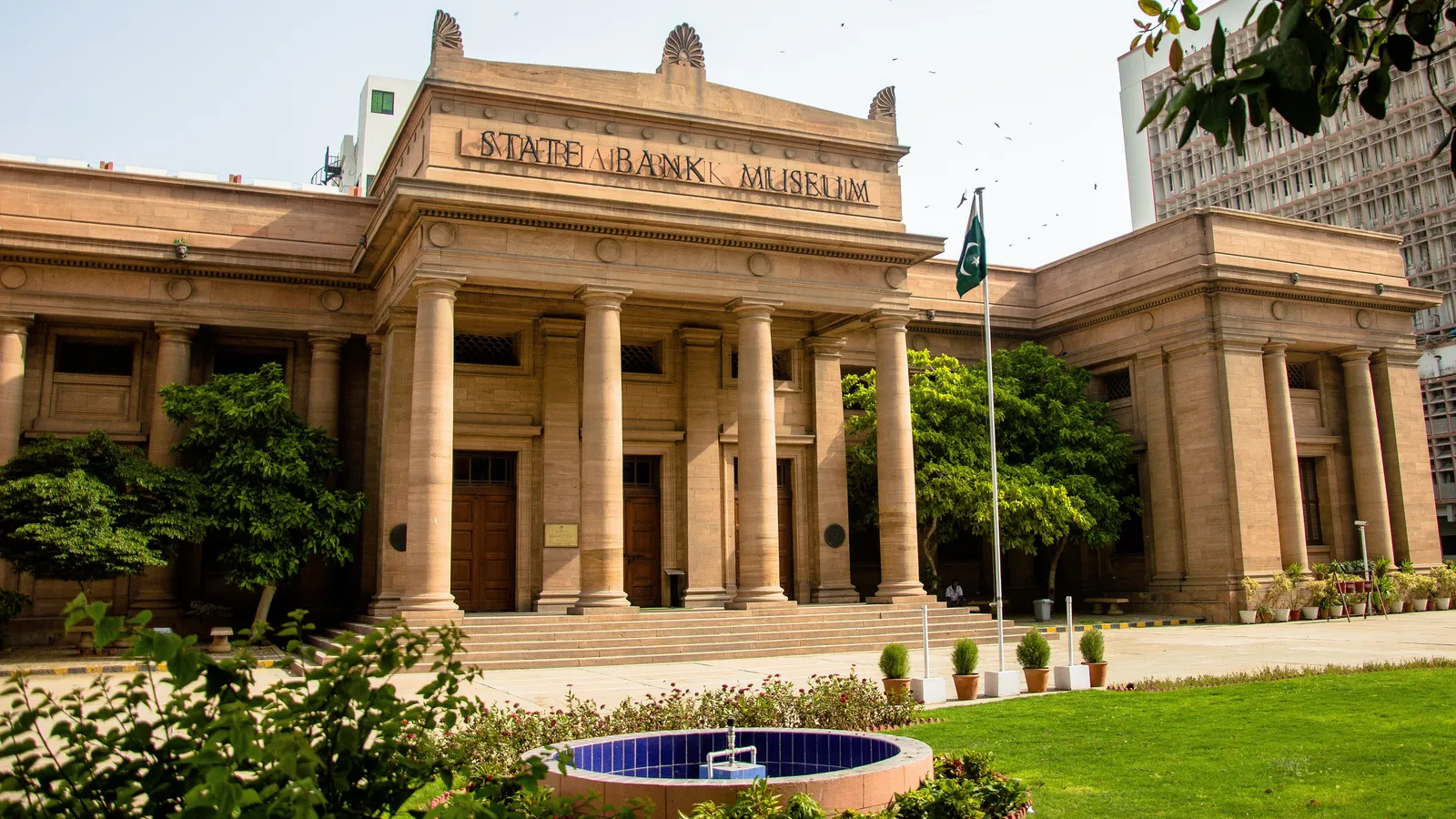
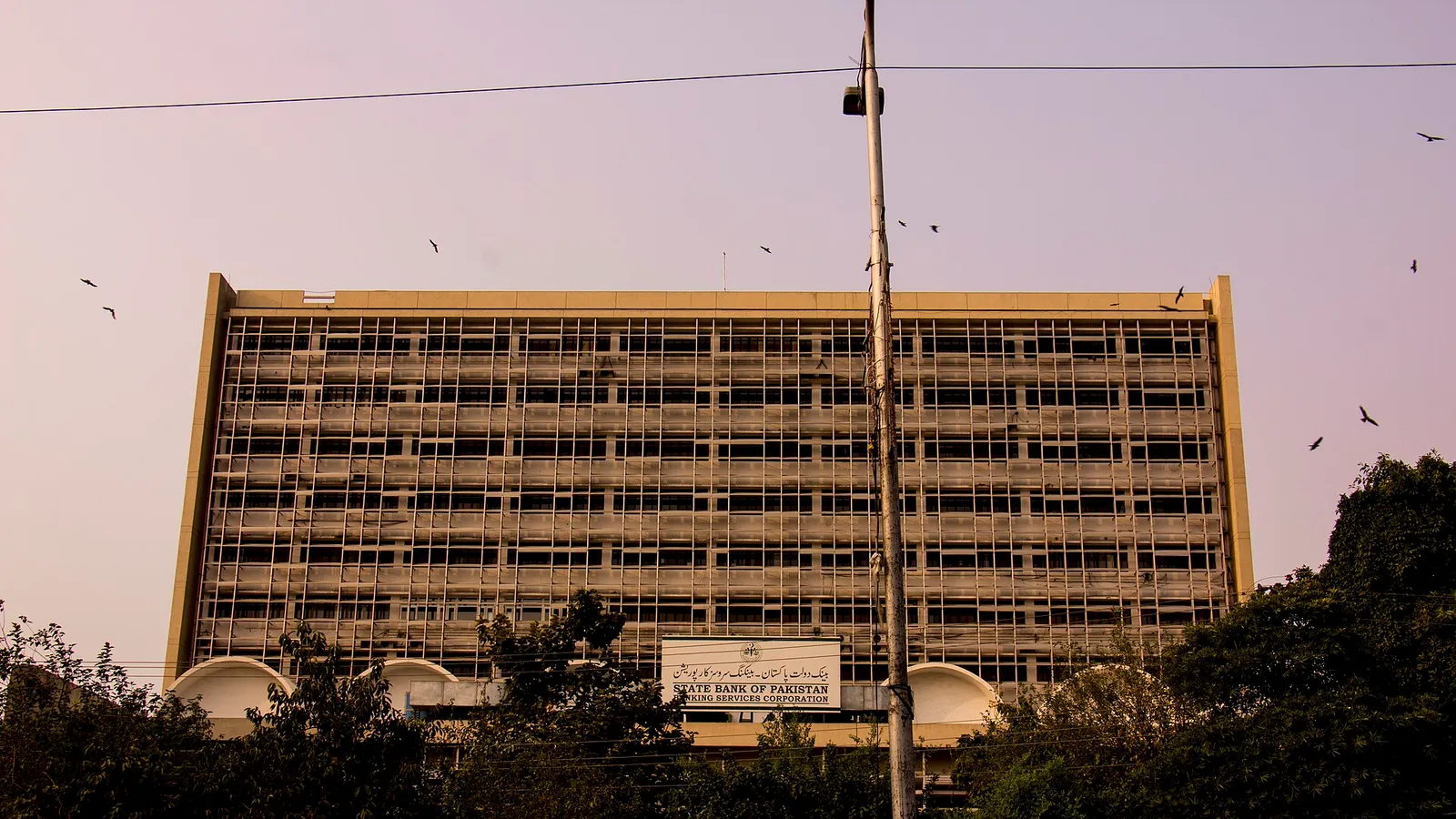
Two sets of figures reported on Thursday tell different stories about the same economy. The State Bank of Pakistan (SBP) said the country’s total foreign exchange reserves have reached a record $26.864 billion. The World Bank’s latest debt report, covered the same morning, showed that Pakistan’s external debt has almost doubled in ten years, to $135.1 billion.
The reserves: a record, built in wartime
Total reserves, which add the SBP’s own holdings to those of commercial banks, rose by $110 million in a week, from $26.754 billion. The SBP’s share grew by $39 million, and commercial banks added $70 million, which the Dawn report read as a sign that less money left the country than came in.
The more telling number is the central bank’s own cushion. It was $16.568 billion in February, just before the Gulf war began on February 28, and stood at $21.568 billion on October 30. That is about $5 billion added during a war that has pushed oil prices up and shaken weaker economies. Bankers say the cushion is large enough to keep the exchange rate steady and to persuade exporters to bring their earnings home quickly. Importers like the stability too, since it lets them plan.
There is a catch that currency analysts point to. Some of them believe the rupee is overvalued, which makes dollars cheap for importers. One result is a widening trade gap: imports in the first four months of FY27 were $26 billion and exports $11.4 billion, leaving a deficit of $14.6 billion. Dawn also noted a belief that the stable rate is being kept in place at the cost of remittances, which keep rising but are used mostly to cover the trade gap, not to build anything.
The debt: what the World Bank counted
The World Bank’s International Debt Report 2026 says Pakistan’s external debt grew from $68.673 billion in 2015 to $135.107 billion in 2025. By our calculation that is an increase of about $66 billion, or roughly 7 per cent a year on average. The 2025 total breaks down this way:
- Public and publicly guaranteed debt: $107.076 billion. Of this, $56.83 billion is owed to multilateral lenders, $42.43 billion to bilateral creditors and $7.8 billion to private creditors.
- Private debt without a government guarantee: $17.58 billion.
- Short-term debt: $10.45 billion.
China is the single largest creditor, owed $22.4 billion, followed by the World Bank ($19.2 billion) and the Asian Development Bank ($16.83 billion). Terms differ sharply by lender. Official creditors, on average, give 16 years to repay with a four-year grace period at 3.6 per cent interest. Private lenders charge 8.6 per cent and want their money back in three years, with one year of grace.
In 2025 China extended the maturities on $2 billion of its loans to Pakistan, and the International Monetary Fund (IMF) disbursed $2.3 billion under two of its programmes, according to the report. For the wider region that includes Pakistan, the World Bank said external debt rose from 26.7 to 29.4 per cent of gross national income, the biggest one-year jump of any region.
Across low- and middle-income countries, external debt rose 5.5 per cent to a record $9.4 trillion, and the poorest countries paid some of their highest borrowing costs in decades.
How to read the two numbers together
The record reserves and the debt report do not contradict each other. Reserves are a stock of assets that can be spent; debt is what has to be repaid. Reserves above $26 billion mean Pakistan can meet its payments for now, but the debt report shows how much of the money was borrowed.
A note of caution on comparing figures. The World Bank’s $135.1 billion includes private and short-term debt. When Finance Secretary Imdadullah Bosal briefed the Senate Finance Committee this week, he put foreign debt at $98.2 billion, and the SBP’s own reserves of $21.5 billion were what Finance Minister Muhammad Aurangzeb called the best in the country’s history; we reported this in our story on the Saudi rollover. The two measures use different definitions, so they should not be read as one figure.
What to watch
The government says it is trying to cut external debt by $4 billion this fiscal year. The test will come from three directions: whether weekly reserves keep rising without new borrowing, whether the trade deficit stops widening, and whether the IMF board approves its December tranche of about $1.2 billion. A steadier rupee helps in the short run, but only a smaller trade gap will make the reserves last.

Comments
Comments are reviewed by our editors before they appear. Please keep them civil and on topic. See our terms.
No comments yet. Be the first to share your view.