

Nigeria’s first confirmed Ebola case is the Bundibugyo strain responsible for a major outbreak in the Democratic Republic of Congo, and the patient is a diplomat, officials told an emergency meeting on Wednesday, Dawn reported, citing AFP.
The case was detected in a woman who travelled from Uganda to the capital, Abuja, on October 3, according to the Nigeria Centre for Disease Control and Prevention (NCDC). She is a diplomat, one official said, adding that her condition has deteriorated into “multi-organ failure”.
How the strain was identified
“We did three levels of tests, but all molecular. The strain was Bundibugyo,” said Olajumoke Babatunde, the NCDC’s director of the public health laboratory service. The World Health Organization (WHO) also confirmed the strain.
The WHO has said there is still neither a vaccine nor a specific treatment for the Bundibugyo strain, which makes the early tracing of contacts and strict infection control the main tools for stopping its spread.
Contacts and hospital controls
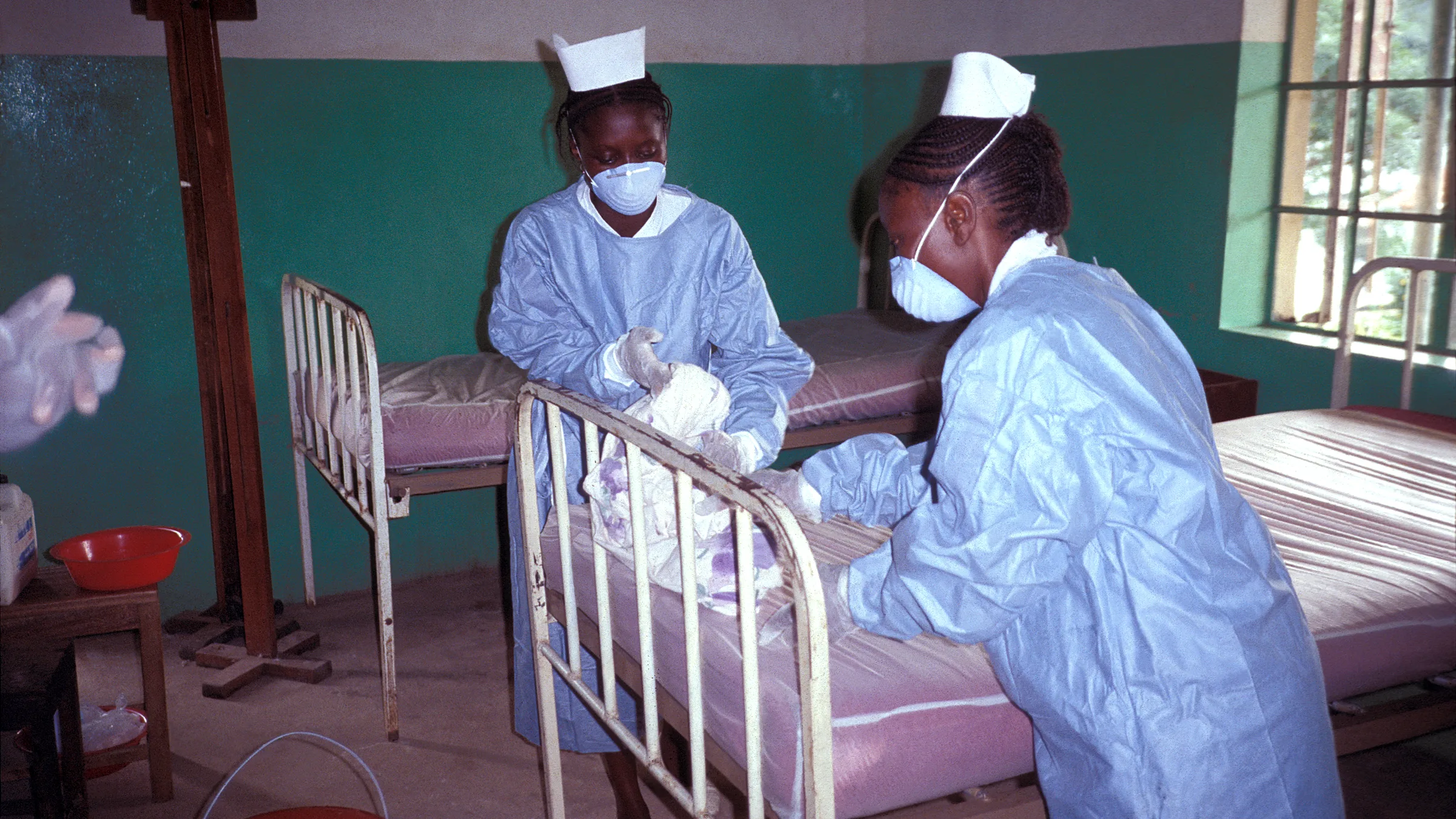
Nigeria has identified 44 contacts who are being monitored, and the health authorities are working to find anyone else who may have been exposed. The WHO said in a statement that infection prevention and control was being “ramped up” at the private hospital where the patient sought care.
The reports available so far do not say which country the diplomat represents or how she is being treated.
A spreading outbreak
The Ebola outbreak was declared in the Democratic Republic of Congo in mid-May. Since then, the deadly viral haemorrhagic fever has spread to several countries across Africa, including neighbouring Uganda. In DR Congo, the epidemic has become the deadliest in the country’s history, killing 4,381 people out of more than 9,000 confirmed cases, according to the Congolese health authorities.
The WHO declared the outbreak a public health emergency of international concern on May 17. At that point the NCDC, in a statement signed by its director general, Jide Idris, said Nigeria had no confirmed case but had strengthened surveillance, laboratory readiness, infection prevention and risk communication, and was working with the Port Health Service on border vigilance because of increasing regional movement.
On Tuesday, the head of the Africa Centres for Disease Control and Prevention (Africa CDC), Jean Kaseya, warned of “an extremely serious threat” as Kenya declared its ninth Ebola case. Nigeria’s case now takes the outbreak into Africa’s most populous country.
What happens next
The next days will show whether any of the 44 contacts develop symptoms. The NCDC and the WHO will need to trace everyone who met the patient after she arrived on October 3 and before she was isolated, including staff at the private hospital and anyone who travelled with her. Because Ebola spreads through direct contact with the body fluids of a sick person, hospital staff and family members are usually the most exposed.
Nigeria has dealt with Ebola before. It contained an outbreak in 2014 that began with a traveller from Liberia, and its public health teams have since built experience in contact tracing. But the Bundibugyo strain is a harder problem because no approved vaccine exists, unlike for the Zaire strain that caused earlier large outbreaks.
Why it matters
The confirmation shows how the outbreak that began in eastern DR Congo in May is now crossing borders by air, with travellers carrying the virus to capitals far from the original centre. It tests Nigeria’s response, and the response of the WHO and Africa CDC, at a moment when no vaccine can be offered to health workers or contacts. The case is also a reminder that a single traveller can carry the virus across borders within days, which is why early reporting and isolation matter.
This article draws on reporting by Dawn and AFP, and on statements by the NCDC and the WHO.
Comments
Comments are reviewed by our editors before they appear. Please keep them civil and on topic. See our terms.
No comments yet. Be the first to share your view.