

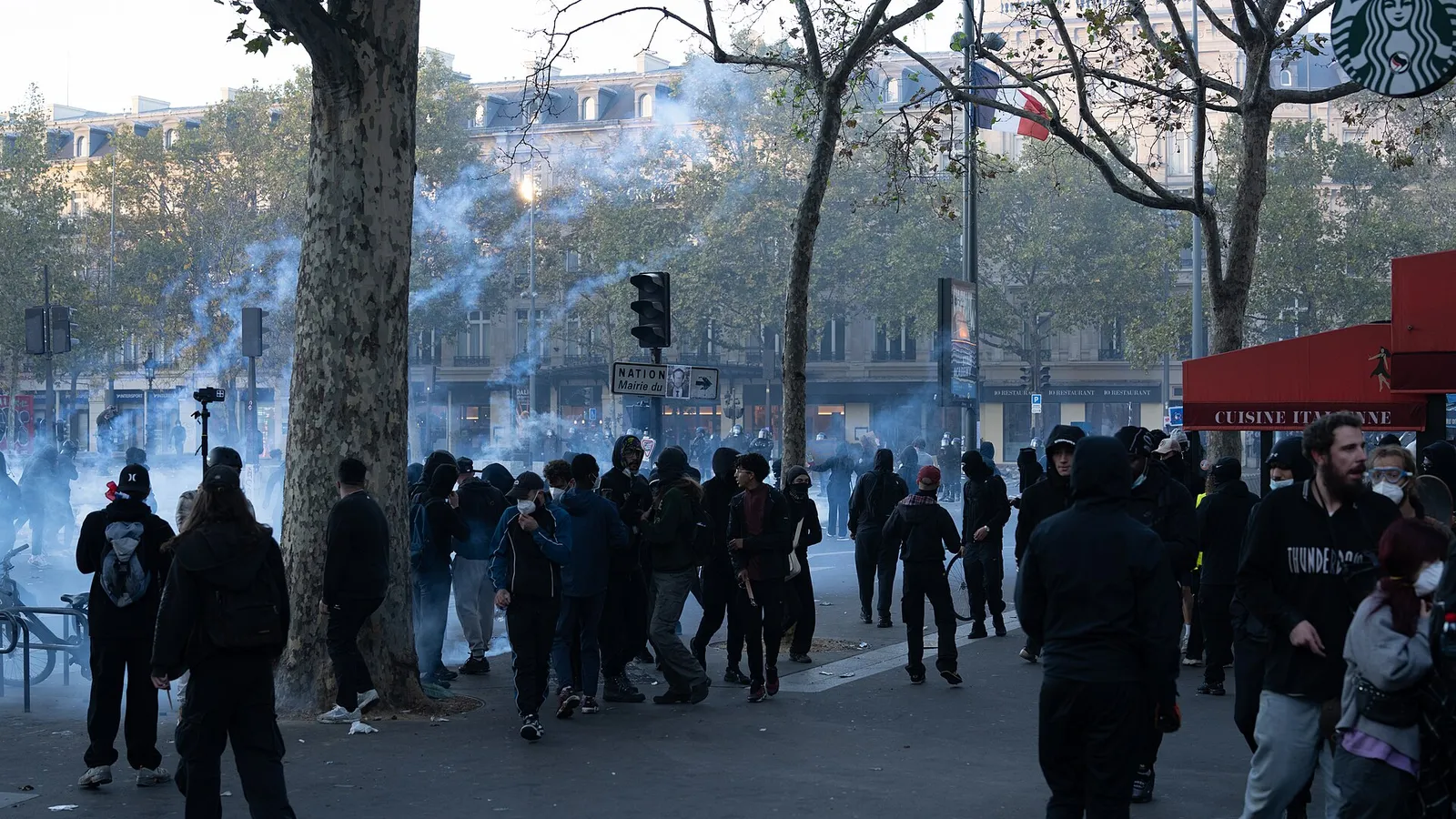
France is taking stock after one of its worst days of public disorder in years, as Prime Minister Sebastien Lecornu holds a crisis cabinet meeting on Monday. Nearly 2,400 people were arrested in violence that followed nationwide cost-of-living protests, according to Dawn, which cited AFP.
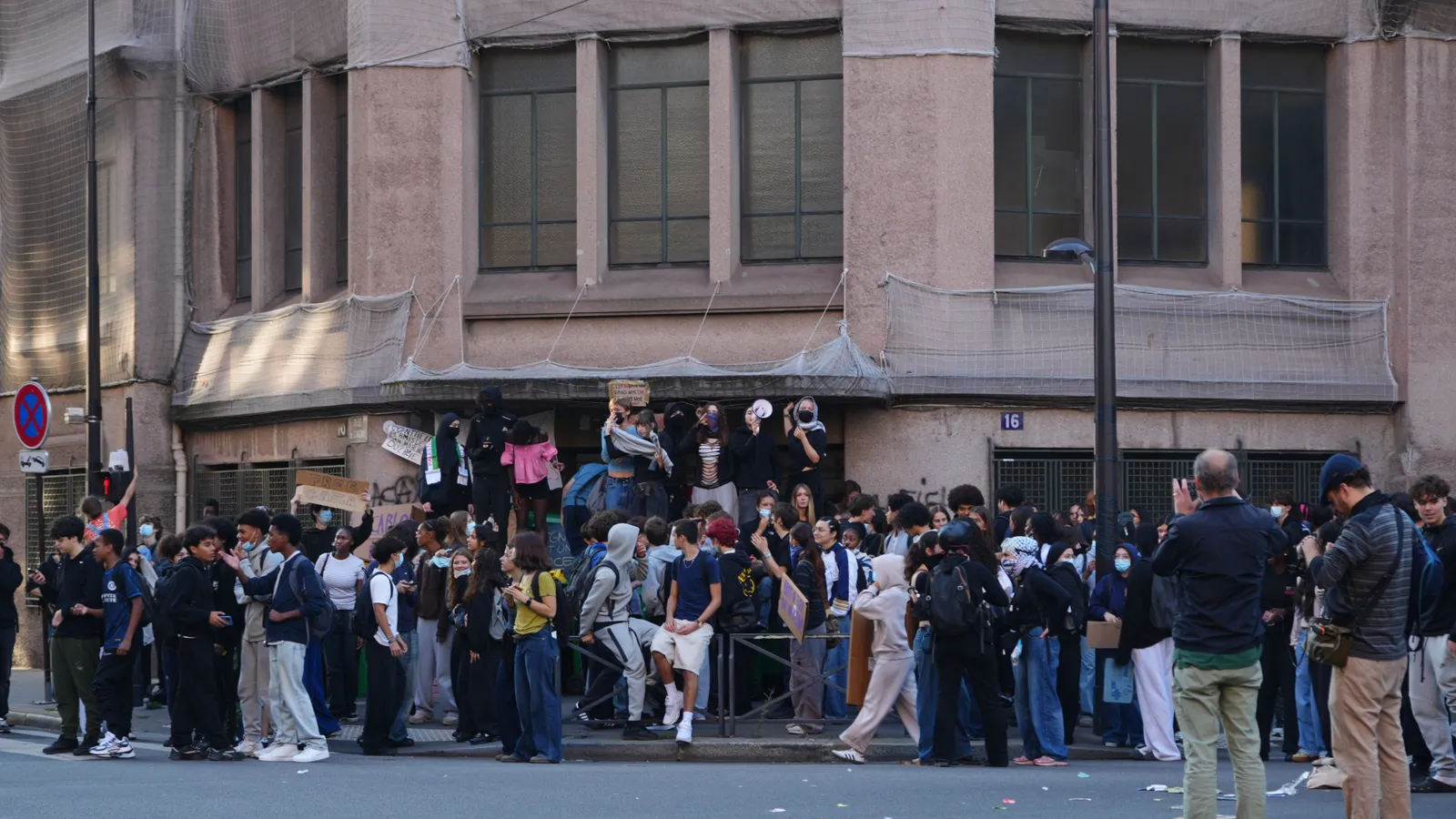
More than half a million people joined marches in scores of cities on Saturday, the convergence of a month-long student movement with wider anger at rising living costs and weakening public services. The marches were largely peaceful, the BBC reported, but turned violent when groups of masked, black-clad activists and vandals appeared.
Macron’s address
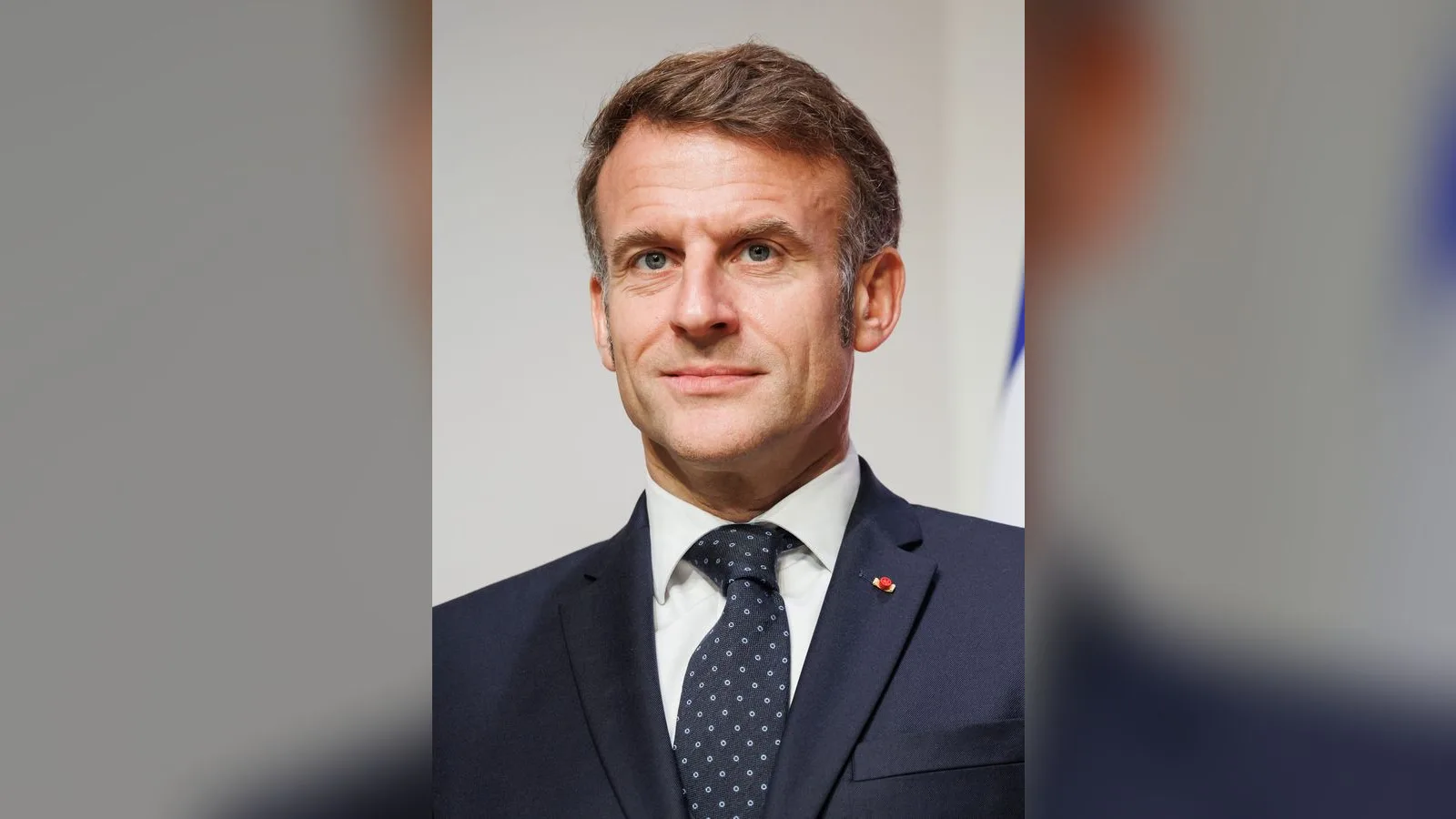
President Emmanuel Macron spoke to the nation on Sunday evening. “Tonight, we all feel anger and shame,” he said, condemning the “unbridled” violence but stopping short of a state of emergency or a curfew, which had been rumoured. He drew a line between protesters with “legitimate demands” and “those who destroyed, smashed, and looted”, and promised to be “uncompromising” with what he called “agitators from ultra-left fringe groups, joined by numerous delinquents”.
He said top officials would coordinate with mayors to protect towns, public buildings and businesses, pledged support for firms that suffered losses, and promised “full transparency” on the security forces’ response. He also said he had asked Interior Minister Laurent Nunez to “draw all necessary lessons” on intelligence gathering and anticipation, and expected “clear answers”. Some opposition politicians have called for Nunez to be sacked.
The speech has been widely criticised for lacking concrete detail, the BBC reported. The CGT union leader, Sophie Binet, said Macron had failed to address students’ concerns, the cost-of-living crisis or the decline of public services.
The damage
- Arrests: around 2,400 arrests nationwide by Sunday evening. In Paris, 550 of the 855 people arrested on Saturday were still in detention on Sunday, according to the Legal Team Paris lawyers’ group, and police stations were struggling to cope.
- Injuries: the interior ministry said about 1,000 police officers were injured on Saturday, seven of them seriously, according to the BBC. A 17-year-old boy lost his right hand to a crowd-control grenade in Saint-Etienne, and a 17-year-old girl lost an eye in Mulhouse, according to prosecutors.
- Businesses: the Retail and Trade Federation says about 1,500 businesses were damaged, with losses estimated at hundreds of millions of dollars. Looting was reported in Paris, Marseille, Bordeaux, Nice and Strasbourg.
- Buildings: the city of Limoges lost its 19th-century town hall to a fire that local prefect Maurice Barate said was set deliberately by “a wild horde”. A tourist office in Lyon was set ablaze.
A second day of clashes
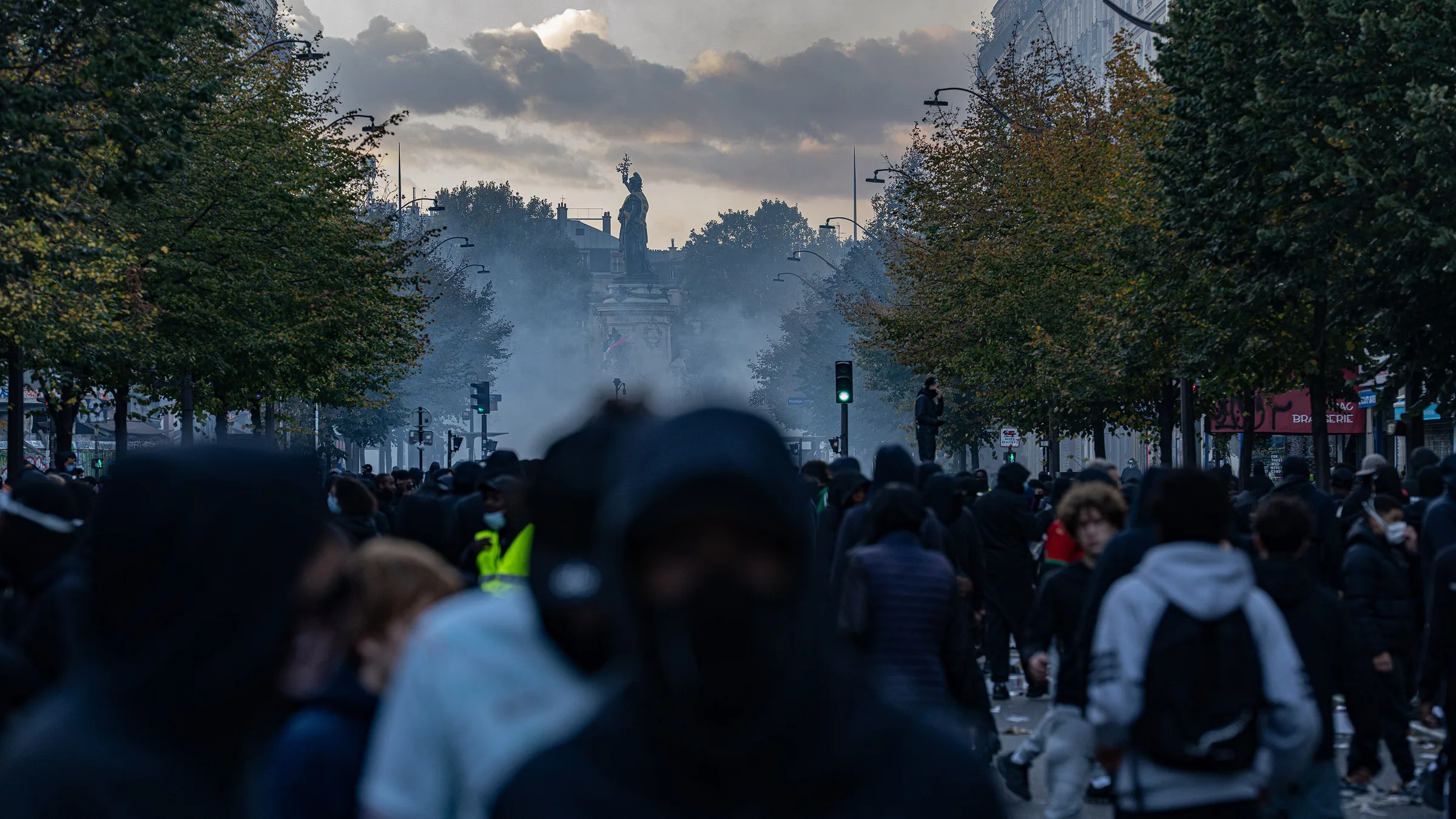
Fresh trouble broke out on Sunday in Paris’s Republique square, after calls on social media for a gathering that the authorities said had not been approved. AFP journalists saw police fire tear gas and stun grenades at hundreds of people, with bottles and rocks thrown back at officers, and shops around the square were looted. Police made several arrests. About 7,000 people marched peacefully in Limoges to show their anger at the destruction of the town hall.
“It’s like we had a war,” Paris resident Mehmet Ozeden told AFP. Another resident, Anita Gras, said she saw young men loot a sports shoe retailer. “It’s appalling, terrifying,” said Cecile Rogue, a 57-year-old resident.
Politics six months before an election
The unrest comes six months before a presidential election, and the political blame game began quickly. Macron and Lecornu blamed radical far-left groups and delinquents. Far-right leader Marine Le Pen, who leads opinion polls, said the government was “running on fumes, exhausted and disoriented” and spoke of a “profound crisis of trust and authority”. The far-left leader Jean-Luc Melenchon accused the authorities of inflaming tensions. US President Donald Trump weighed in on social media, blaming immigration for the turmoil.
The president of the lower house, Yael Braun-Pivet, wants an inquiry into what happened and why, according to the BBC. Students begin their half-term break on Monday, which the authorities hope will bring a respite, but a cross-section of trade unions and the “yellow jacket” movement have called huge new protests for November 5.
Why it matters
France’s government faces anger over living costs and public services, a divided parliament and pressure from investors over public debt, and the weekend showed how quickly a protest can spiral. Whether Macron’s promises on policing and dialogue are enough will be tested on November 5. Read our earlier explainer on the student protests in France.
This article draws on reporting by Dawn, The Express Tribune and the BBC.
Comments
Comments are reviewed by our editors before they appear. Please keep them civil and on topic. See our terms.
No comments yet. Be the first to share your view.