

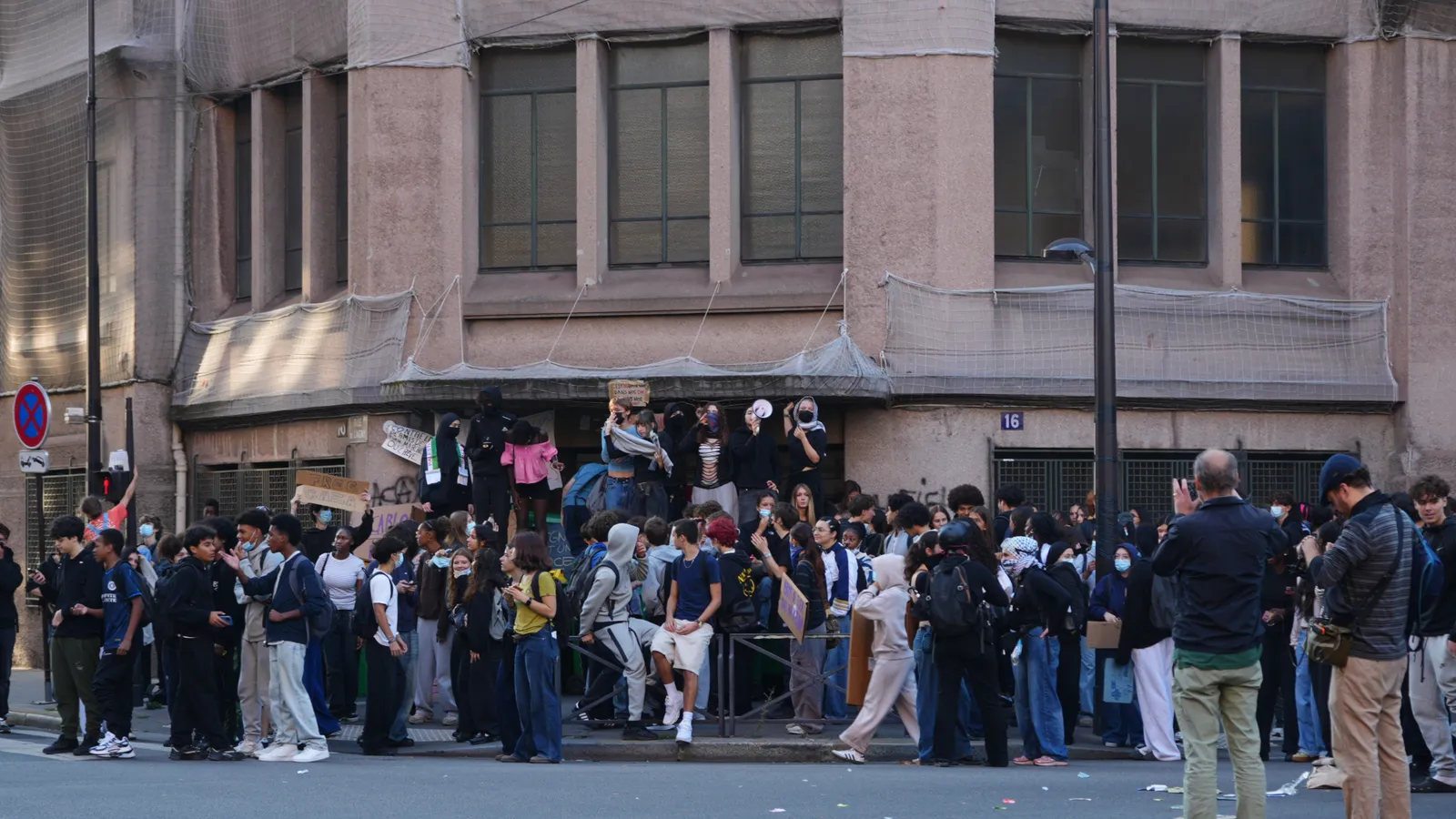
Protests by teenagers outside their schools have shaken France, with students blockading school gates and police at times responding with tear gas. More than 5,000 people have been arrested since Monday, according to the interior ministry, and about 735 schools were affected on Friday alone, the education minister said.
A major new day of protest is planned for Tuesday, Dawn reported, citing AFP.
What do the students want?
The protests are in the lycees, where French teenagers aged 15 to 18 spend their final school years. Their grievances include:
- Missing teachers: frequent teacher absences that are not covered
- Classrooms: poor conditions and a lack of resources
- Timetables: overloaded schedules
- Long days: a school day that can run from 8am to 6pm
“High-school students, particularly those from low-income neighbourhoods, feel they are receiving an inferior education,” said French sociologist Valerie Becquet.
How it started
The movement began on September 17 at the Saint-Exupery high school in Creteil, a Paris suburb, where students backed teachers striking over a lack of staff. It then spread across the country.
Ironically, things returned to normal at Saint-Exupery after the authorities agreed to send extra staff, including a deputy principal and a nurse. “Our grades were slipping. If we had not rallied now it would have augured very badly for the future,” said a pupil, Abderrahmane, who said he felt “enormous” pride in starting the movement.
The role of TikTok
Dramatic videos on social media, especially TikTok, are fuelling the protests. Students film burning bins and police firing tear gas, and channels chasing views edit together the most dramatic moments.
“With social media, they can offer a narrative different from the one presented in traditional media, a narrative that is not manufactured,” Becquet said.
Deep inequality
France offers every student a place at a lycee, but the schools range from vocational colleges to elite institutions. The elite schools remain dominated by students from white, affluent families with university-educated parents, despite many diversity efforts. “There are glaring inequalities among different students and schools, and this is a real problem,” Becquet said.
Violence on both sides
Protesters have blockaded schools, set fire to bins and thrown objects at police. Police have fired tear gas and rubber bullets, and at times beaten students with batons.
- Tours: a young man lost the use of his right eye after clashes with police on Wednesday, the city’s prosecutor said
- Viral videos: one showed a police officer with his arm around a girl’s neck as she was arrested
- Belfort: a police officer was chased, beaten and kicked by a group of youths
Critics accuse some police of heavy-handed force against protesters who are, legally, still children.
A political storm
With a presidential election just over six months away, the government accuses the hard-left France Unbowed (LFI) of stirring up the movement. Senior LFI official Manuel Bompard said the government was “descending into conspiracy theories”. LFI’s veteran candidate Jean-Luc Melenchon, who polls above 40 percent among 18 to 25-year-olds, has backed the protests while calling for them to stay peaceful.
Why it matters
When teenagers take to the streets over teachers and classrooms, it is a sign of deep frustration with how a country invests in its young people. How France responds, with reform or with force, could shape its election next year.
This article draws on reporting by Dawn and AFP.

Comments
Comments are reviewed by our editors before they appear. Please keep them civil and on topic. See our terms.
No comments yet. Be the first to share your view.