

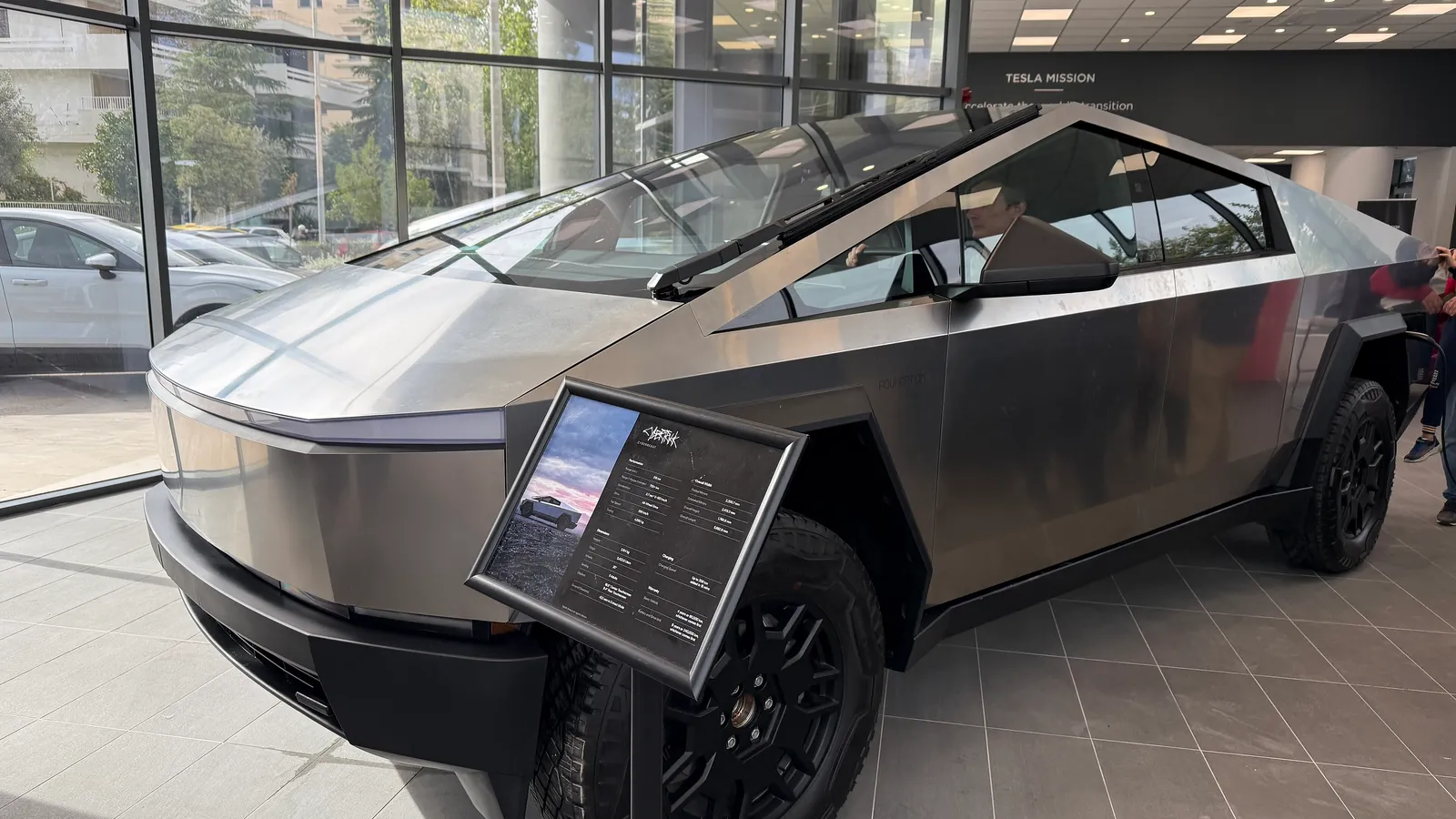
Tesla is going to stop making the Cybertruck. Chief executive Elon Musk said on Friday that the company will wind down production of the angular stainless-steel pickup at its Texas factory around the middle of next year, to free space for its Cybercab robotaxi.
Musk wrote on X that Cybertruck output at Gigafactory Texas will be wound down around the middle of 2027 “to make room” for more Cybercab production. In reply to a user, he called the Cybertruck the “best vehicle Tesla has ever made” and the wind-down “the end of an era”.
What is and isn’t known
Musk gave no detail on three points: whether the truck will be built at another plant or discontinued for good, what happens to orders that are still open, and how many trucks are still to be made. Reuters noted that the Austin factory is the only known Tesla site equipped to make the specialised parts the heavy, angular truck needs. Tesla does not report Cybertruck revenue separately; its “other models” category, which includes the pickup, is a small share of sales.
Wes Morrill, the Cybertruck’s lead engineer, wrote that the truck “was an incredible technology development platform and lives on through Cybercab”. Musk told fans on X that the Cybertruck fleet “will be around for a long time”.
A timeline of the truck
- November 2019: Musk unveils the Cybertruck and says it drew 250,000 preorders within days.
- 2021: The planned start of production, which was repeatedly delayed.
- Late 2023: Customer deliveries begin.
- November 2025: With US demand weak, Tesla begins selling the truck abroad, starting with deliveries in South Korea.
- January 2026: Deliveries start in the United Arab Emirates.
- Throughout: Several recalls and complaints about build quality.
- Friday: Musk announces the wind-down for mid-2027.
Tesla built its Texas lines for a capacity of 250,000 trucks a year, and sales have never come close to that, AFP reported.
The politics around the truck
The Cybertruck came to be seen as an extension of Musk himself. Its image became tied to his politics when he led the Trump administration’s cost-cutting Department of Government Efficiency, and it was praised by fans as a symbol of futuristic design while others disliked it. The announcement comes at the end of a hard week for Musk: Reuters reported that his record political spending of nearly half a billion dollars achieved little in Tuesday’s US midterm elections, with most of the Republican candidates he backed losing, and that his companies were on track to lose more than $370 billion in market value over the week. That figure is Reuters’ estimate, not a company statement.
Why it matters
The Cybertruck was meant to prove that an electric pickup could be a mass-market product. Its end shows that Tesla is putting its factory space behind the robotaxi, which Musk has made central to the company’s plans. For buyers who already own one, the practical questions are service, parts and software support, and Musk’s remark that the fleet will be around for a long time is the only assurance so far. For the wider market, it shows how hard it is to build a niche vehicle at scale, even for the best-known electric carmaker.
The week was also rough for tech and AI shares, as we reported in our story on the sell-off spreading to Asia. What to watch is whether Tesla says where, or if, the truck will be built after mid-2027, what it says about open orders, and how fast Cybercab production ramps up.



Comments
Comments are reviewed by our editors before they appear. Please keep them civil and on topic. See our terms.
No comments yet. Be the first to share your view.