

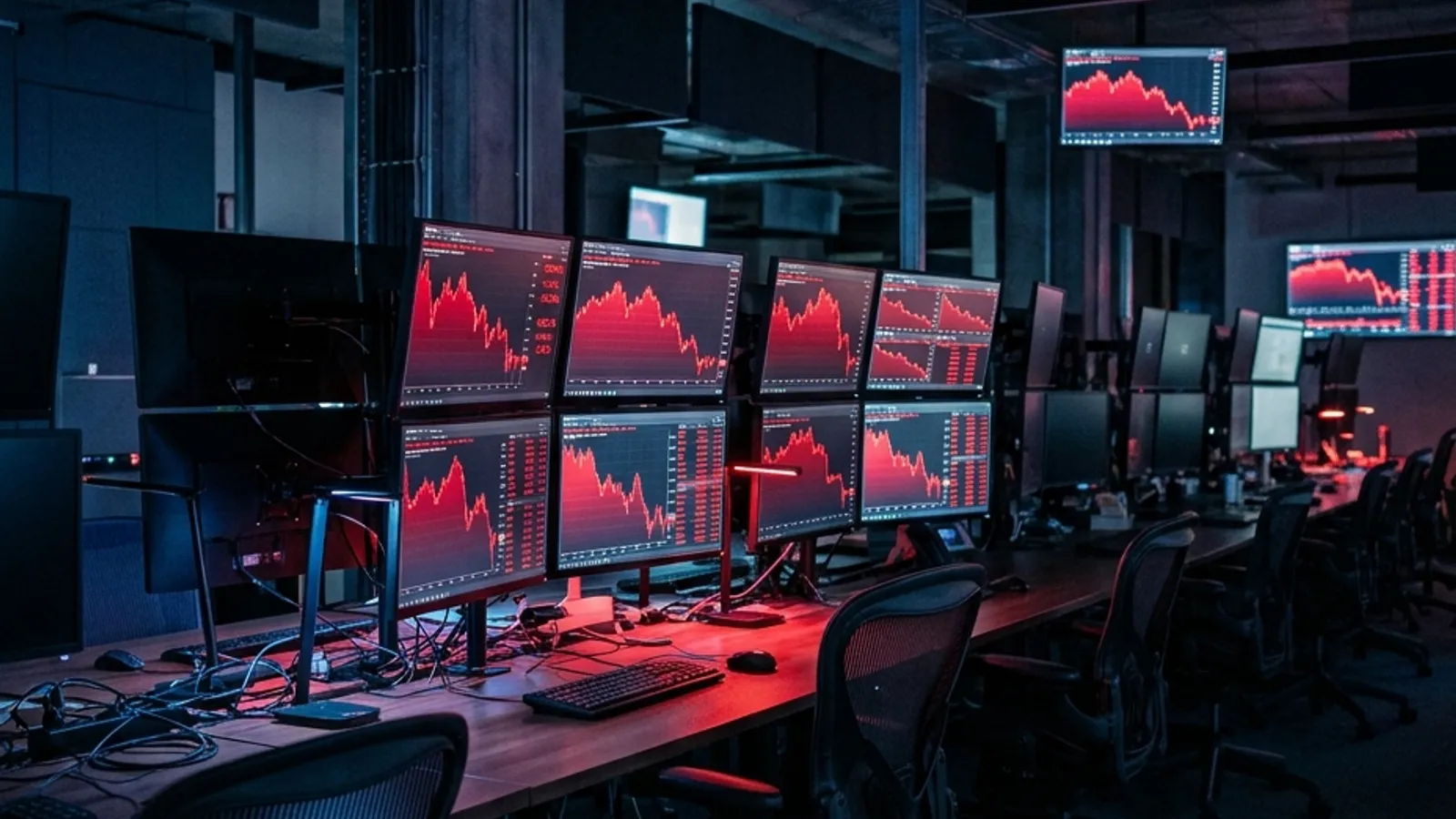
Asia’s tech-heavy stock markets were hit hard on Friday as the sell-off in artificial intelligence shares that started on Wall Street rolled across the region. Japan’s Nikkei index slumped 7 per cent soon after the opening bell, and the benchmark indices in South Korea and Taiwan dropped more than 8 per cent, according to Reuters. Prices then steadied as bargain hunters stepped in, and European and US stock futures pared early losses.
Where the fall started
The trigger was the US session on Thursday. The Nasdaq sank 5.5 per cent, the steepest one-day drop in US stocks since the tariff-driven sell-off of April 2025, and about $3 trillion was wiped off the value of S&P 500 companies. Wall Street’s “fear gauge”, the volatility index, jumped. The Philadelphia Semiconductor Index lost 12.2 per cent, and the Nasdaq is now 12 per cent below the record it closed at a month ago.
Two worries came together. One is politics: after the Democrats’ wins in the midterm elections, investors fear Congress will put the brakes on the AI boom. We reported on Wednesday that data-centre shares were already slipping on fears of tighter AI regulation, even as the wider market rallied. The other worry is money: the companies building AI infrastructure have borrowed and spent heavily, and investors doubt the returns will arrive in time.
Who lost most
- Chipmakers: Samsung Electronics fell nearly 10 per cent and SK Hynix about 12 per cent in South Korea. Kioxia dropped 14 per cent in Japan. TSMC fell as much as 8.5 per cent in Taiwan and, at one point, hit its daily limit-down circuit breaker.
- SoftBank: The Japanese AI investor slid 11 per cent, and the cost of insuring against a default on its debt jumped to the highest in four years.
- CoreWeave: The “neocloud” company, treated as a gauge of anxiety about AI borrowing, fell 10 per cent. The price of insuring its five-year debt hit a record.
What the market watchers said
Charu Chanana, chief investment strategist at Saxo, said there was “clearly an element of panic in the selling”, and that when investors unwind the same positions at once, selling can feed on itself, especially where leverage and forced liquidations are involved. Dong Baozhen, chairman of asset manager Lingtong Shengtai, said the fall showed that AI share prices “had been built on rosy illusions about the future”.
Others thought the worst might be over. Allen Huang of Mega Financial Holding’s equities trading department said the day was likely to bring further liquidation of margin accounts, “the final stage of capitulation”, and argued that TSMC hitting its limit-down circuit breaker usually marks the tail end of a downturn. That is one opinion, not a forecast, and a lower open does not guarantee a floor.
Money moved to safer assets. Government bonds rose in the United States, Japan and China, and the dollar slipped against havens such as the yen and the Swiss franc. The US 10-year Treasury yield stood at 4.838 per cent, near its lowest since September 9, and Japan’s 10-year yield fell as much as 9 basis points to 1.795 per cent, the lowest since June 30.
Why it matters beyond Asia
The sell-off exposes how much of the global stock market has come to depend on a single story. If AI spending slows, it affects not only chipmakers but the firms that supply them, the lenders behind them and the pension funds that own them. Analysts also noted that people living near data centres are pushing back, a cost that markets have yet to price fully.
For Pakistani readers, the direct link is small: the Pakistan Stock Exchange is not an AI market. But sharp global falls can unsettle emerging markets, and the shift to safe assets changes the dollar, bond yields and oil. We recently reported on the KSE-100 crossing 170,000 on hopes of easing US-Iran tensions, so Friday’s global slide is one more thing to watch against that rally. The questions now are whether Asian markets hold their rebound when they next open, how the US market behaves in its next session, and whether Washington actually moves to regulate AI or only talks about it.



Comments
Comments are reviewed by our editors before they appear. Please keep them civil and on topic. See our terms.
No comments yet. Be the first to share your view.