

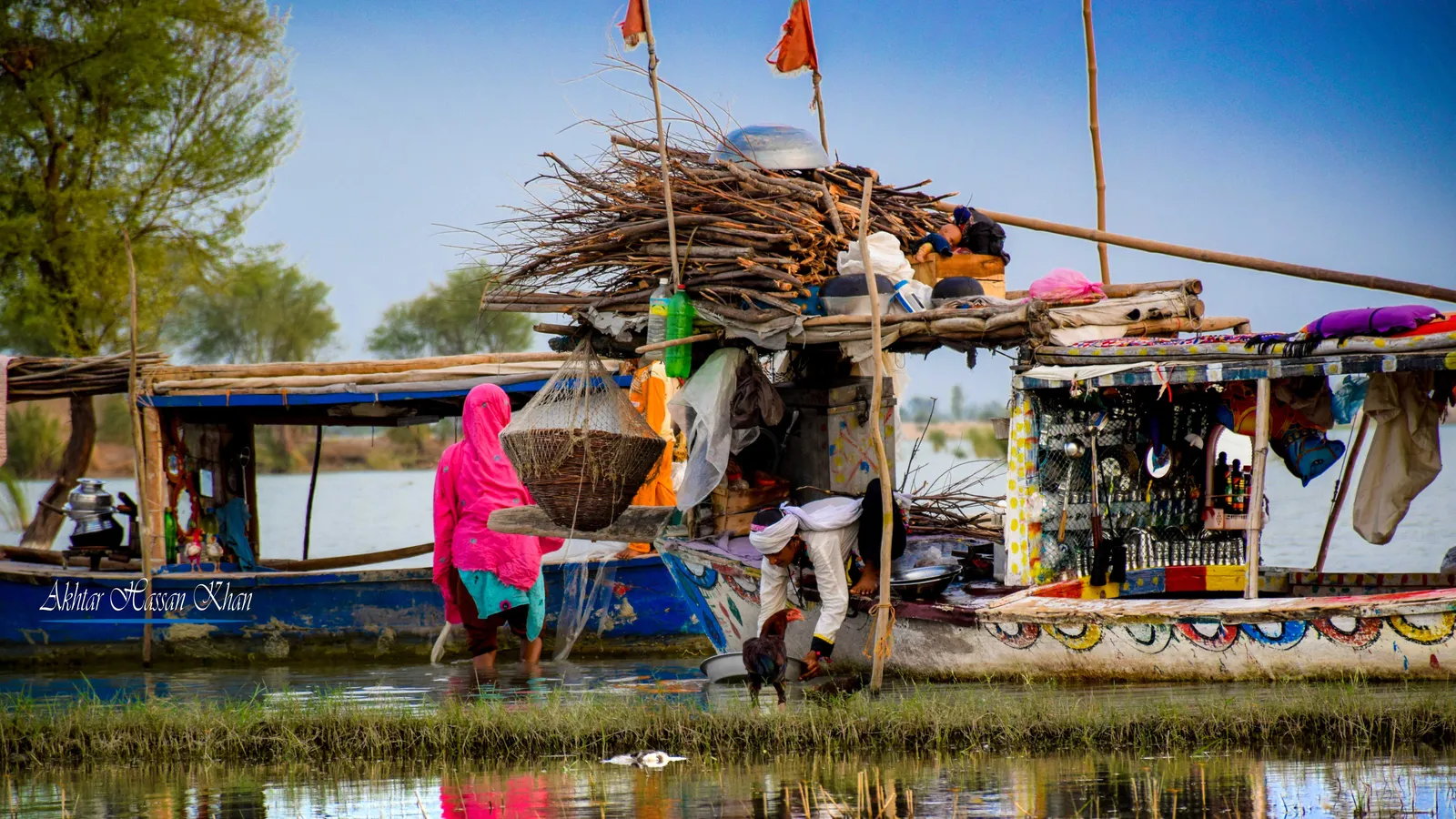
Manchar Lake, once famous for its clear waters, rich fisheries, birdlife and centuries-old boat culture, is facing an environmental and social crisis, as rising salinity and toxic inflows destroy its fish and the livelihoods of communities who have lived on its waters for generations.
The lake in Sindh’s Dadu district is now so salty that it records about 4,000 Total Dissolved Solids (TDS), Shir Mohammad, an official of the Sehwan Irrigation Department, told Dawn.
The drain that is poisoning the lake
The main problem is the Main Nara Valley Drain (MNVD), which carries saline and polluted water into Manchar, about 2,000 cusecs a day, the official said.
Recent floods brought only brief relief:
- July 29: the lake stood at 108.4 feet Reduced Level (RL)
- September 1: fresh water from the Indus through the Aral Head and Aral Tail canals raised it to about 112 feet RL
- Salinity: despite four extra feet of river water, salinity fell only from about 6,000 to 4,000 TDS
The Indus has since receded, and the lake is again fed mainly by the drain.
“A higher water level can create the appearance of recovery while polluted inflows continue to affect the lake’s water quality and ecosystem,” said socio-economic expert Khadim Soomro.
“Not a single fish variety remaining”
For the Mohana people, the boat-dwelling fishing community of Manchar, the crisis is about the end of a way of life.
“There is not a single fish variety remaining,” said Juman Khatoon, an elderly resident of the Shah Hassan area. Families who once lived off the lake have been pushed into extreme poverty, and the distinctive boat culture that lasted for centuries is disappearing, she said. She called for a full rehabilitation programme for fishermen.
Many men now travel to coastal areas to fish, leaving their families behind with poor access to clean water, healthcare and schools.
Paying for drinking water beside a lake
Shama Mallah, who lives on Bund Manchar near Bubak and has suffered from water-borne diseases, said 12 reverse-osmosis plants along Bund Manchar and 38 more in nearby villages are not working. Residents now pay about Rs30 a jerrycan to water tankers, while living beside one of Pakistan’s largest lakes.
“The authorities are not doing anything to promote the lake or work for the betterment of the area people,” she said.
What experts want
Water expert Dr Imran Aziz Tunio said the key step is to stop the drain’s polluted water from entering Manchar and divert it to the sea by completing the Right Bank Outfall Drain (RBOD-II).
Environmentalist Nasir Panhwar said the damage goes far beyond people, affecting the lake’s birds, its beauty, and about 300,000 acres of farmland that depend on it.
Why it matters
Manchar is not just a lake. It feeds farms, birds and one of Pakistan’s oldest living cultures. Raising its water level is not enough if the water itself is poison. Completing RBOD-II and rebuilding the livelihoods of the Mohana people would save both a vital ecosystem and a community that has nowhere else to go.
This article draws on reporting by Dawn.
Comments
Comments are reviewed by our editors before they appear. Please keep them civil and on topic. See our terms.
No comments yet. Be the first to share your view.