

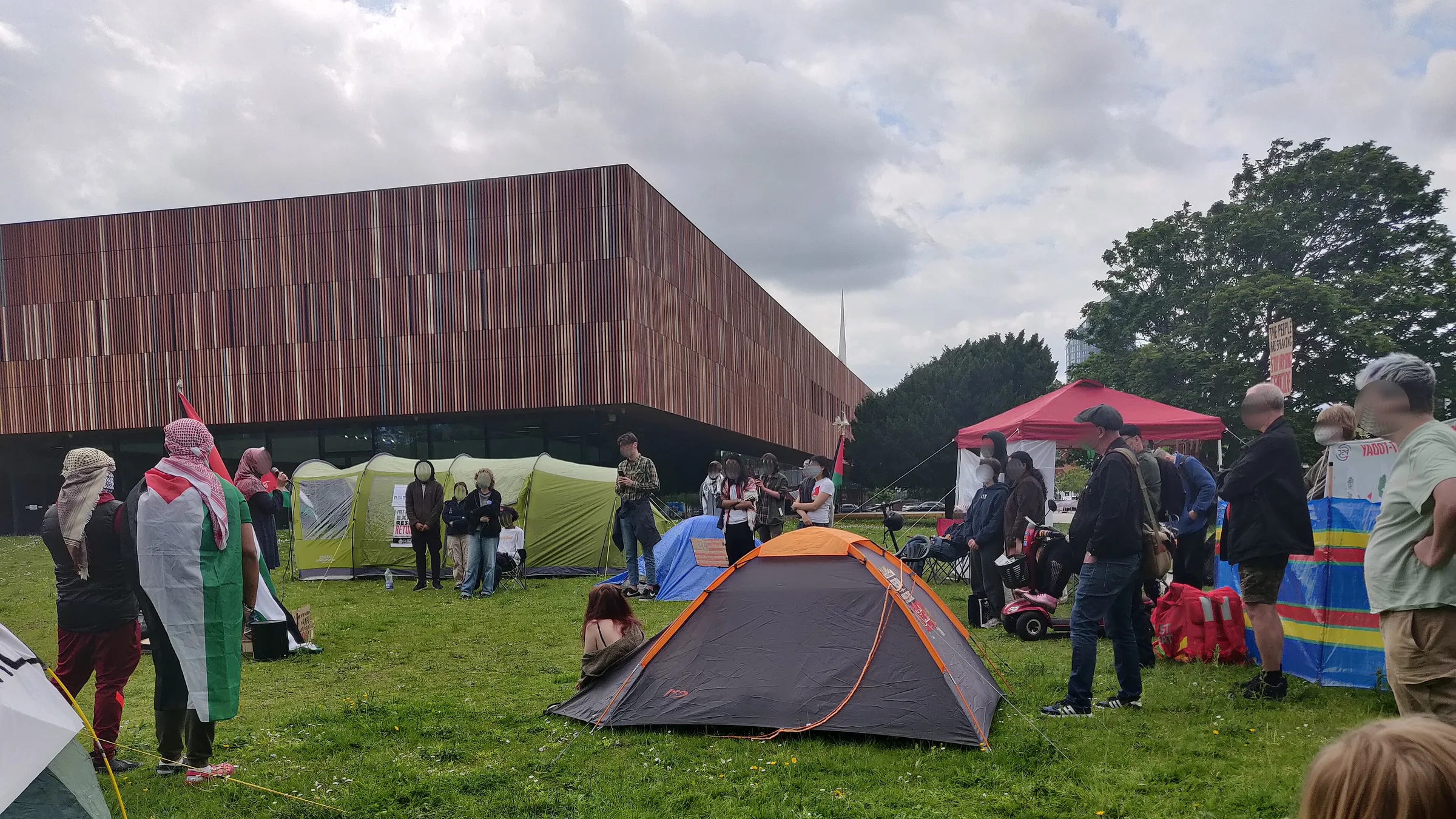
British universities worked together to suppress pro-Palestine activism on their campuses, sharing tactics, hiring private intelligence firms and coordinating with the government, according to a new report by Amnesty International.
The Silencing Dissent report, published on Tuesday, found that universities actively cooperated to stop students protesting against their institutions’ ties to Israel’s war on Gaza, Middle East Eye reported.
Freedom of Information (FOI) disclosures examined in the report showed universities “were not acting in isolation when responding to Palestine solidarity protest, but are operating within a network which encouraged repressive responses”.
What the report found
- Shared tactics: messages showed administrators discussing disciplinary measures, including injunctions to stop protests and referring student protesters to Prevent, the UK’s counterterrorism programme
- “Locking in” protesters: emails from the University of Northampton showed senior staff swapping tactics, with one administrator asking whether other institutions were “locking in” their student protesters
- Weekly calls: Universities UK (UUK), which represents 142 universities, hosted weekly calls with vice-chancellors whose campuses had encampments, creating a “standard forum to share practices and align approaches”
- Government links: FOI disclosures from the University of Kent indicated UUK worked closely with government departments and ministers, arranging meetings between vice-chancellors and Downing Street
- Legal advice: UUK worked with the Department for Education and the Office for Students on reputational risk, protest management and civil injunctions
UUK did not respond to a request for comment at the time of writing, according to Middle East Eye.
Security chiefs and spy firms
University security officers coordinated through the Association of University Chief Security Officers (Aucso), the report found. Before national protest days, its South West chair circulated briefings and advised institutions to use FOI exemptions to keep their security communications from public view. The association also supplied ready-made press templates.
At least nine universities received threat briefings from private intelligence firms, including Horus Security Consultancy, Mitie Intelligence Hub and Global Situational Awareness. These routinely gave peaceful student actions severe threat ratings:
- May 2025: student-led weeks of action were labelled a “high threat level” by the Global Security Operations Centre
- Slogans: the briefings described peaceful slogans such as “From the river to the sea” as “escalatory rhetoric”
- Monitoring: they advised authorities to watch the social media of at least 15 university Palestine societies, including at SOAS, Leeds, Imperial College London and Glasgow
Earlier this year, Al Jazeera revealed that UK universities had paid former British military intelligence officials to monitor students campaigning for Gaza. Horus Security Consultancy has been paid at least £440,000 ($594,000) by UK universities since 2022, Middle East Eye reported.
Why it matters
Students who protested against the killing of Palestinians in Gaza were treated as security threats by the institutions meant to protect free debate. The findings will add to pressure on British universities, and the government, over how they handled the Palestine solidarity protests. Read our report on Britain’s refusal to hold an inquiry into its role in Gaza.
This article draws on reporting by Middle East Eye and Amnesty International.

Comments
Comments are reviewed by our editors before they appear. Please keep them civil and on topic. See our terms.
No comments yet. Be the first to share your view.