

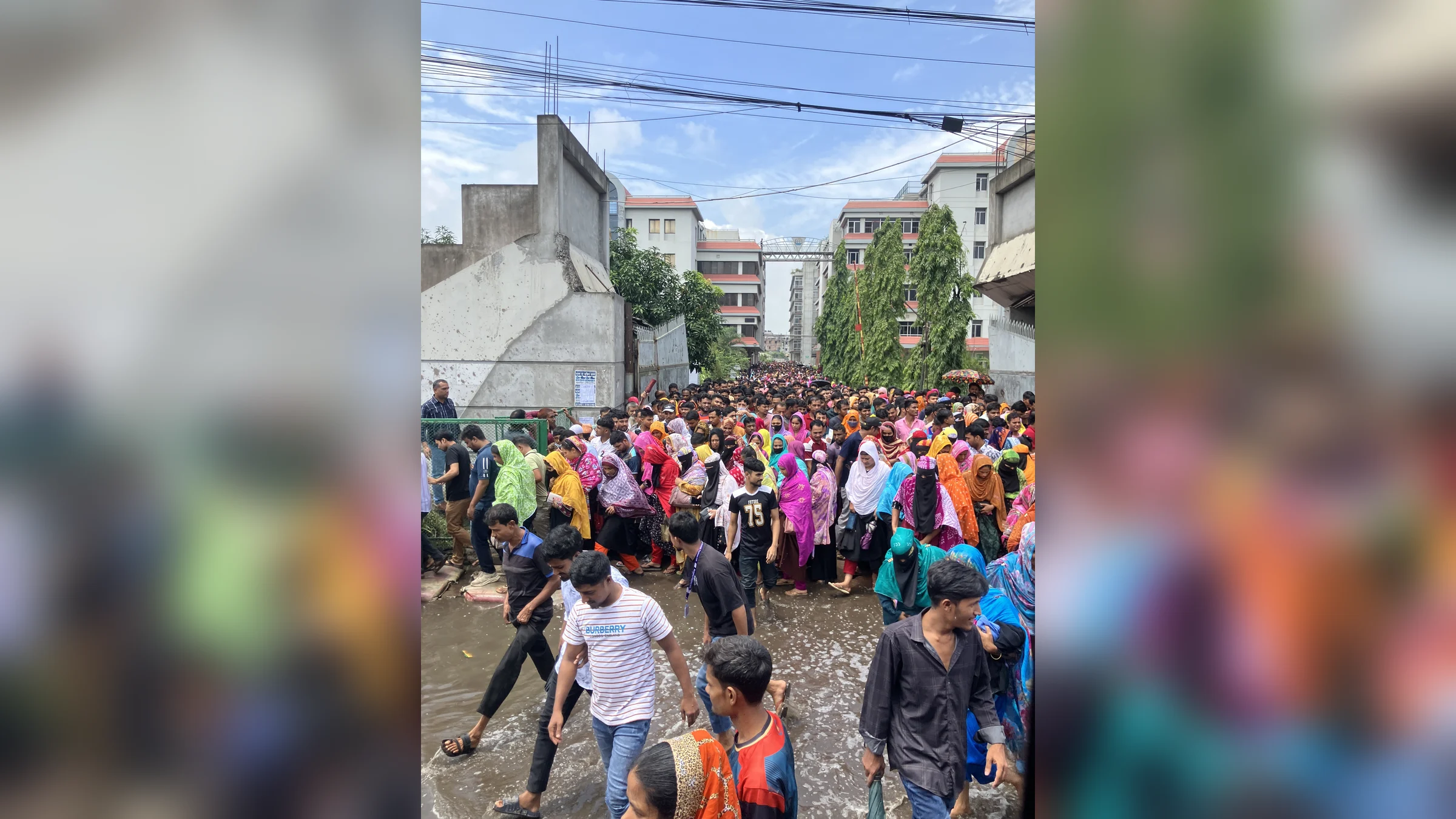
Thousands of Bangladeshi garment workers blocked a major highway and clashed with police on Monday, demanding a monthly minimum wage more than double their current pay, as protests spread across the country’s industrial hubs, Dawn reported, citing AFP.
Bangladesh, a nation of 170 million people, is the world’s second-biggest garment exporter after China, making clothes for some of the largest international brands.
What happened on Monday
- Gazipur: hundreds of workers blocked the Dhaka-Tangail highway and vandalised several vehicles.
- Mirpur: police used tear gas to disperse large groups in this Dhaka district.
- Ashulia: police fired stun grenades and tear gas to scatter crowds in the suburb, home to some of the biggest factories. The gas drifted into crowded housing where families often live in single rooms.
Workers demand a monthly wage of 30,000 taka (about $245). Kalpona Akter of the Bangladesh Centre for Workers Solidarity said workers now earn about 13,000 taka a month; Reuters, citing officials, put the current minimum at 12,500 taka.
“Food prices, cooking gas and electricity bills have all gone up. The government must either bring down the prices of essential commodities or raise our wages,” said Mamum, a 28-year-old factory worker.
A wage board, but no calm
On Sunday the government said it had set up a wage board to review pay and urged workers to go back to work. The six-member board has two representatives each for workers and employers, a government representative and a neutral member, and will recommend new pay rates.
The protests carried on anyway. Labour leaders say grievances go beyond the board and are driven by inflation and rising household costs. Kamrul Hasan of the Ekota Garments Sramik Federation said some labour leaders had gone into hiding. “We were not prepared for this unrest either, as the wage board has already been formed,” he said.
The scale of the shutdown
According to the Bangladesh Garment Manufacturers and Exporters Association (BGMEA), the unrest has shut 529 factories and left 987,190 workers out of work in the main industrial areas, including Savar, Ashulia, Jirani and Gazipur.
On Sunday, bricks were thrown at police, and a police vehicle and a police box were set on fire in separate incidents, Reuters reported, and Border Guard Bangladesh personnel were deployed.
Government warning
Home Minister Salahuddin Ahmed warned that those “engaging in unlawful activities and conspiracies under the guise of labour movements will be tackled with an iron hand”. But he also said Prime Minister Tarique Rahman had told officials after an emergency cabinet meeting to “ensure workers’ rights and improve their living standards”, while keeping production and exports running “unhindered”.
Manufacturers’ associations warned that prolonged unrest “could disrupt production, delay export shipments and affect Bangladesh’s commitments to international buyers”.
Background: an industry that carries the economy
The garment sector employs about four million workers, generates more than 80pc of Bangladesh’s export earnings and contributes about 10pc of GDP. Manufacturers say they face rising costs, periodic gas and electricity shortages and energy-market uncertainty linked to tensions in the Middle East. Competitors face similar cost pressures: Pakistan’s textile exporters have also asked for a rebate to stop an export slide.
Why it matters
Brands that buy clothes in Bangladesh may shift orders if shipments are delayed, which could benefit rival exporters but hurt workers who depend on those orders. For the government, the test is whether the wage board can offer something workers accept quickly, since the workers’ demand is more than double today’s pay and factories say costs are already rising.
What to watch: how quickly the board reports, whether the shut factories reopen this week, and whether the clashes spread.
This article draws on reporting by Dawn.
Comments
Comments are reviewed by our editors before they appear. Please keep them civil and on topic. See our terms.
No comments yet. Be the first to share your view.