
Pakistan is weeks away from choosing its first astronaut. Two Pakistani pilots are in the final stages of training in Beijing, and one of them is set to become the first foreign astronaut ever to fly to China’s Tiangong space station.
Pilots Zeeshan Ali and Khurram Daud have spent months at the China Astronaut Research and Training Center, learning Mandarin, spinning in centrifuge drills and practising how to eat, sleep and repair equipment in weightlessness. A final decision on which of them will fly is expected in mid-to-late October, according to Amer Gilani, who oversees human spaceflight cooperation at Pakistan’s space agency, Suparco.
A first for Pakistan, and for China
The mission would make Pakistan the latest country to send a citizen into space, and it marks a milestone for China too: it will be the first time Beijing has carried a foreign astronaut. Since Yuri Gagarin’s flight in 1961, citizens of about 50 countries have flown in space, but only Russia, the United States and China have launched their own crewed spacecraft.
The idea was agreed by the two countries in 2019. Whoever is selected will not return home before launch. They will travel to space directly from training in China, and come back to Pakistan only after a recovery period on their return to Earth.
Chosen for their nerve
Ali and Daud beat roughly 20 finalists drawn from an initial pool of Pakistani pilots and scientists, who were screened for medical fitness, psychological resilience and the ability to tolerate high g-forces.
That last requirement favoured fliers. “You cannot easily find scientists who are familiar with travelling and facing high-level g-forces,” said Uzair Ansari, Suparco’s director of artificial intelligence, explaining why two men with backgrounds in high-speed flying were chosen.
Training covers intensive Chinese-language study, spacecraft systems, and adapting to both the microgravity of orbit and the forces of launch. In orbit, the chosen pilot will serve as a “payload specialist”, running Pakistan’s science experiments rather than flying the spacecraft. They will launch aboard a Chinese spacecraft from a Chinese site and communicate in Mandarin.
Pakistani science in orbit
The stay will last about a week. Suparco ran a year-long campaign that drew more than 300 research proposals from universities in Karachi, Lahore and Islamabad, and Chinese institutes selected four for the flight. All four are biotechnology experiments aimed at helping to tackle food insecurity and climate change.
Every experiment is built and pre-tested in Suparco’s own laboratories before Chinese engineers approve it, which Ansari described as a rare chance for Pakistani technology to be validated on an international platform. He called the mission a “once-in-a-lifetime opportunity” for Pakistani scientists.
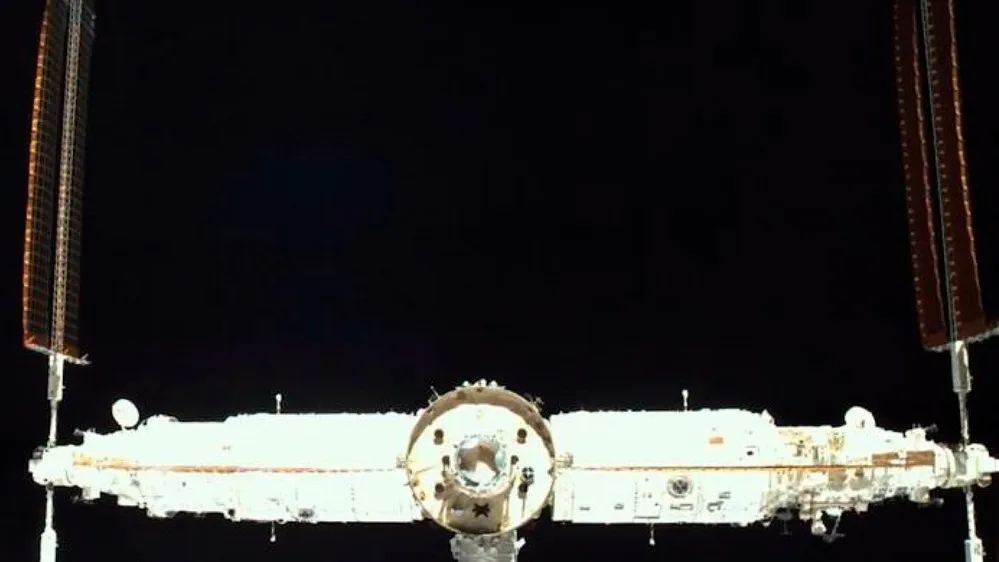
Tiangong, made up of the Tianhe, Wentian and Mengtian modules, weighs about 77 tonnes and has hosted more than 180 experiments, producing more than 500 research papers and 150 patents, according to Suparco. The Pakistani astronaut is expected to return to Earth with two members of a Chinese crew that arrived in May; the third member of that crew will stay for a year to study the effects of long-duration spaceflight.
A partnership reaching the Moon
The astronaut mission is one strand of a wider space partnership between the two countries, which has already produced Chinese-launched Pakistani satellites and a joint satellite-navigation system. A Pakistani-built rover is due to fly on China’s Chang’e 8 lunar mission around 2028, using AI-based stereo imaging to detect obstacles and plan its own route across the lunar surface, since controllers on Earth cannot steer it in real time.
Asked whether Pakistan has been promised a place on a future Moon mission, Gilani said “there is no official commitment or discussion on this matter”, adding that the next steps will depend on how “our maiden mission” goes.
The cooperation is part of the broader relationship between Islamabad and Beijing, which spans the Belt and Road Initiative. The two countries also work closely in regional forums such as the Shanghai Cooperation Organisation, which Pakistan chairs this year.
Why it matters
Sending a citizen into space is a moment of national pride and a signal of scientific ambition. For Pakistan, it also means Pakistani researchers seeing their own experiments tested in orbit, and a generation of students with a new reason to study science and engineering. With a lunar rover to follow, the mission could mark the start of a lasting role for Pakistan in space exploration.
This article draws on reporting published by Dawn.

Comments
Comments are reviewed by our editors before they appear. Please keep them civil and on topic. See our terms.
No comments yet. Be the first to share your view.