

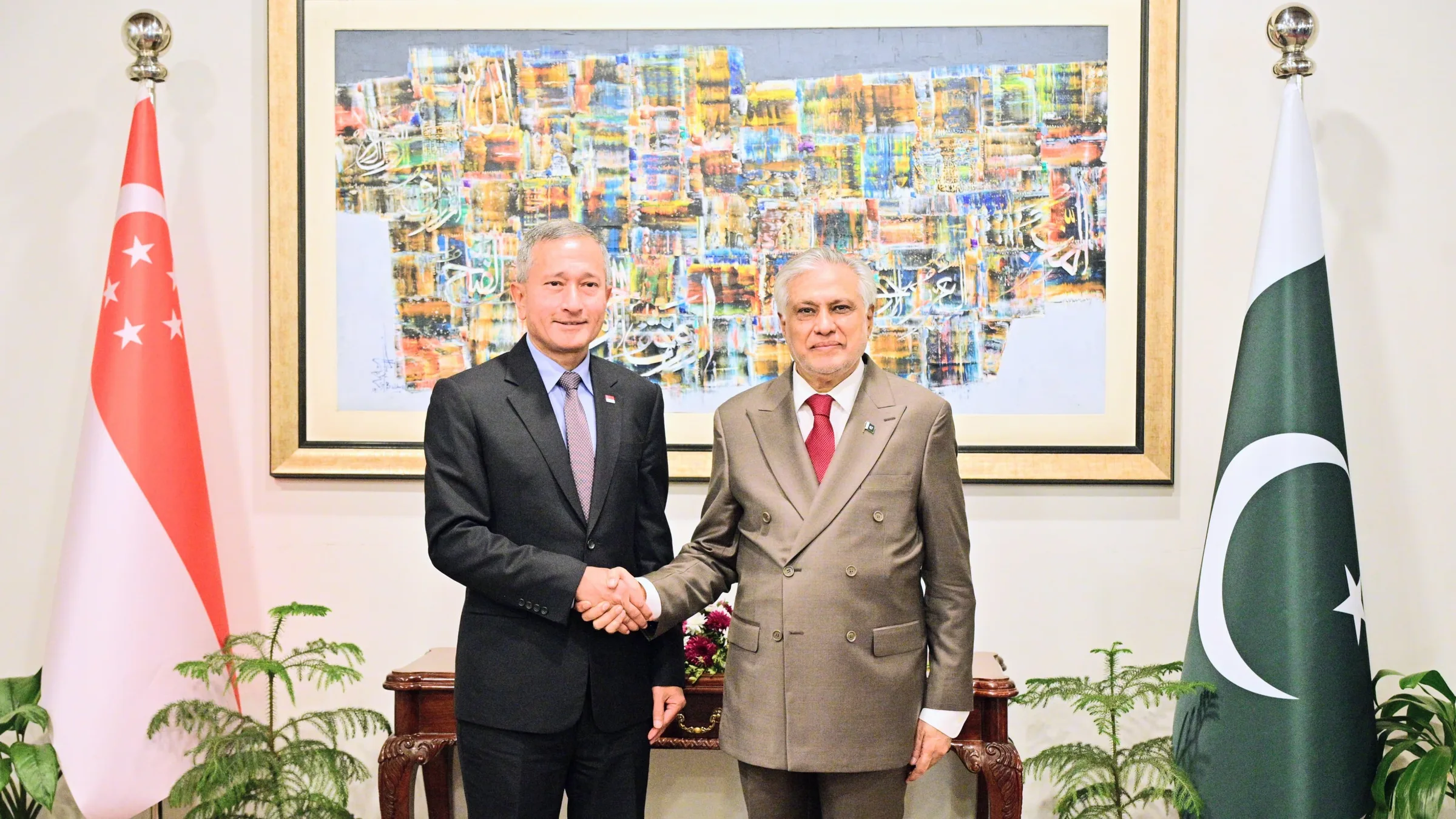
Pakistan and Singapore on Friday discussed restarting direct flights between the two countries as Singapore’s Foreign Minister Vivian Balakrishnan held talks with Deputy Prime Minister and Foreign Minister Ishaq Dar in Islamabad, Dawn and The Express Tribune reported. Dar said the flights would “facilitate business travel and close contact between our peoples”.
A first visit in over two decades
Addressing a joint press conference, Dar said Balakrishnan’s trip was the first by a Singaporean foreign minister to Pakistan in more than 20 years, and that it came as the two countries mark 60 years of diplomatic relations. He noted that Pakistan was one of the first countries to recognise Singapore after its independence in 1965.
Balakrishnan was received at the airport by the Foreign Office’s director general for East Asia Pacific. He later called on Prime Minister Shehbaz Sharif, according to the Prime Minister’s Office, and the two discussed trade, investment and cooperation in the digital economy, fintech, infrastructure, logistics, small and medium enterprises and services.
What was agreed
According to Dar, the delegation-level talks and a restricted meeting focused on political and economic ties, technology, education and cultural contacts. The two sides agreed to:
- hold regular bilateral political consultations and encourage high-level exchanges;
- exchange business delegations and build stronger links between chambers of commerce;
- reopen the Pakistan Trade and Investment Office at the High Commission in Singapore;
- work together on education, research, digital technologies, artificial intelligence, human resource development, agriculture and climate; and
- look at the possible resumption of direct flights.
Earlier in the day, Dar and Balakrishnan exchanged a memorandum of understanding between Pakistan’s National Disaster Management Authority (NDMA) and Singapore’s Civil Defence Force on cooperation in disaster preparedness and response. Balakrishnan said disasters were not something anyone wished for but that, with climate change, they were “a current and clear threat”.
“Trade ought to be much higher”
Balakrishnan said the relationship at the diplomatic level was “so good that it makes it even more obvious that actual trade relations… ought to be much higher”, and called that the first order of business. He said governments should help small and medium businesses meet and understand the opportunities and risks in both South Asia and Southeast Asia. He also said the two sides discussed carbon markets, which he described as a promising way to bring investment into projects in Pakistan that cut emissions.
Regional issues
Dar said the two sides discussed the effect of regional tensions on maritime trade, and that secure sea routes and uninterrupted supply chains were essential for economic stability. He said Pakistan was working with international partners to encourage dialogue as the only viable way to resolve disputes. On Palestine, he said he had raised concern about the expansion of illegal settlements and efforts to change the status of the West Bank and Al-Quds Al-Sharif, and stressed the need for unhindered humanitarian aid to Gaza. He restated Pakistan’s support for an independent, sovereign and viable Palestinian state on the pre-June 1967 borders with Al-Quds Al-Sharif as its capital. He also briefed his guest on Pakistan’s position on a settlement of the Jammu and Kashmir dispute in line with UN Security Council resolutions.
Dar wished Singapore well as it prepares to chair the Association of Southeast Asian Nations (ASEAN) in 2027, and said Pakistan, as ASEAN’s oldest sectoral dialogue partner, looked forward to working with it.
Why it matters
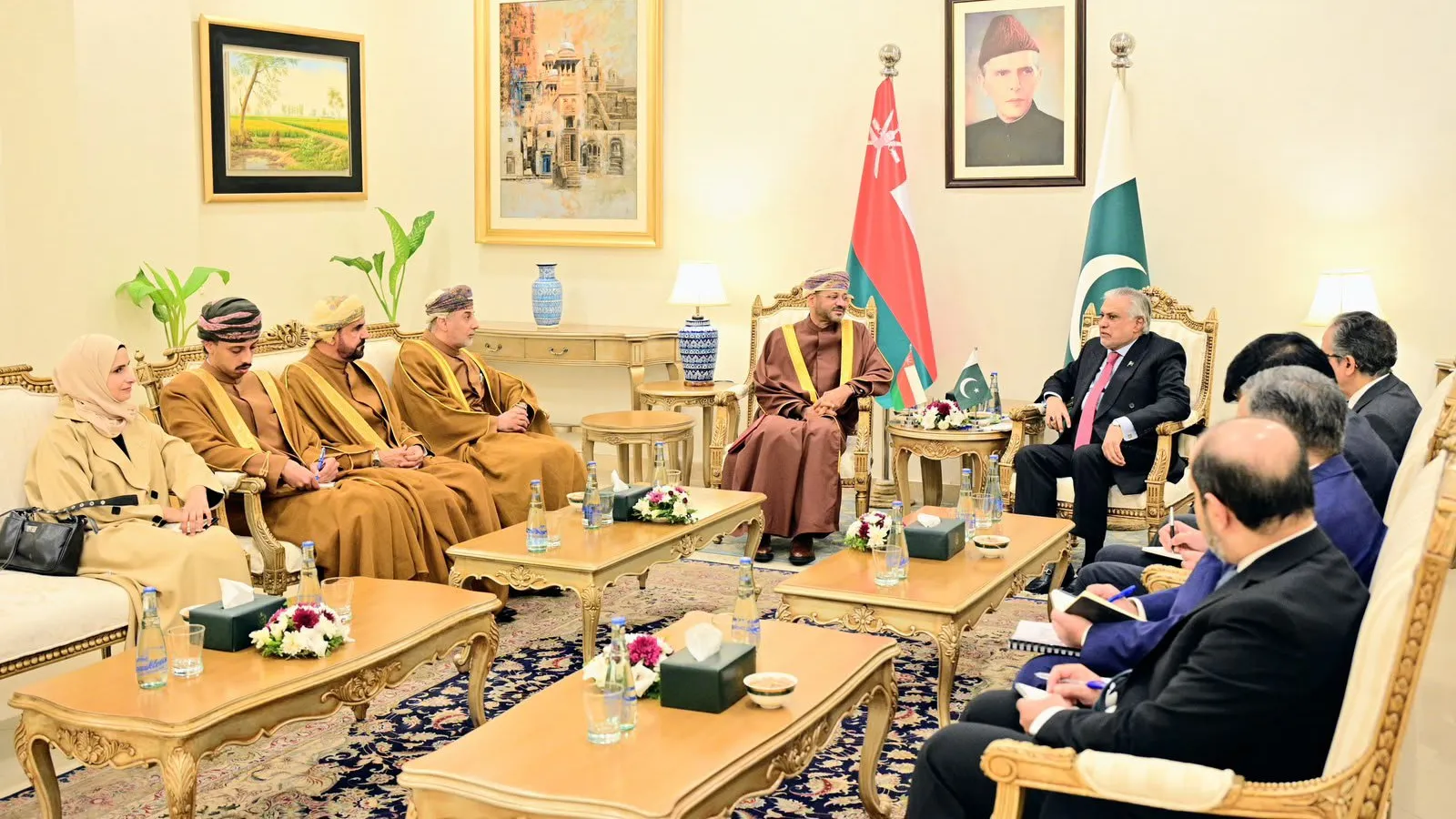
For Pakistan, the visit is a chance to ask a rich, trade-oriented partner for investment at a time when the economy is under pressure from high fuel and food prices; our report on Pakistan’s diplomacy with Oman at the joint ministerial commission shows the same push for closer economic ties. Both ministers, however, were more specific about goals than about numbers: no trade target, flight date or investment figure was announced. The things to watch are whether an airline announces a route, whether the trade office reopens on a set date, and whether the promised business delegations and carbon-market talks produce actual projects.
This article draws on reporting by Dawn and The Express Tribune.
Comments
Comments are reviewed by our editors before they appear. Please keep them civil and on topic. See our terms.
No comments yet. Be the first to share your view.