

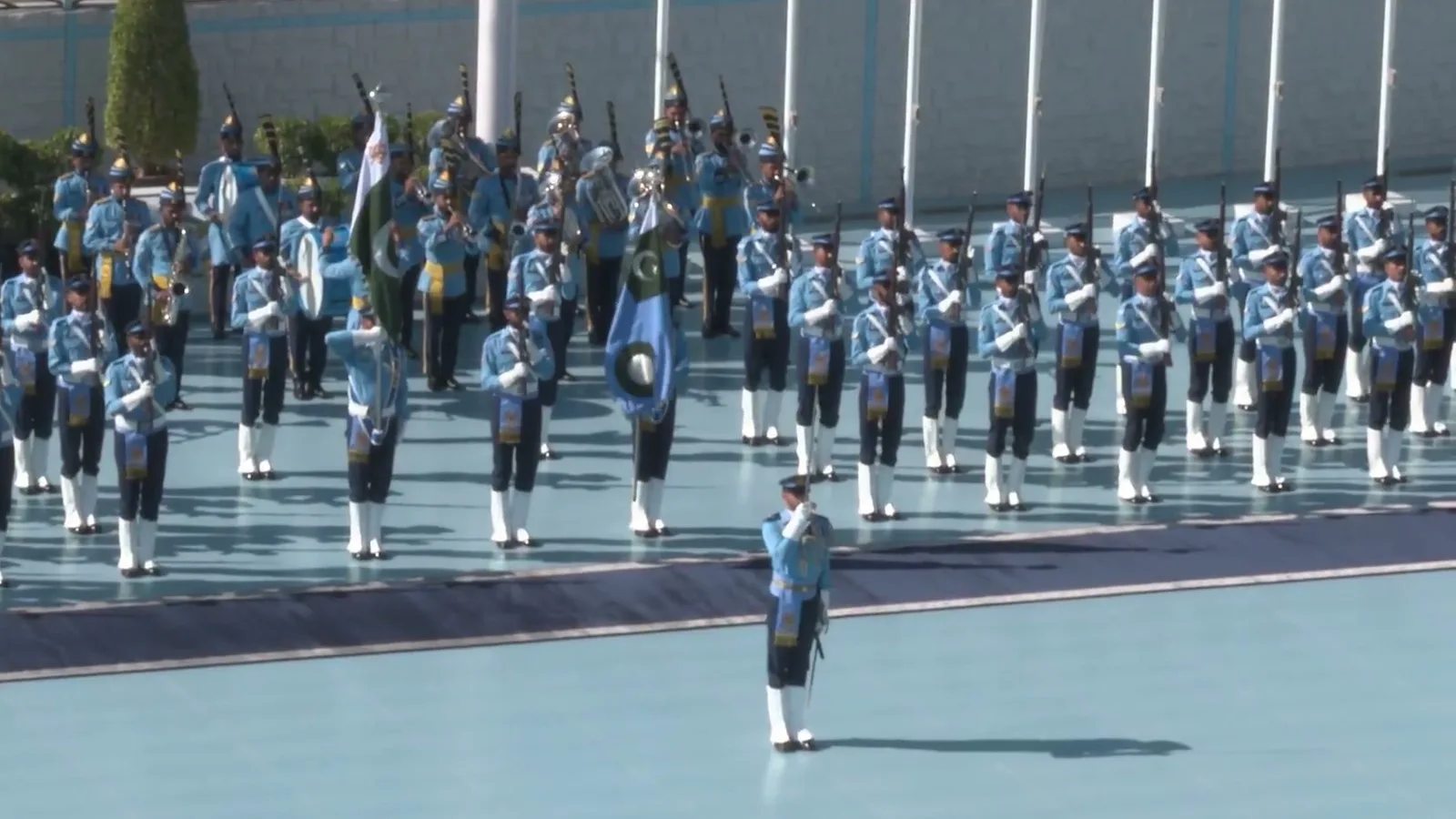
The air force chiefs of Pakistan and Turkiye met in Islamabad on Wednesday and identified drones, electronic warfare and advanced aerospace technology as areas for closer cooperation, according to the Pakistan Air Force (PAF). Air Chief Marshal Zaheer Ahmed Babar Sidhu received Turkish Air Force Commander General Rafet Dalkiran at Air Headquarters, where he was given a guard of honour.
What the statement says
In a statement, the PAF’s media wing (the DGPR) said the two commanders saw “substantial opportunities” in four fields:
- unmanned and autonomous systems;
- electronic warfare;
- advanced aerospace technologies; and
- indigenous research, development and production.
Air Chief Marshal Sidhu described the Pakistan-Turkiye relationship as one grounded in shared history, common values and mutual trust that has become a robust strategic partnership. He assured his guest of the PAF’s “all-out support” in pilot training, professional development and capacity-building for the Turkish Air Force, and told him the PAF is being transformed into a technologically advanced force able to operate across several domains, through modernisation and home-grown innovation, the statement said.
General Dalkiran praised the PAF’s professional standing and combat experience and said he wanted to draw on its operational expertise. Both sides stressed institutional exchanges, joint training and exercises to improve how the two air forces work together, the DGPR said. The statement described the visit as a sign of deepening strategic ties and a shared aim of a more integrated, technology-driven defence partnership.
A second meeting in two days
The visit began a day earlier. On Tuesday the Turkish commander called on Field Marshal Asim Munir, who is Chief of Defence Forces and Chief of the Army Staff, at General Headquarters. They discussed regional security and ways to strengthen defence cooperation, and Field Marshal Munir pointed to the long historical, cultural and strategic ties between the two countries, according to the military’s account.
| Date | Meeting | Topics, as reported |
|---|---|---|
| May 2026 | Air Chief Marshal Sidhu’s visit to Turkiye | Joint exercises, training, unmanned aerial systems, emerging technology |
| November 17 | Turkish commander with Field Marshal Munir at GHQ | Regional security, defence cooperation |
| November 18 | Turkish commander with Air Chief Marshal Sidhu at Air HQ | Drones, electronic warfare, aerospace, training |
The wider framework
Pakistan and Turkiye already share several agreements. Both signed the Makkah Defence Pact with Saudi Arabia in August, and in October they joined Qatar and Indonesia in the Badr pact on defence cooperation. They also belong to the Regional Four (R4) group with Saudi Arabia and Egypt, which was formed in March and has met several times, Dawn noted. Our earlier reports cover the Badr defence industry pact and the meeting of military chiefs planned under the Makkah pact.
What the statement leaves out
The PAF statement describes areas of interest and a desire for more exercises. It does not mention any contract, purchase, co-production deal or date, and it does not say which Turkish or Pakistani systems are involved. That is normal for a courtesy visit, and readers should not read more into it than it says. The signal is about direction, not delivery.
Why it matters
For Pakistan, the visit shows its partnerships spreading beyond a single bilateral link to a group of countries with shared defence-industry interests. The practical test will be what follows from it. Joint exercises, training exchanges and any announcement of joint development would show whether talk of “institutionalised” exchanges turns into schedules.
What to watch: any announcement of joint exercises, further meetings of the Makkah and Badr frameworks, and whether either side names a specific project.
Comments
Comments are reviewed by our editors before they appear. Please keep them civil and on topic. See our terms.
No comments yet. Be the first to share your view.