
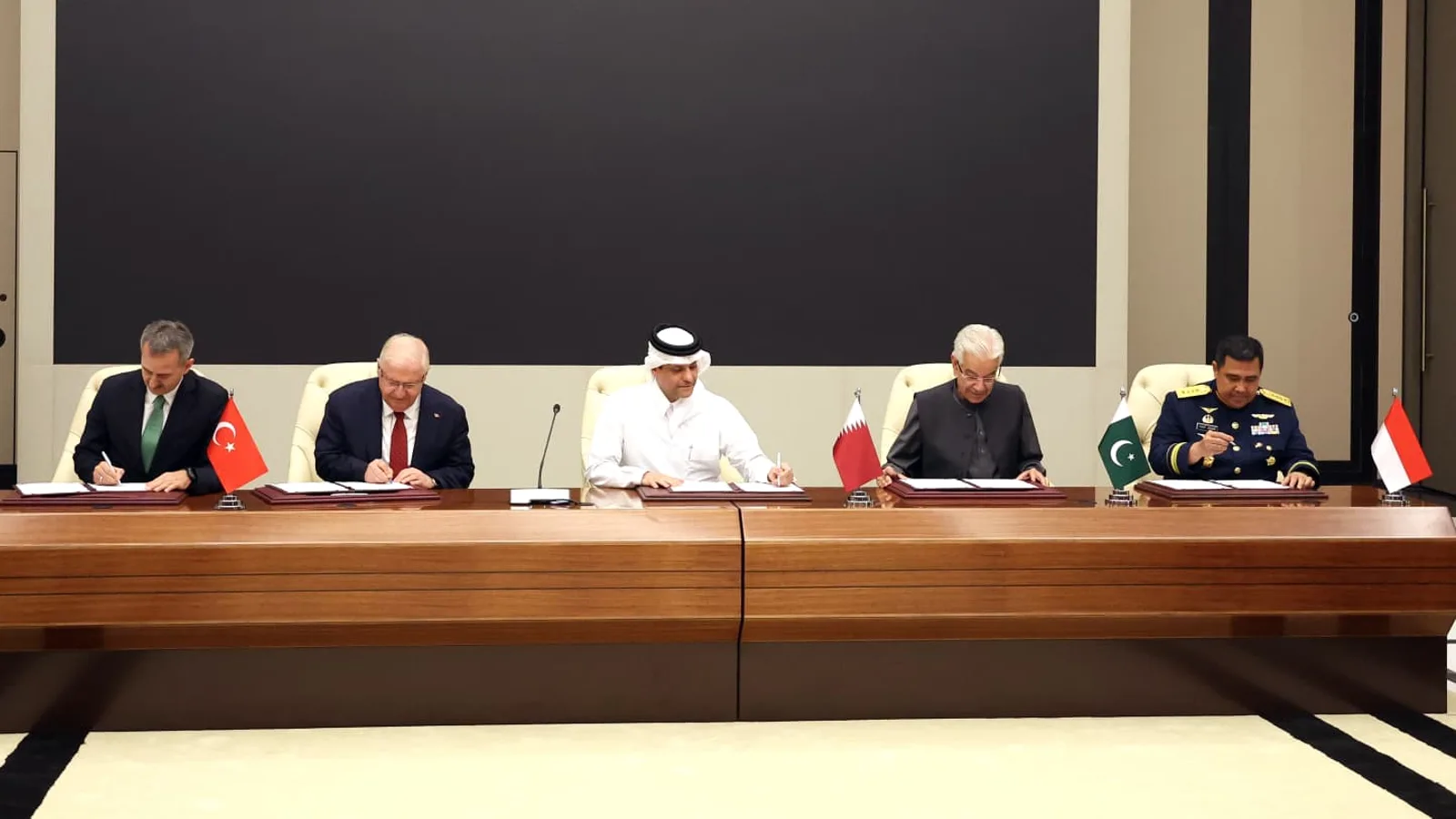
Pakistan, Turkiye, Qatar and Indonesia on Wednesday signed a multilateral pact to cooperate on defence production and capabilities, the Turkish defence ministry said.
The agreement, titled the “Badr Memorandum of Understanding”, was signed in Doha by the four countries’ defence ministers, Dawn and The Express Tribune reported. Defence Minister Khawaja Asif signed on behalf of Pakistan.
“The agreement holds substantial economic importance,” the Turkish ministry said. “By leveraging the unique military production capabilities of each country, the initiative will facilitate cooperation and integration, enhance defence industrial capacities, and enable the fulfilment of the needs of allied and friendly nations.”
Who signed
- Turkiye: Defence Minister Yasar Guler
- Qatar: Deputy Prime Minister and Minister of State for Defence Affairs Sheikh Saud bin Abdulrahman bin Hasan Al Thani
- Indonesia: Deputy Defence Minister Yusuf Jauhari
- Pakistan: Defence Minister Khawaja Muhammad Asif
Haluk Gorgun, head of Turkiye’s Secretariat of Defence Industries, also attended.
What the pact covers
The memorandum seeks cooperation in military production, stronger military capabilities, and collaboration in technical training, research and development. It builds on existing defence projects among the four countries.
“Technology sharing, joint development and strengthening domestic production capabilities lie at the heart of sustainable defence industry,” Gorgun said. “As Turkiye, we value partnerships that go beyond off-the-shelf procurement models, that foster the development of a nation’s own human capital and industrial infrastructure.”
The state-run Qatar News Agency said the pact was named Badr, “referring to the full moon, to signify how the four nations complement one another”. It added: “Other friendly nations may join the MoU, in accordance with criteria agreed upon by the four countries.”
Pakistan’s view
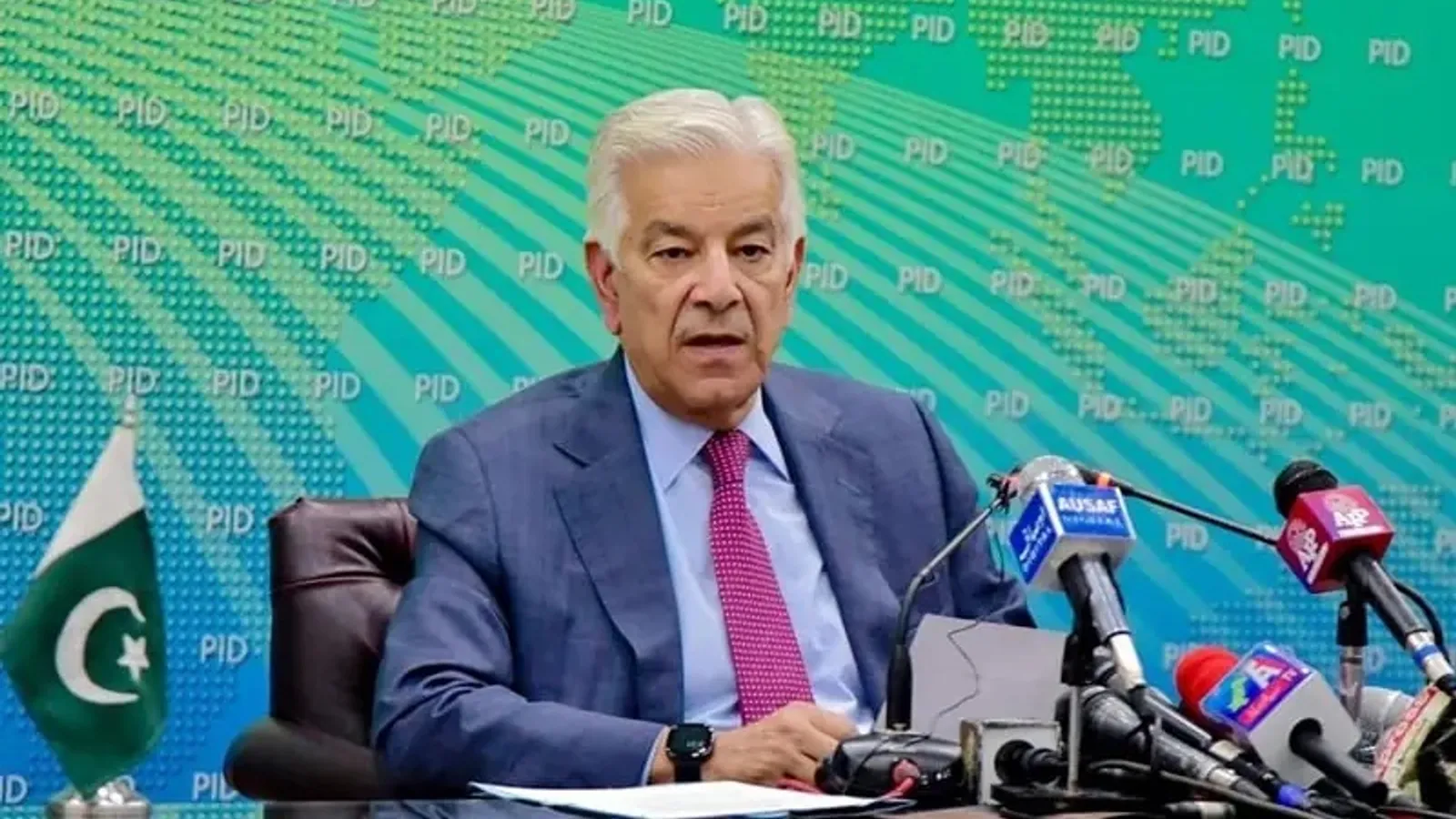
Khawaja Asif said Pakistan placed great importance on strengthening defence cooperation with trusted partners and was committed to regional peace and stability, The Express Tribune reported.
He said the partnership would help strengthen self-reliance, promote industrial collaboration, expand joint production and facilitate technology transfer, and stressed the importance of joint research and development, training exchanges and building industrial capability.
A web of alliances
The pact adds to a growing network of defence ties:
- The Makkah pact: Pakistan and Turkiye signed the Makkah Joint Defence Agreement with Saudi Arabia in August, treating an attack on one as an attack on all; Qatar welcomed that pact
- Existing projects: the PN MILGEM Babur-class corvette is a flagship Pakistan-Turkiye defence project; Qatar has bought Turkish Bayraktar TB2 drones and armoured vehicles
- Mediation: Islamabad and Doha have worked together as mediators in the US-Iran conflict
- Indonesia: the Indonesian naval chief met Field Marshal Asim Munir last month, and the two sides pledged closer cooperation in training and joint exercises
Turkiye’s defence and aerospace exports topped $10 billion in 2025, up 48 percent, according to its exporters’ association.
Gulf states step up coordination
On the same day, the Gulf Cooperation Council’s Armed Forces Operations and Training Committee held an extraordinary meeting in Riyadh to strengthen coordination and readiness among their armed forces, as Yemen’s Houthis keep attacking Saudi Arabia, according to the UAE defence ministry.
Why it matters
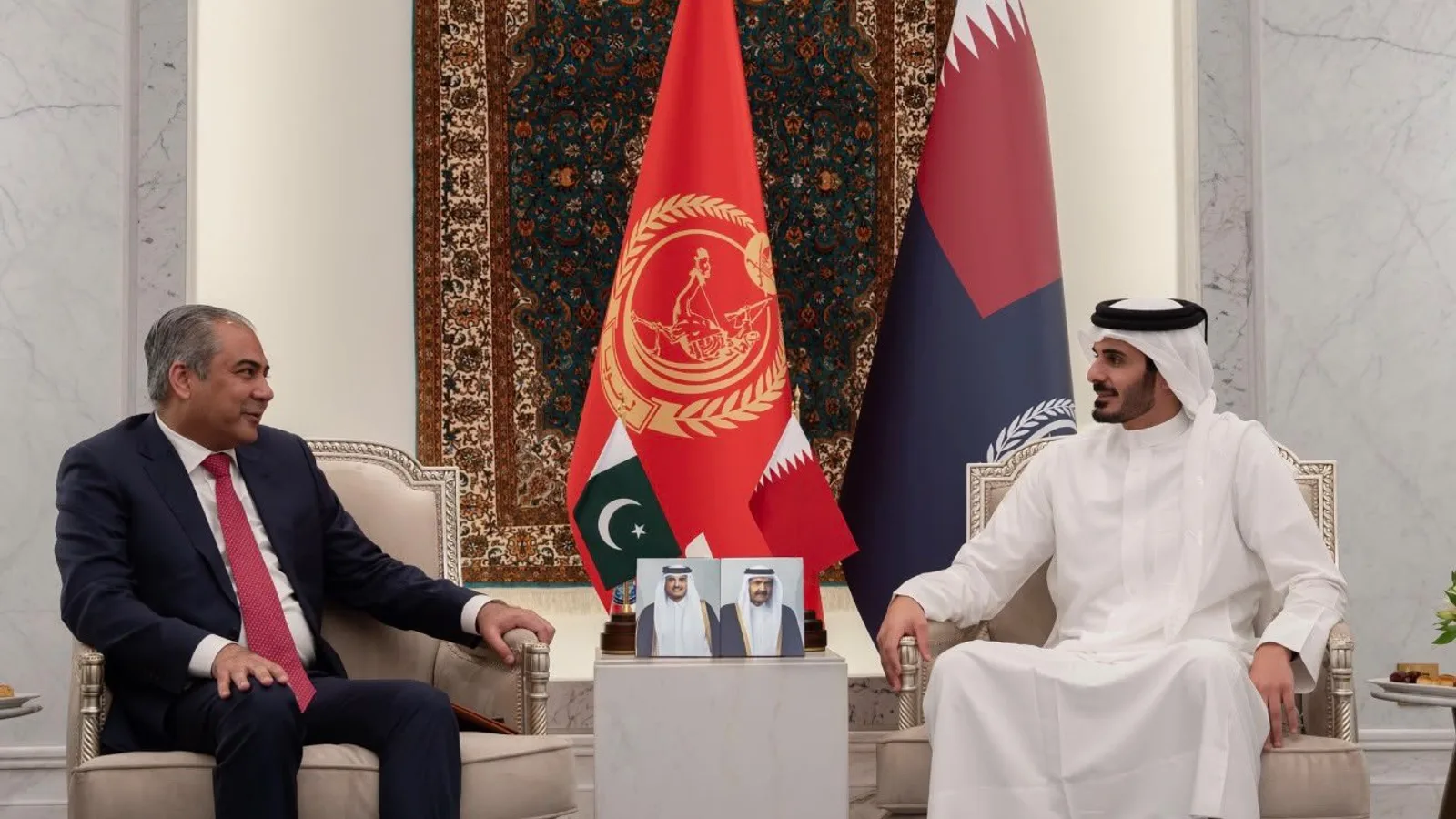
The Badr pact links Pakistan’s defence industry with three important Muslim partners at a time of war in the region. Joint production and technology transfer could help Pakistan build more of its own weapons and sell them abroad. Read our reports on the text of the Makkah defence pact and on Pakistan’s security cooperation with Qatar.
This article draws on reporting by Dawn, The Express Tribune, Reuters and Anadolu.
Comments
Comments are reviewed by our editors before they appear. Please keep them civil and on topic. See our terms.
No comments yet. Be the first to share your view.