
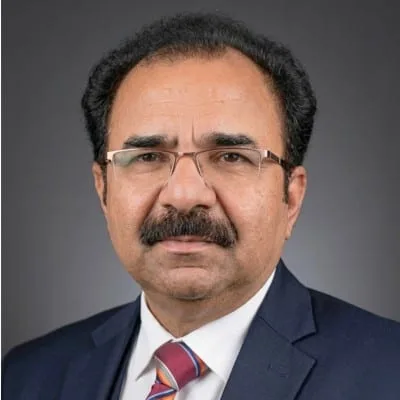

Justice Mohsin Akhtar Kayani of the Lahore High Court (LHC) resigned on Wednesday, more than five years before he was due to retire, saying his conscience would not let him stay on the bench. Dawn and The Express Tribune reported the resignation, which he sent to President Asif Ali Zardari.
What the letter says
In the letter, a copy of which Dawn has seen, Justice Kayani gave two reasons: his health after a recent surgery, and “reasons of conscience”. On the second, he was direct. “In my considered view, the changes introduced through the 26th and 27th Constitutional Amendments have compromised the independence and institutional integrity of the high Courts,” he wrote.
He said he had seen “the executive’s growing control over judicial institutions, extending to the appointment and transfer of judges”, and that this had “seriously eroded public confidence in judicial independence and the fairness of the judicial process”. He also wrote about the ordinary litigant, “whose suffering continues to deepen”, and said that other actors had become “beneficiaries of a system intended to serve them”.
“In these circumstances, my conscience does not permit me to continue on the bench,” he wrote. He said he would return to legal practice. He also said he had disposed of more than 23,000 cases during his years on the bench and thanked his teachers, fellow judges and family. He was due to retire on February 10, 2032.
How he got here
Justice Kayani, who comes from Islamabad, was the senior puisne judge of the Islamabad High Court (IHC) and expected to become its chief justice. That changed when the IHC’s chief justice, Sardar Muhammad Sarfraz Dogar, was moved there from the LHC and two other judges were transferred in from other high courts. Justice Kayani challenged the inter-high court transfers. The Supreme Court’s constitutional bench upheld them, including Justice Dogar’s, but the dispute went on.
Justice Kayani and other senior IHC judges then asked the Supreme Court to look at the administrative powers used by Justice Dogar, alleging that the chief justice’s office had become a “monocracy” and that judges could be left out of the roster at will.
The Tribune reported that the Judicial Commission of Pakistan approved Justice Kayani’s transfer to the LHC, together with Justice Babar Sattar to the Peshawar High Court and Justice Saman Riffat Imtiaz to the Sindh High Court. It was the first time the 27th Amendment, passed in November last year, was applied to the high courts. An amendment to Article 200 removed the need for a judge’s consent before a transfer and let judges be moved between provinces on the commission’s recommendation. The three transferred judges had been among six IHC judges who wrote to the Supreme Judicial Council about alleged interference by intelligence agencies in judicial affairs, the Tribune said.
At the LHC, Justice Kayani dropped down the seniority list (Dawn put him 12th and the Tribune 10th), and was not placed on any division bench. Days before he quit, a new roster assigned him to a single bench at the Rawalpindi registry.
Where this leaves the courts
The letter is a public criticism of the 26th and 27th Amendments from a sitting judge. The Tribune noted that Justice Kayani has been known for his rulings on human rights, particularly cases involving enforced disappearances, and that he had spoken against the 27th Amendment while it was being passed.
The reports we drew on carry no response from the government or the judiciary. A few things will show how far this goes: whether the president accepts the resignation, whether other judges speak out, and whether the pending challenges to the transfers in the Supreme Court are decided.
For people with cases in the high courts, the practical effect is simpler. A senior judge with years of service has left, and his cases will have to be reassigned.
This article draws on reporting by Dawn and The Express Tribune.



Comments
Comments are reviewed by our editors before they appear. Please keep them civil and on topic. See our terms.
No comments yet. Be the first to share your view.