

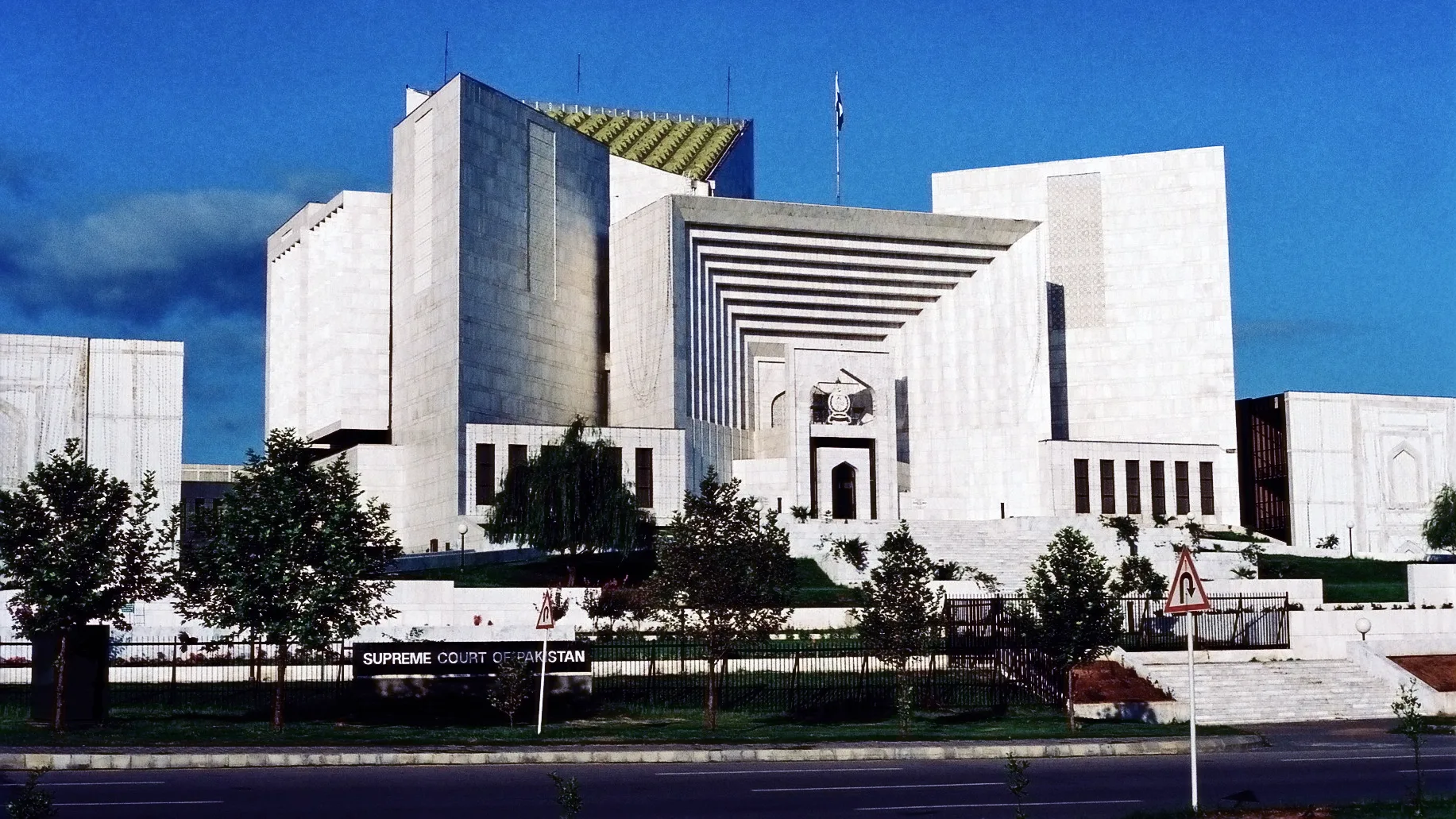
The Federal Constitutional Court (FCC) on Monday rejected a claim to proprietary rights over protected agricultural land by the holders of a lease, observing that state property held in trust for the community cannot be “alienated” except under the law, Dawn reported.
The ruling
“Where official record discloses a legal prohibition affecting the very competence of the authority to transfer such property, courts cannot disregard it,” FCC Chief Justice Aminuddin Khan observed. He headed a two-judge bench, with Justice Ali Baqar Najafi, hearing a challenge by the member (colonies) of the Punjab Board of Revenue to a 2016 Lahore High Court (LHC) decision that had favoured the respondent, Rasheeda Bibi, now deceased.
The court framed two questions: whether the land in dispute could be given to leaseholders as private property under the government’s policy notification of September 3, 1979, and whether the executive district officer (revenue) was competent to review an earlier order. It answered both in the government’s favour. It held that:
- a temporary cultivation lease confers “no vested or indefeasible right” to proprietary title, and the leaseholders’ entitlement stayed subject to the conditions of the 1979 notification, in particular the ban on land falling in a prohibited zone;
- a successor revenue officer was competent to review an order passed by his predecessor, subject to the statutory requirements and prior sanction under section 163 of the Punjab Land Revenue Act, 1967;
- the dispute had to be decided under the governing law and policy, “rather than based on prolonged possession, extension of lease or payment of government dues”.
Justice Aminuddin also said the rules of pleadings, important as they are for fairness, “cannot be invoked to perpetuate an illegality resulting in unauthorised divestment of state property”. Courts, he said, have a duty to notice any legal bar that is clear from the record and to ensure that public property is not given away through administrative error, omission or acquiescence.
How the dispute began
The respondent was leased 49 acres, 5 kanals and 13 marlas of agricultural land in Chak No 2/KB, Pakpattan, under the Temporary Cultivation Lease Scheme from the Kharif season of 1968 to the Rabi season of 1978, with extensions granted from time to time. Later she asked for proprietary rights under the September 3, 1979 notification. The application was rejected on May 14, 2001, because the land lay within a prohibited zone.
After appeals and remands, the Pakpattan executive district officer (revenue) accepted the claim in a 2008 order and directed that a challan be issued for the deposit of the land price. That order was then reviewed, with the permission of the member (colonies) of the Board of Revenue, and the claim was rejected again on August 24, 2011. The LHC later set aside that rejection, which led to the appeal before the FCC.
The judgment explained the legal difference between the two kinds of rights. A temporary cultivation lease only permits possession and cultivation “without derogation from state title”, while conferring proprietary title results in the permanent loss of public property. The respondents’ reliance on the original lease was therefore “misconceived”, it said, as it set aside the LHC order.
Background
Read our earlier report on the FCC disposing of a plea against governor’s rule in Khyber Pakhtunkhwa.
What we know and what we don’t
What we know: the court’s reasoning, the land’s history and the fact that the LHC order has been set aside.
What we don’t know: what happens next to the land and to the heirs of the late leaseholder, since the judgment as reported does not say whether the area will be taken back by the revenue department, or how many other leases elsewhere are in a similar position.
Why it matters
The judgment sends a clear message that years of possession and regular payments do not turn a lease into ownership, and that officials cannot give away public land by mistake or oversight. For leaseholders, the practical point is to check which conditions and prohibited-zone rules apply to their land. For the state, the case is a reminder to keep land records in order, since this dispute ran from 1979 to 2026.
This article draws on reporting by Dawn.




Comments
Comments are reviewed by our editors before they appear. Please keep them civil and on topic. See our terms.
No comments yet. Be the first to share your view.