
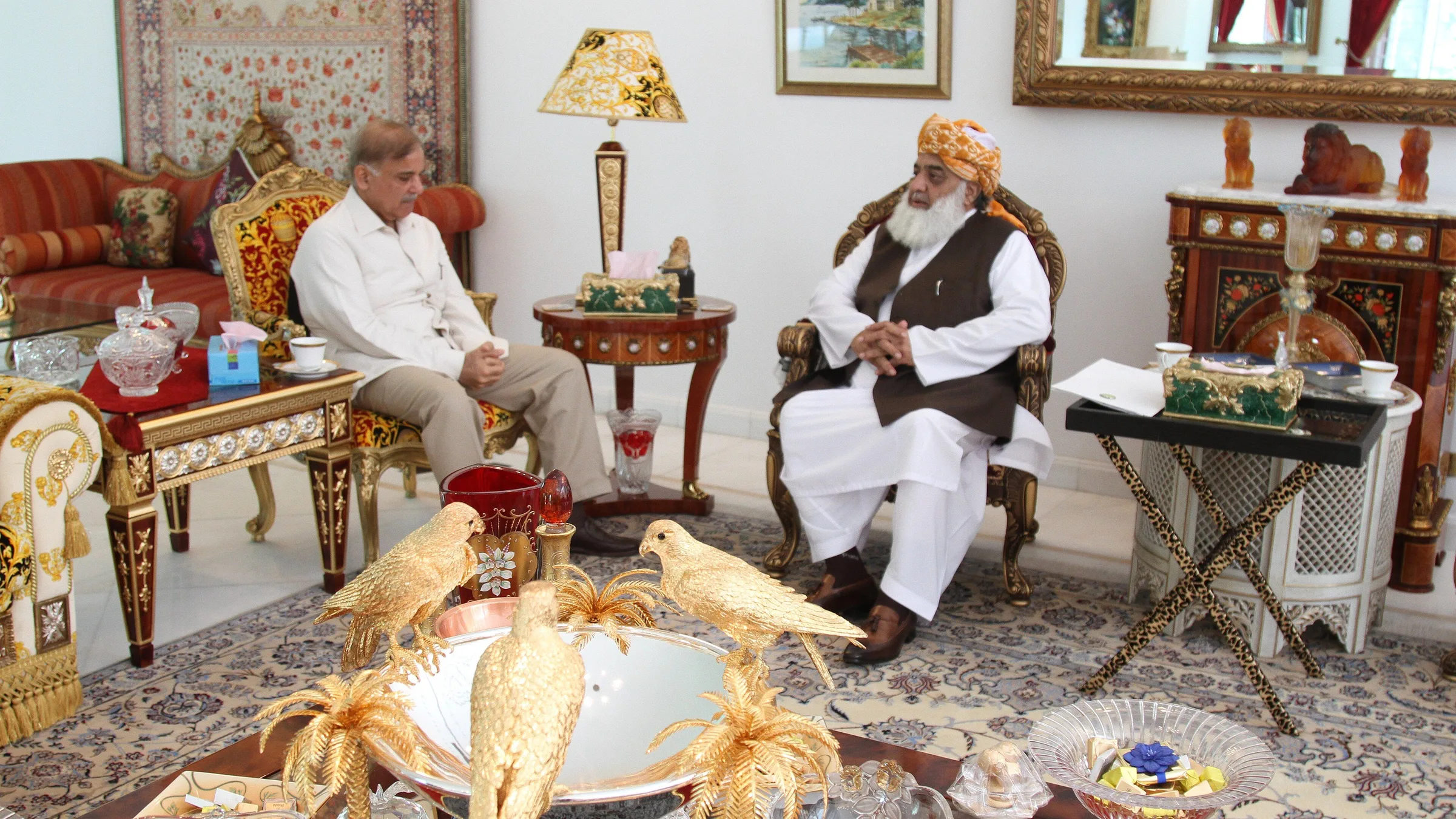
Jamiat Ulema-e-Islam-Fazl (JUI-F) chief Maulana Fazlur Rehman has rejected the government’s justification for imposing governor’s rule and an emergency in Khyber Pakhtunkhwa, alleging that the real aim is to gain control of the province’s mineral resources rather than to fight terrorism, The Express Tribune reported.
Speaking at a press conference on Tuesday after a meeting of his party’s central shura, Fazl called for an in-camera session of parliament to brief lawmakers on the security situation and discuss the government’s actions.
No seat on the interim council
Fazl announced that no JUI-F member would join the interim council being formed in the province. He said political power should change hands through constitutional means, not through force “at the behest of powerful quarters”.
His party believed in political dialogue, he said, and grievances over government policy should be addressed through discussion rather than allegations.
“Baseless” justification
The federal government imposed the emergency and governor’s rule on October 11, citing the provincial government’s disengagement from the fight against terrorism. Fazl said that justification was baseless and questioned the results of repeated military operations against militancy.
He pointed out that the PML-N government had merged the former Federally Administered Tribal Areas (Fata) with KP, but was now placing the former tribal areas under federal control. In his view, the developments were driven by an interest in controlling the province’s mineral wealth.
Fazl questioned the constitutional basis for the measures, saying governments should be installed or removed according to the Constitution and not through coercion. He asked whether governor’s rule imposed by former prime minister Zulfikar Ali Bhutto and by Asif Ali Zardari in the past had been accepted at the time.
He also accused President Zardari of failing in his constitutional duty by signing the proclamation without being satisfied that its requirements had been met.
JUI-F’s own losses
On terrorism, Fazl said his party had also suffered heavily, with more than 150 of its people killed in militant violence. He said JUI-F had rejected “the politics of the gun”.
He criticised the local government system introduced by former military ruler Pervez Musharraf, saying it had failed. He recalled that the police had been separated from the administration under that system, and that there had since been calls to reverse the arrangement.
Muslim unity and the Houthis
Looking beyond Pakistan, Fazl said no single power could claim to represent the whole nation, and urged policymakers to plan for future challenges as Asia re-emerges as a global economic hub.
He called on the Muslim world to form a united and effective bloc and regretted that the Organisation of Islamic Cooperation (OIC) was ineffective. He described Houthi attacks on Saudi Arabia as an attempt to undermine Muslim unity.
Before and after
Before the emergency was declared, PML-N leader Amir Muqam had said the Centre did not want governor’s rule in the province.
Parliament has since ratified the proclamations in a joint session, while the Peshawar High Court is hearing petitions challenging them.
Comments
Comments are reviewed by our editors before they appear. Please keep them civil and on topic. See our terms.
No comments yet. Be the first to share your view.