

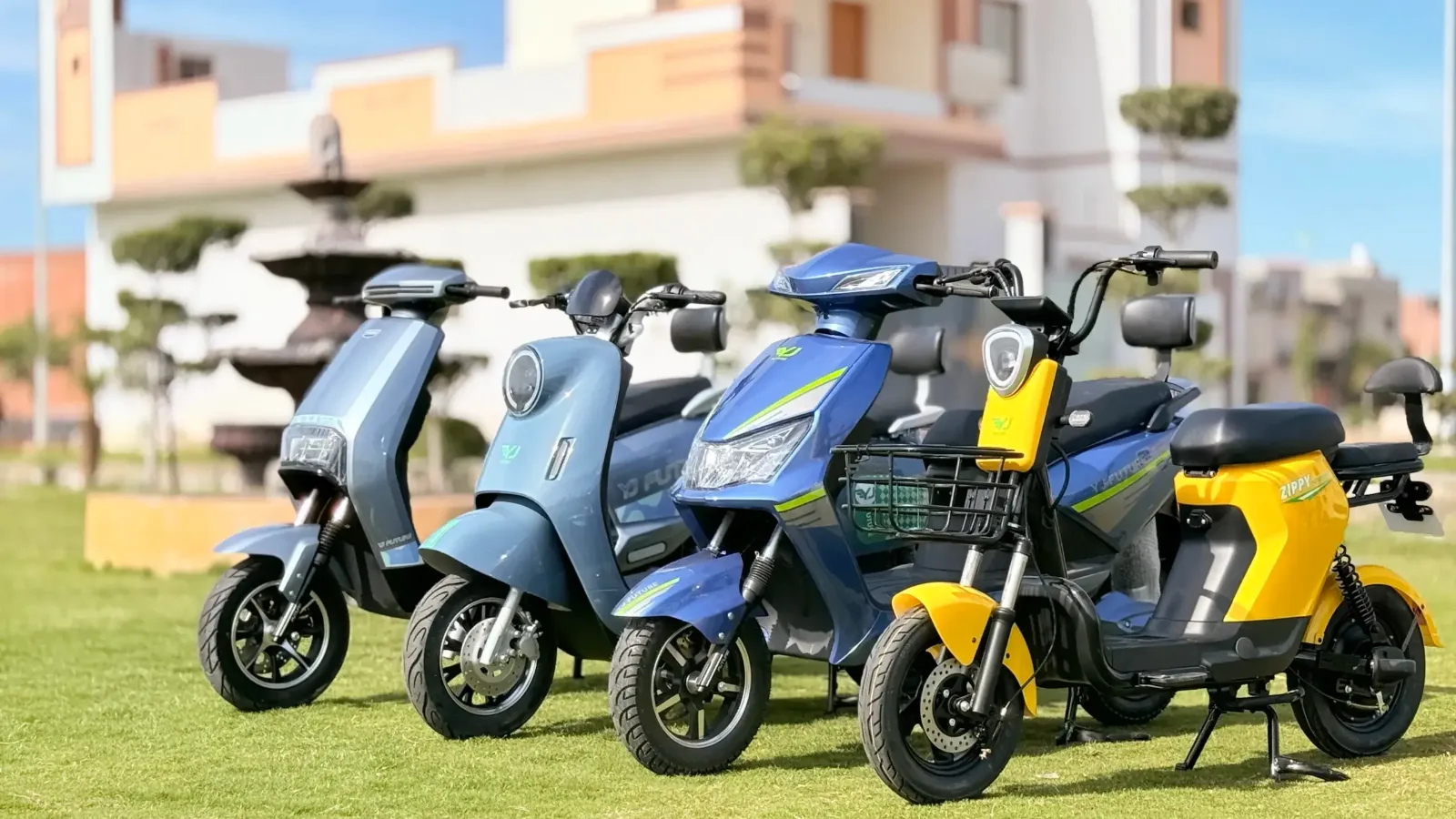
Pakistan’s plan to put electric bikes and rickshaws on its roads will only pay off if the country also learns to make them, according to a new analysis from the Institute of Cost and Management Accountants of Pakistan (ICMA). Without that, the institute warns, Pakistan could simply trade its dependence on imported petrol for dependence on imported electric vehicles, batteries and parts.
The warning comes in the ICMA’s latest Economic Signal, titled “Can PAVE Shift Pakistan from EV Adoption to EV Industry?”, issued from Karachi this month. We set out what it says below.
Why fuel prices are the backdrop
The institute points to how wildly petrol has moved this year. A litre cost Rs266.17 on 1 March, peaked at Rs458.41 in early April, then swung up and down before settling at Rs319.00 on 24 November. That is lower than the peak but still about 19.85 per cent above where it started in March, which the ICMA reads as a sign of how exposed Pakistan remains to world oil markets, import bills and pressure on foreign exchange. Fuel pricing is a live issue elsewhere too: petrol pump owners have given the government 15 days before they threaten to shut down, as we reported in our story on the dealers’ warning.
What PAVE is meant to do
PAVE, the Pakistan Accelerated Vehicle Electrification programme, sits inside the New Energy Vehicle (NEV) Policy 2025-30. It works through subsidies, bank financing and a distribution system. Across its first two phases it aims to deliver about 116,000 electric bikes and 3,170 electric rickshaws and loaders. The vehicle-tax side of the policy was covered in our report on the one per cent sales tax on electric cars in the new auto policy.
The gap between demand and delivery
The ICMA’s main evidence is how slowly applications have turned into vehicles on the road.
| Stage | What happened |
|---|---|
| By May 2026 (first phase) | 44,689 applications sent to banks |
| Processed by banks | 9,889, or about 22.1 per cent |
| Approved | 4,075, about 9.1 per cent of all applications |
| Left unprocessed | 34,800, nearly 78 per cent |
| Financing at that stage | Rs143 million |
| Vehicles reported distributed | 5,409 |
Changes to the programme have since helped on approvals. Government figures reported on 28 October show banks had approved 21,918 applications, involving about Rs3.06 billion in financing. Delivery is still the weak link: Rs1.093 billion had been paid out across 5,506 loans, and 3,263 vehicles had been handed to customers.
By our arithmetic, that means only about one approved applicant in seven had received a vehicle by the end of October. The ICMA does not give that ratio, and the figures come from different counts, so it is a rough guide rather than an official rate. The numbers also do not line up neatly: the 5,409 vehicles reported as distributed in the first phase is higher than the 3,263 handed over in the October figures, and the analysis does not explain the difference.
From buying EVs to making them
The institute’s bigger argument is about what happens after the sale. Rising demand for electric vehicles, it says, could support local assembly, battery-related industries, components, charging equipment, repair and maintenance, recycling, engineering skills and technical training. If most of that work is done overseas, the money and the jobs go with it.
The ICMA wants PAVE to be seen as more than a subsidy for buyers. It describes the scheme as a strategic economic tool that links energy security, household affordability and industrial competitiveness. The test, it says, is whether growing demand produces domestic value addition, productive investment and jobs, and not mainly higher imports.
Why it matters
For a household buying an electric bike, PAVE is a way to cut petrol spending when a litre costs Rs319. For the economy, the question is where the money lands. A subsidised electric bike assembled from imported kits keeps import demand alive, while one built with local batteries and parts could build a base of small factories and skilled workers. That is the choice the ICMA is putting to policymakers, and it is one the government will have to answer in the next phase of the policy, not only in the number of vehicles delivered.
The ICMA is a professional body of cost and management accountants, so its analysis comes from a financial and business point of view rather than an engineering one. Its numbers on applications come from the government and banks, and we have not checked them independently.
What to watch
- Whether the share of approved loans that turn into delivered vehicles improves from the October level.
- Whether the government attaches local-content conditions, such as local assembly or battery requirements, to future subsidy rounds.
- Whether investors announce assembly or battery plants in Pakistan in response to the demand.
What we do not know
- Why applications stalled in the first phase, and which of the later reforms made the biggest difference.
- How many of the 116,000 bikes and 3,170 rickshaws and loaders are planned for each phase.
- How much of the content of the vehicles delivered so far was made in Pakistan.
Comments
Comments are reviewed by our editors before they appear. Please keep them civil and on topic. See our terms.
No comments yet. Be the first to share your view.