
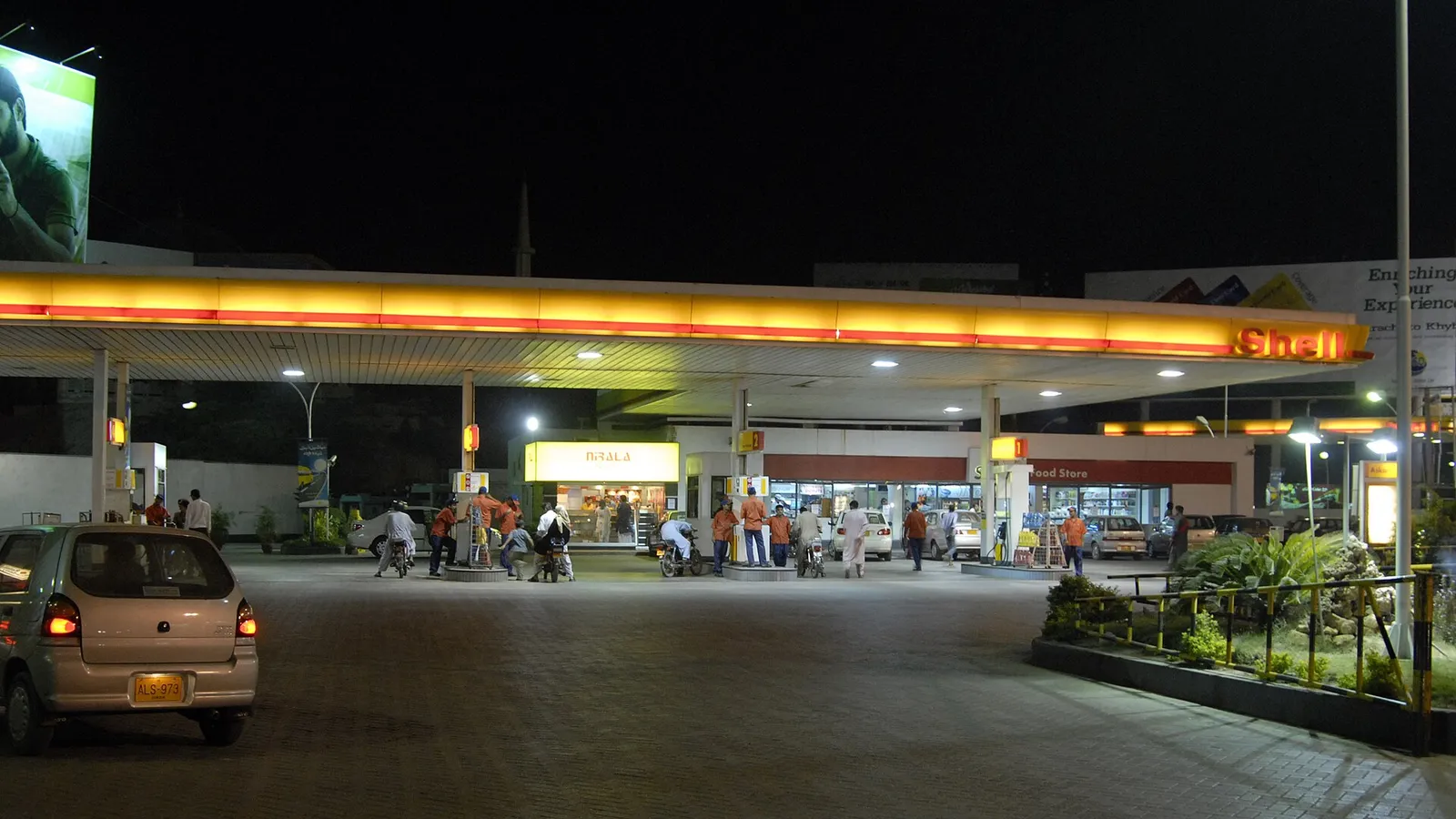
The government on Monday raised the price of petrol by 88 paisas a litre and cut the price of high-speed diesel (HSD) by Rs1.88 a litre, under the daily fuel pricing system introduced during the Iran war.
According to the Petroleum Division’s notification, the new prices apply for Tuesday, October 6, Dawn reported:
- Petrol: Rs393.64 a litre
- High-speed diesel: Rs397.76 a litre
The government still collects about Rs114 a litre in taxes and duties on petrol and Rs100 a litre on diesel.
The revision follows an increase of Rs2.10 a litre on petrol and 30 paisas on diesel for October 3 to 5, The Express Tribune reported.
Far below the April peaks
Prices have eased since the spring, but remain far above where they were before the war:
- Diesel: started rising from Rs281 a litre after the US-Iran war broke out on February 28, and peaked at Rs520.35 on April 3
- Petrol: began climbing from Rs266 in the first week of March and peaked at Rs458.41 on April 3
Prices set every day
On July 17, Petroleum Minister Ali Pervaiz Malik announced that fuel prices would be fixed daily, replacing weekly revisions, because of volatile international markets after renewed hostilities between Iran and the United States. The cabinet gave the Oil and Gas Regulatory Authority (Ogra) the job of setting prices each day based on global trends.
Relief and austerity
To soften the blow, the government has introduced several measures:
- Petrol relief: on September 13, Prime Minister Shehbaz Sharif announced Rs100 a litre off petrol for motorcycles, rickshaws and cars up to 800cc. About 10 million two-wheeler users and 800,000 three-wheeler users can claim relief on 20 litres a month, worth up to Rs2,000, while about one million small-car owners get relief on 30 litres, worth up to Rs3,000
- Earlier closing: from September 17, shops and markets must close by 9pm, marriage halls by 10pm, and restaurants by 11pm, with takeaway and delivery exempt
- Official vehicles: fuel allocations have been cut by 50 percent for three months
Who feels it
Petrol is used mainly by private cars, rickshaws and motorcycles, so its price hits the middle and lower-middle classes directly. Diesel powers heavy transport, power plants and large generators, so changes in its price feed into the cost of goods and food. Petrol and diesel are the biggest sellers, at about 700,000 to 800,000 tonnes a month.
The global picture
Pakistan imports most of its fuel, so world prices pass through quickly. On Monday, Brent crude fell about 1 percent to around $101 a barrel as Middle East exports rose and G7 nations pledged to release emergency stocks. But analysts warned that renewed fighting between Saudi Arabia and the Houthis would keep a risk premium on prices. “A truce in the Middle East remains elusive,” said PVM Oil Associates analyst Tamas Varga.
Why it matters
The small cut in diesel is welcome for transporters and farmers, but with prices still around Rs400 a litre and taxes making up more than a quarter of the cost, fuel remains a heavy burden on households. Read our reports on the last price cut and on why oil prices are slipping.
This article draws on reporting by Dawn, The Express Tribune and Reuters.
Comments
Comments are reviewed by our editors before they appear. Please keep them civil and on topic. See our terms.
No comments yet. Be the first to share your view.