

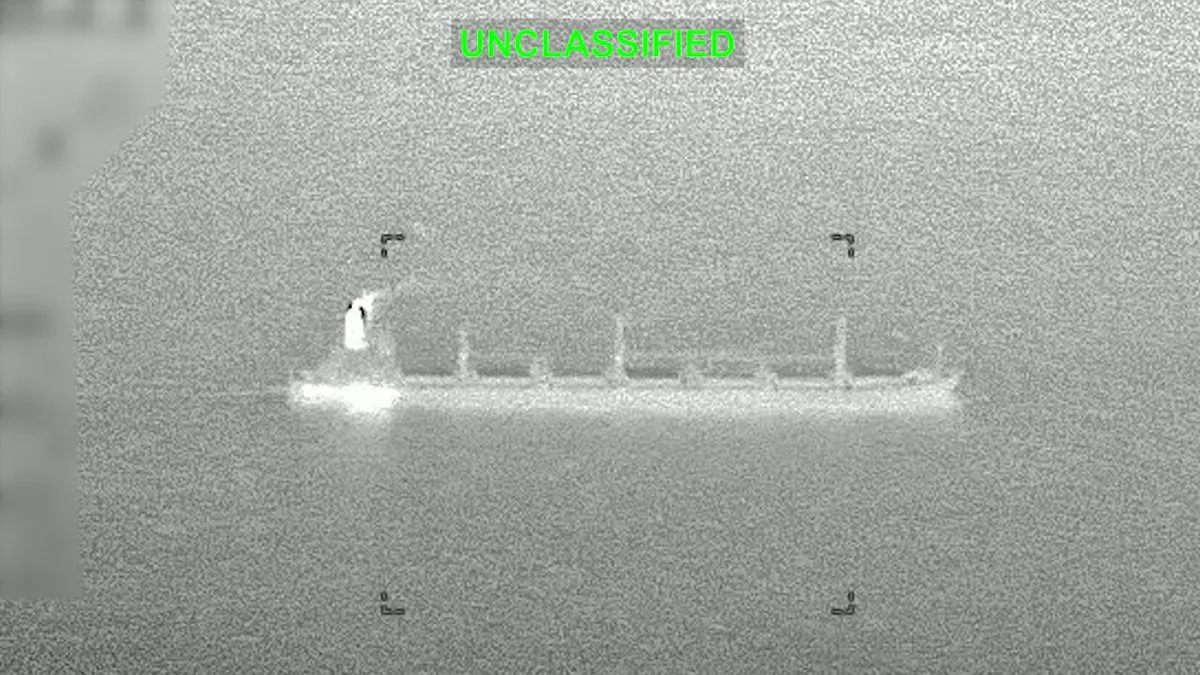
A US fighter jet disabled a commercial cargo ship in the Gulf of Oman on Saturday after its crew “ignored repeated warnings” and tried to run the US naval blockade of Iran, US Central Command (CENTCOM) said.
The jet knocked out the propulsion system of the Panama-flagged M/V Ocean Molica, also called the Arika Sun, which CENTCOM said was “attempting to transit regional waters after having previously departed an Iranian port”, The Express Tribune reported, citing Anadolu.
The blockade in numbers
CENTCOM resumed its blockade of all ships entering or leaving Iranian ports on July 14. By its own count:
- 4 commercial vessels have been disabled
- 135 ships have been turned around
- 10 tankers linked to what it called the Islamic Revolutionary Guard Corps’ “multibillion-dollar shadow network” have been destroyed
Trump: Iran may ‘do a little bit extra’
At a rally in Tennessee, President Donald Trump said Iran might step up its actions before the November 3 midterm elections. “They’ll probably do a little bit extra before the election, thinking it’s going to hurt us,” he said. “But we could end it really quick.”
“They don’t know how nice I’ve been to them,” he said, claiming he had shown restraint towards Iran. Trump, who is not on the ballot but is campaigning for fellow Republicans, has previously said the war might end just after the midterms, in which it has become a key issue.
Trump claimed 159 Iranian ships had been sunk since the war began in late February, and mused about renaming the Strait of Hormuz: “We’re thinking about renaming it to the Trump Strait.”
The US and Israel launched the war on Iran on February 28. Tehran responded with missile and drone attacks and effectively closed the Strait of Hormuz, sending global energy prices soaring as commercial oil traffic through the waterway effectively halted. The US and Iran signed a framework agreement in June after Pakistan and Qatar mediated a halt to hostilities, but its implementation has stalled over disputes including navigation in the strait.
Tankers hit in the strait
Shipping in the region remains dangerous:
- A tanker caught fire on Sunday after being struck on its port side by an unknown projectile in the Strait of Hormuz, the UK Maritime Trade Operations agency (UKMTO) said. The crew were reported safe.
- Late on Saturday, Iran’s Revolutionary Guards said an oil supertanker able to carry about 2 million barrels struck a naval mine and exploded while trying to leave the strait through an unauthorised southern route, after switching off its navigation systems.
UKMTO advised ships to pass through the area with caution while the incidents are investigated.
Why it matters
The blockade, the mines and the strikes on tankers are keeping one of the world’s most important energy routes largely shut, more than seven months into the war. Pakistan, which helped broker the June framework, has seen its own pump prices revised daily as global prices swing.
This article draws on reporting by The Express Tribune, Anadolu and US Central Command.



Comments
Comments are reviewed by our editors before they appear. Please keep them civil and on topic. See our terms.
No comments yet. Be the first to share your view.