


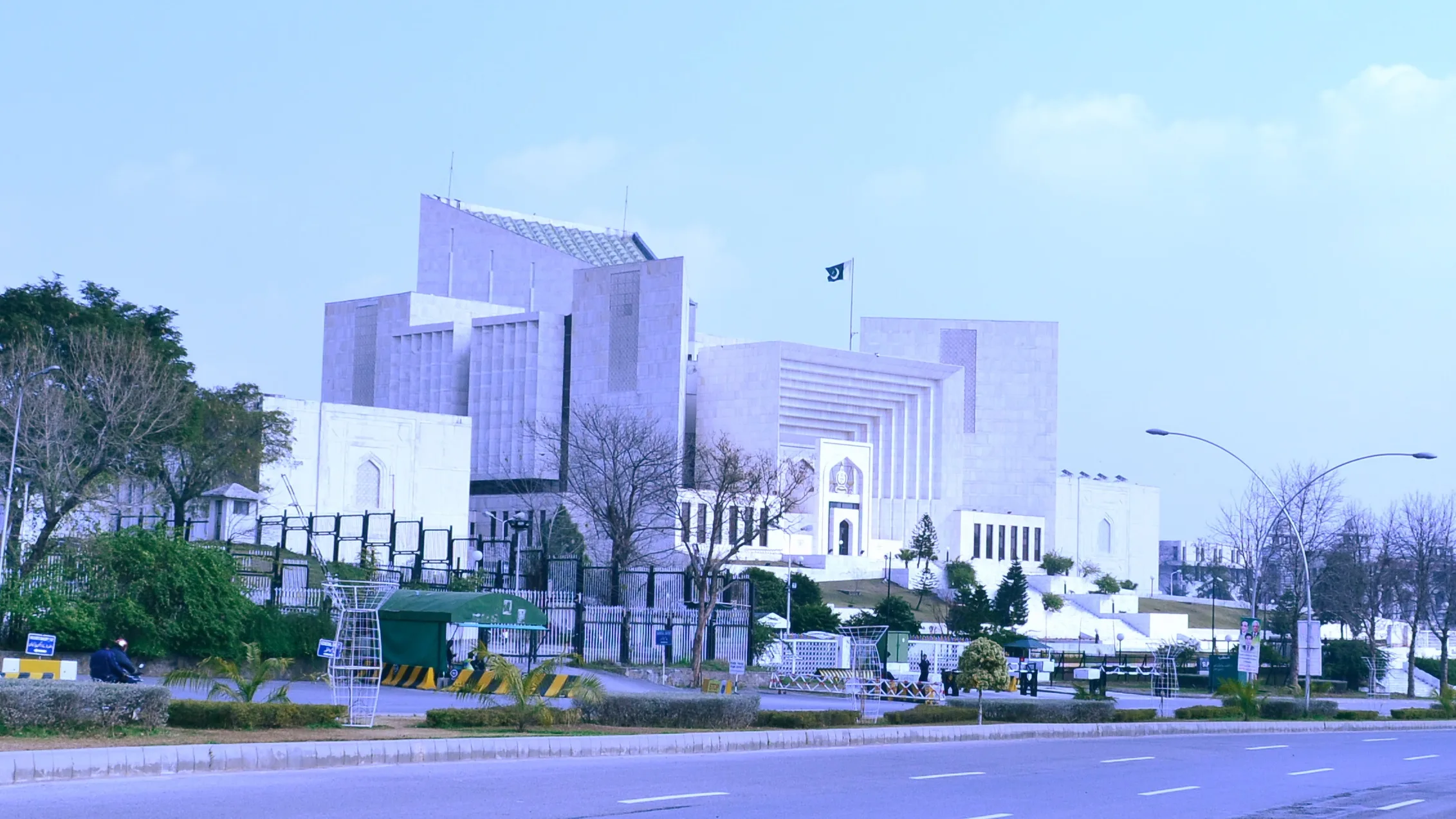
The Supreme Court said on Tuesday that respect for a woman’s dignity is not merely a matter of personal morality but a constitutional obligation that the state expects of everyone in its service, as it rejected a plea by a former Intelligence Bureau (IB) employee against his compulsory retirement, Dawn reported.
A two-member bench headed by Justice Ayesha Malik, with Justice Shahid Waheed, dismissed the plea over the allegation that the man had set his wife on fire. Justice Waheed wrote the nine-page judgment.
The case
The petitioner, Jawad Abbasi, worked as a cook in the IB. He challenged a January 15 decision of the Federal Service Tribunal (FST) that upheld his compulsory retirement. He had faced disciplinary proceedings under the Civil Servants (Efficiency and Discipline) Rules, 2020, over allegations that he set his wife on fire and was ill-mannered and short-tempered. He was also accused of conduct described as criminal, unprofessional and prejudicial to good order and service discipline, and of damaging the reputation of the IB.
The departmental proceedings found the charges established, and by an order dated June 14, 2024 he was compulsorily retired. His departmental appeal was rejected and the FST dismissed his service appeal. A lower court, however, had acquitted him in the criminal case.
His lawyer, Aftab Alam Yasir, argued that the matter was private and domestic, unconnected with his official duties, and that conduct outside the workplace and office hours could not be misconduct under the civil service rules. He pointed to the acquittal and claimed the wife had attempted suicide.
What the court held
Justice Waheed ruled that “off-duty conduct of sufficient gravity may constitute misconduct and acquittal in a criminal case does not undo misconduct independently established in departmental proceedings”.
The judgment said a woman’s dignity, “whether as a wife, sister, daughter, mother or a fellow citizen”, is a fundamental value protected by the Constitution, and that “respect for that dignity is not merely a matter of personal morality; it is an obligation that the state is entitled to expect from every person in its service.” A civil servant’s conduct is not judged only by how he does his job, it said. His private character and conduct can become relevant when they bear on his suitability for office, the discipline of the service or public confidence in the institution.
“The walls of a home are not a jurisdictional boundary, and violence does not become private because it is committed behind a closed door,” Justice Waheed wrote, adding that “fire does not become a family affair because it was lit indoors”. The allegation, he noted, was not of “a quarrel or a harsh word” but of setting a wife on fire, “among the gravest forms of violence one person can inflict upon another”.
On the claim of suicide
The court addressed the defence that the wife tried to kill herself. “The burning of women in their homes, frequently passed off as a kitchen or stove accident or as attempted suicide, is a grave and recurring social evil in this country,” the judgment said. “The plea of suicide is often the final injury inflicted upon a burnt woman; having been robbed of her safety, she is then robbed of the truth.”
It said a public institution could not stay indifferent to such an allegation against one of its employees, because indifference would be “a failure of institutional duty, not a mark of respect for privacy”. A civil servant found on proper inquiry to have used potentially lethal violence against his spouse displays “a want of self-control and a disregard for human life”, it said, and such conduct is “wholly unbecoming” of a government servant.
The bench cited Pakistan’s protections for women, including the Punjab Protection of Women against Violence Act, 2016, the Domestic Violence (Prevention and Protection) Act, 2020 for Islamabad, and the UN convention on eliminating discrimination against women. We reported on an earlier judgment on violence over a refused marriage in our story on the Supreme Court’s Ghag ruling.
What we know, and what we don’t
- Known: the court upheld the retirement on the findings of the departmental inquiry; a trial court had earlier acquitted him.
- Known: the allegations are those on which the departmental proceedings and the court relied, and the ruling concerns his employment, not a new criminal verdict.
- Unknown: whether the family or prosecutors will appeal the acquittal; the report does not say.
Why it matters
Government employees often face criminal cases and service cases separately, and an acquittal can be treated as a clean slate. This judgment sets out that a service inquiry can reach its own findings on serious conduct at home, which departments can now cite. It also puts on record, from the highest court, that violence behind closed doors is not a private matter for those who hold public office.
This article draws on reporting by Dawn.



Comments
Comments are reviewed by our editors before they appear. Please keep them civil and on topic. See our terms.
No comments yet. Be the first to share your view.