

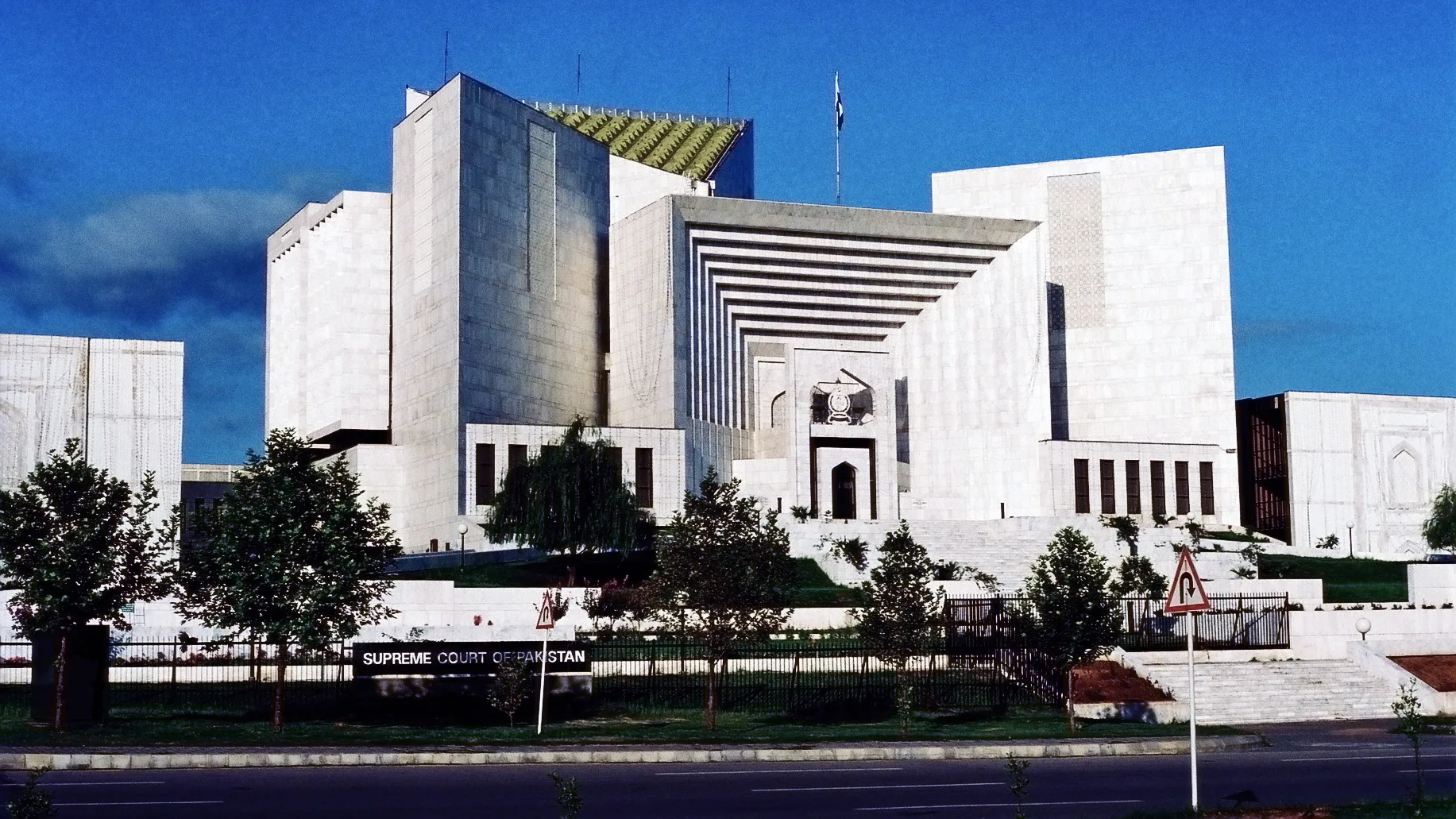
The Supreme Court has ruled that whenever reasonable doubt arises about a suspect’s involvement in a crime, the suspect should not be deprived of bail, criticising prosecutors for changing charges in a case in a way that kept a man in jail, Dawn reported.
“The object of a trial is to make an under-trial suspect answer criminal trial instead of punishing by letting him rot behind bars,” Justice Muhammad Ali Mazhar wrote in a five-page order published on Wednesday.
He headed a three-member bench that heard an appeal on July 22 from Muhammad Akbar, who had been granted bail by the Supreme Court on April 16 in a case registered at Quetta’s New Sariab police station.
The principle
“Whenever reasonable doubt arises with regard to the participation of the accused in the crime or the truth or probability of the prosecution case as well as the evidence proposed to be produced in support of the charge, the accused should not be deprived of benefit of bail and in such a situation it would be better to keep him on bail than in jail during the trial,” the order said.
The court extended Akbar’s bail on the same terms, saying its observations were tentative and would not affect the trial.
How the charges changed
- The original case: Akbar was booked for transporting expired drugs, under sections of the Pakistan Penal Code and the Drugs Act 1976 that carry penalties of up to six months
- Bail granted: on April 16, a two-judge bench granted him post-arrest bail on bonds of Rs100,000
- New charges: when the bail order was sent for compliance, it emerged that prosecutors had rewritten the FIR, replacing the original charges with sections covering white-collar crimes by public servants, forgery, cheating, abetment and corruption, which carry penalties from 10 years to life
- No explanation: state counsel and the investigating officer said the changes were made on January 15, but could not explain why the court was not told when it granted bail, or why the Drugs Act charges were dropped
When asked what new evidence justified the changes, the investigating officer said four witness statements had been recorded, and that a Quetta deputy superintendent of police had sought the opinion of a deputy inspector general (legal).
“Hide and seek”
“It appears from the conduct of the prosecution that to complicate the case with some ulterior motives, the prosecution acted unfairly and added certain sections,” Justice Mazhar observed, adding that another aim may have been to deprive the petitioner of bail.
He said new charges could be added if an investigation uncovered something, “but not on the whims of prosecution”, and that any change before bail was granted should have been brought to the court’s notice “without playing hide and seek”.
The judge regretted that because of “such callous conduct”, the petitioner, who had been granted bail, was still behind bars. “The prosecution is itself confused regarding the culpability of the petitioner due to changing stances,” the order said, making it a case for further inquiry.
Why it matters
The ruling reminds prosecutors that bail cannot be defeated by quietly changing the charges, and that doubt must work in the suspect’s favour. Read our report on the Mir Raza inquiry’s findings on police failures.
This article draws on reporting by Dawn.



Comments
Comments are reviewed by our editors before they appear. Please keep them civil and on topic. See our terms.
No comments yet. Be the first to share your view.