

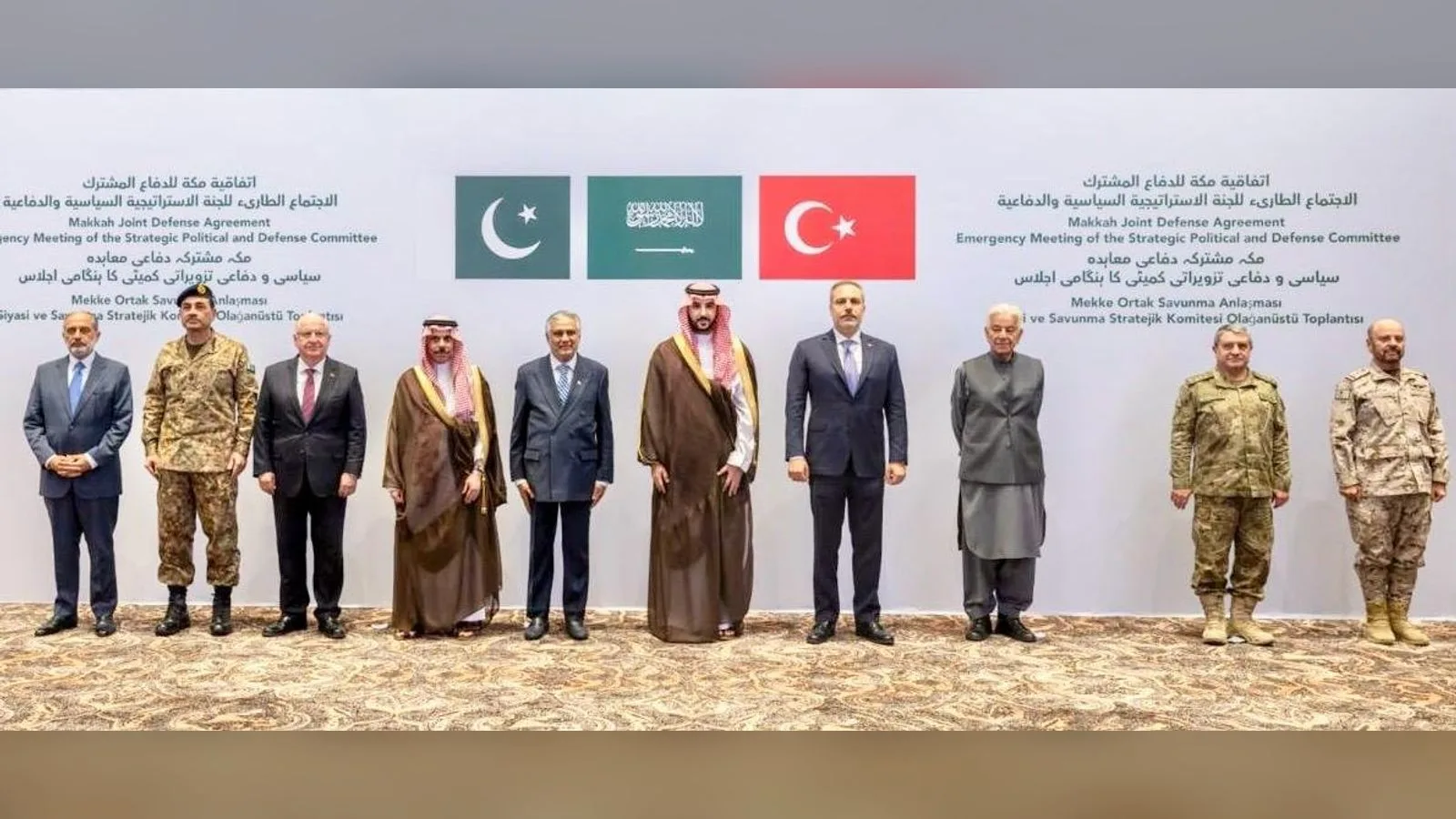
Pakistan is hosting the top decision-making body of the Makkah Defence Alliance in Islamabad on Friday and Saturday. The war between Saudi Arabia and Yemen’s Houthis is on the agenda, and the three allies are trying to turn a three-month-old pact into something that can act.
Update: Turkiye’s President Recep Tayyip Erdogan formally approved the Makkah Joint Defence Agreement on Friday, Turkiye’s Official Gazette said, completing its ratification after parliament voted on November 5. In Islamabad, police closed entry and exit routes to the Red Zone, including around Serena Hotel, Nadra Chowk, Ayub Chowk and Express Chowk, until 12:30am on Saturday, and advised residents to use Margalla Road.
Update, November 28: After about two and a half hours of talks on Friday, the three allies denounced what they called “persistent and heinous” Houthi attacks on civilians and civilian sites in Saudi Arabia, and promised to keep protecting the kingdom’s security, sovereignty and territory under the pact’s collective defence clauses, Deputy Prime Minister and Foreign Minister Ishaq Dar told reporters. In their joint statement they also:
- reaffirmed collective defence, mutual solidarity and respect for sovereignty;
- welcomed progress on setting up the alliance’s secretariat in Saudi Arabia;
- backed de-escalation in the region and the peaceful settlement of disputes;
- agreed to work together on defence industries, joint technology, training and capacity building.
Dar underlined the “purely defensive nature” of the alliance, the Foreign Office said. Defence Minister Khawaja Asif called the declaration a “historic and far-sighted step” and wrote on X that the Muslim world was “uniting to ensure its own security, rather than looking to others”.
View this post on X
The meeting, the second of the alliance’s Strategic Political and Defence Committee (SPDC) according to the Foreign Office, brings together the foreign ministers, defence ministers and defence chiefs of Pakistan, Saudi Arabia and Turkiye. Islamabad and Rawalpindi declared a local holiday on Friday, and special movement restrictions are in force in the capital.
Yemen on the table
Defence Minister Khawaja Asif said on Thursday that the “turmoil south of Saudi Arabia” would be discussed, Dawn reported. Since Yemen’s civil war reignited in July, when a ceasefire from 2022 broke down, the Houthis have repeatedly hit Saudi towns, oil plants and ships.
Under the pact, he said, a threat to Saudi Arabia is a threat to Pakistan and Turkiye as well, and on that point it is “absolutely clear”.
The war is escalating. On Thursday a Houthi strike hit a refinery in Jazan, in Saudi Arabia’s southwest, killing a Nepalese worker and wounding others, according to Saudi officials. The Saudi-led coalition answered that it had wiped out 50 Houthi military sites across Sanaa, Al Hudaydah and Saada, along with the launcher it says fired at Jazan; it did not describe the targets, and the Houthis stayed silent. In Yemen itself, the World Health Organization counts 13,343 people killed or wounded since August.
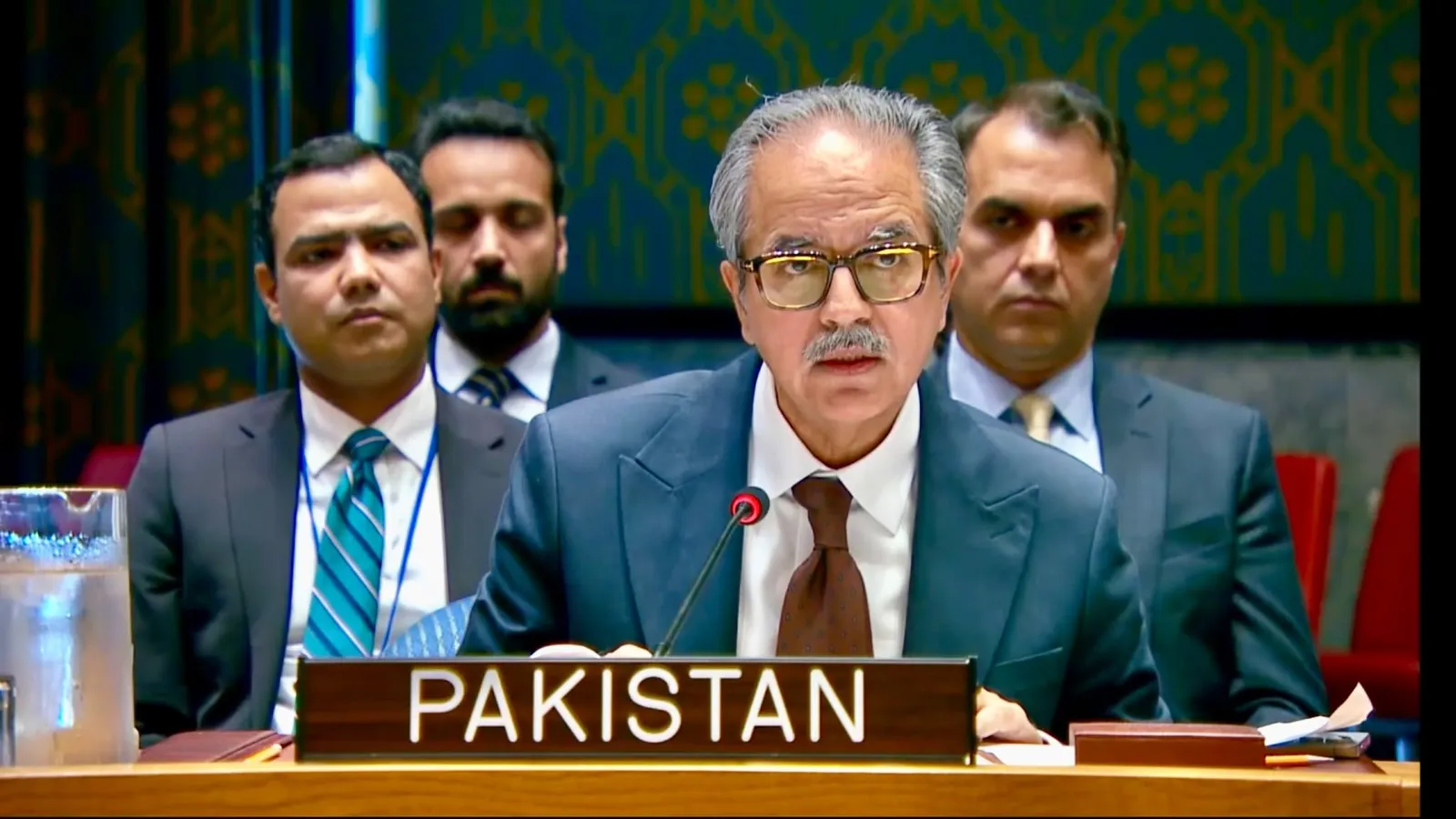
Pakistan’s position on the Houthi attacks is already on record: at the UN Security Council this month it demanded an end to Houthi attacks on Saudi Arabia.
What the meeting has to decide
The pact itself is short on detail. Signed on August 7, it says an armed attack on one member is an attack on all three, obliging the others to help “through available means, including military support”. Turkiye’s ratification completed the three countries’ accession. But the alliance has not yet published a doctrine, the make-up of its forces, its command arrangements or the rules for a joint military response. Asif called it a “nascent stage”.
A Pakistani official said the Islamabad session would focus on:
- Standard operating procedures for how the alliance works day to day.
- An implementation mechanism to turn decisions into action.
- Coordination between the three countries’ political, defence and military institutions.
An emergency SPDC meeting in Riyadh on October 5 had already called for “practical implementation” of the collective defence commitments, including arrangements for rapid deployment of agreed forces, subject to each country’s laws. A permanent secretariat has been set up in Riyadh, headed by Pakistan’s retired Lt Gen Nauman Mahmood as its first secretary general.
The Iran question
Around the alliance, a bigger war is under way between Iran on one side and the US and Israel on the other. Asked what the pact would do if Iran struck Saudi Arabia directly, Asif would not say. He did single out Israel as a danger to the region and said its countries needed to “close our ranks”.
For Pakistan, which shares a long border with Iran and has acted as a go-between with Washington, that balance matters most. Foreign Minister Ishaq Dar has argued for a regional security framework built on the Makkah pact. Turkiye, for its part, has stressed that the agreement is defensive and has been cautious about any role in combat in Yemen.
Why it matters
For ordinary Pakistanis, the alliance links the country’s security directly to the Gulf, where millions of Pakistanis work and through which most of its oil arrives. A pact that commits Pakistan to Saudi Arabia’s defence needs clear limits, so that it deters attacks without pulling the country into a wider war. Whether the Islamabad meeting produces those rules, and makes them public, is the test.
What to watch
- A joint statement when the meeting ends on Saturday, and whether it mentions Yemen or Iran by name.
- Whether the three countries announce force arrangements or a command structure.
- Turkiye’s position on Yemen, given its caution so far.
Comments
Comments are reviewed by our editors before they appear. Please keep them civil and on topic. See our terms.
No comments yet. Be the first to share your view.