

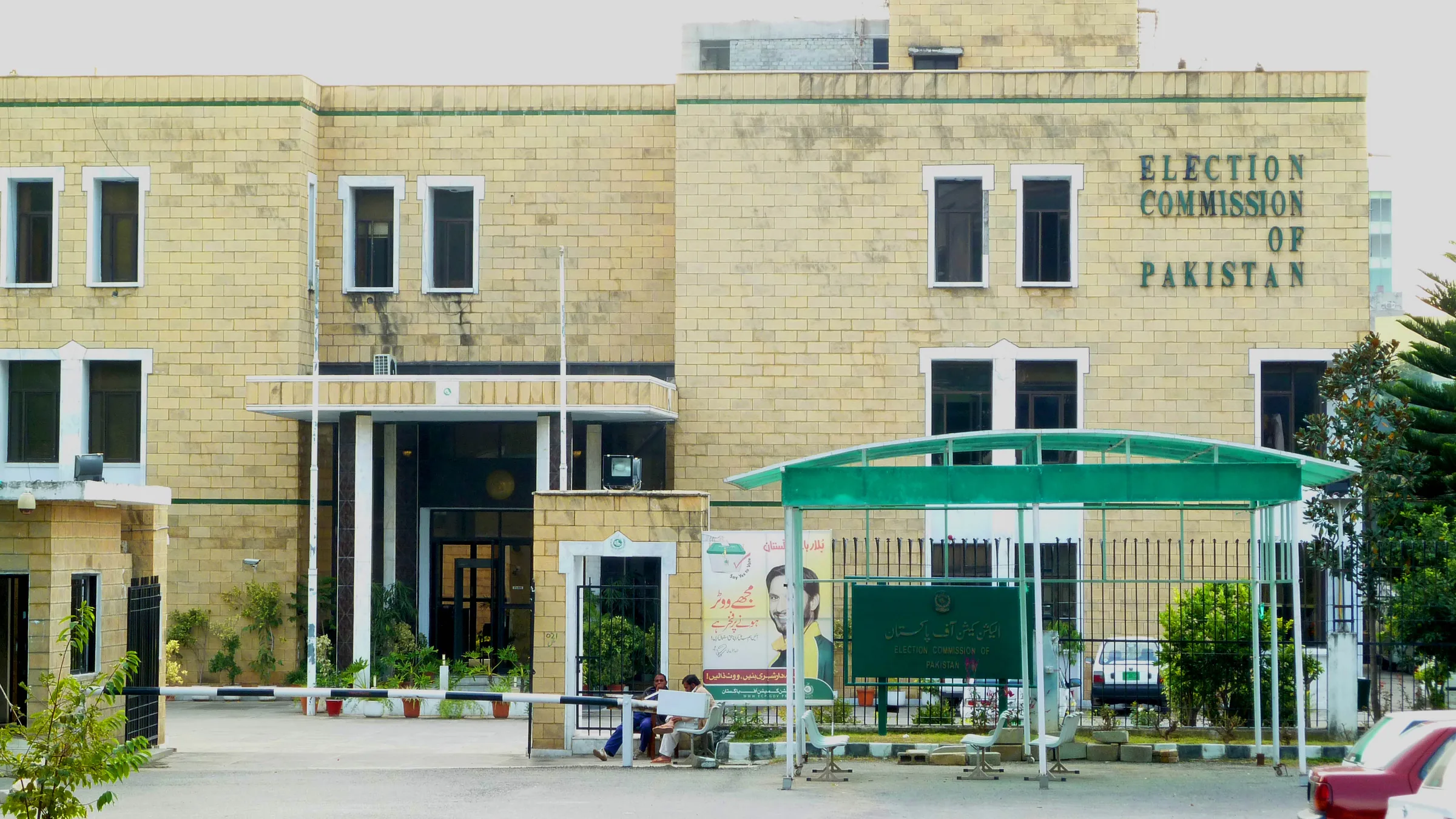
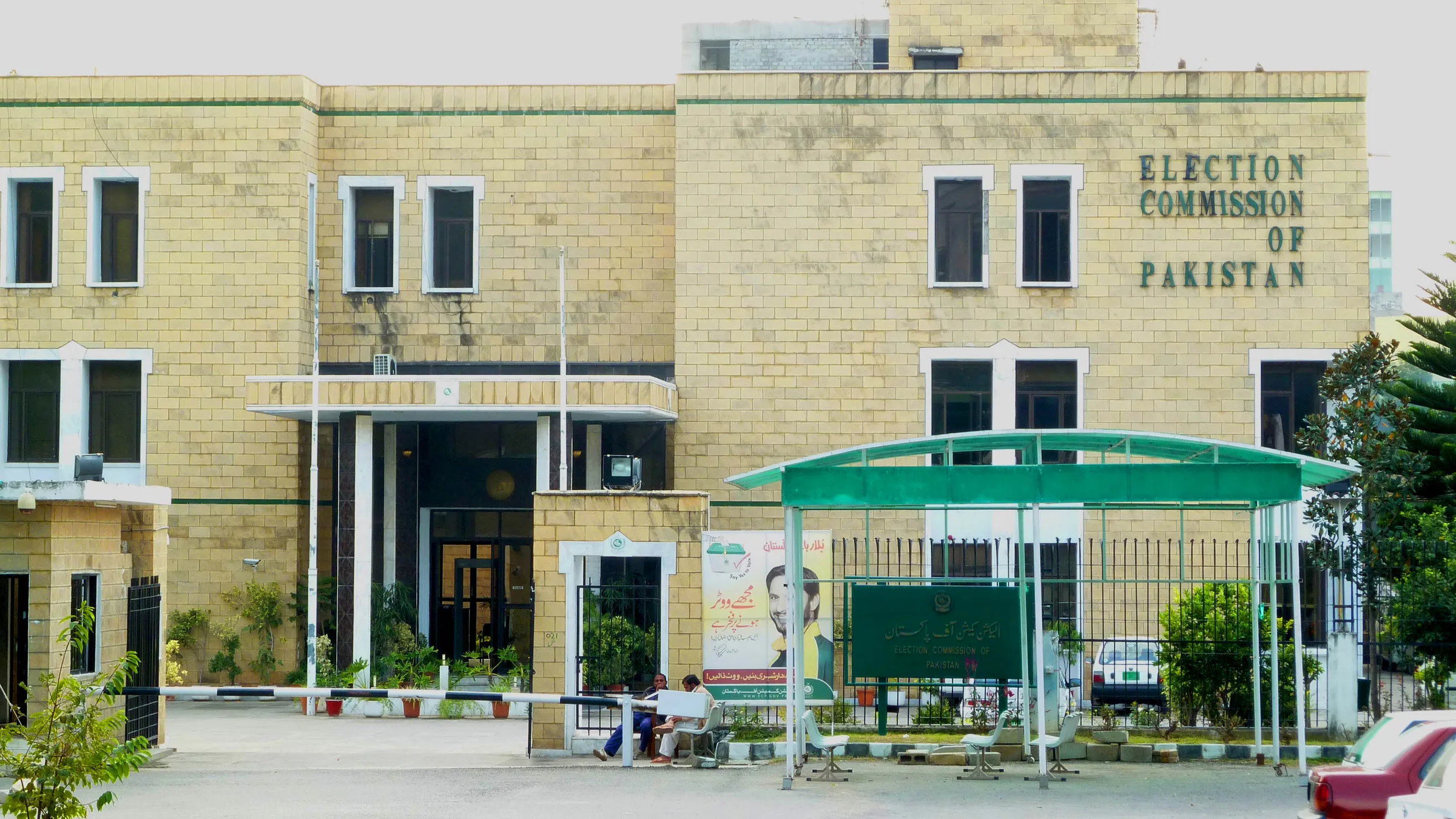
The Election Commission of Pakistan (ECP) on Wednesday ordered local government elections in Islamabad to be held under the Islamabad Capital Territory Local Government Act, 2015, and directed its office to issue the election schedule, Dawn and The Express Tribune reported.
A five-member commission headed by Chief Election Commissioner (CEC) Sikandar Sultan Raja passed the order after hearing why the capital’s polls have been delayed for more than five years. The interior secretary and ECP officials appeared before the bench.
“The government does not wish to hold elections”
During the hearing, the commission was told that the presidential ordinance governing Islamabad’s local government had expired on September 6 and that the government had not enacted a replacement law. The ECP said it had sent two reminders to the interior ministry and that the rules for the polls had still not been provided. The law ministry had returned the draft rules, citing the lapse of the ordinance.
ECP Special Secretary Zafar Iqbal Malik said delimitation in Islamabad had been carried out six times and election schedules issued four times. The last schedule was issued on October 9, he said, and the final delimitation of constituencies was published on October 14, according to The Express Tribune.
Interior Secretary Ahmed Raza Sarwar accepted that the facts presented by the ECP were correct. But he argued that going back to the 2015 law would mean that “everything will have to be scrapped”.
The CEC disagreed, saying that reverting to the 2015 law would not affect the delimitations. He added that the interior minister, the interior secretary, the Islamabad chief commissioner and a ministerial committee had all given undertakings earlier. “It appears that the government does not wish to hold local government elections in Islamabad,” he said. He told the hearing that the Constitution requires elections to be held according to the local government law and that the commission was being compelled by the circumstances to issue the order.
The commission’s short order was issued under Articles 140A, 218(3), 219 and 220 of the Constitution, the Elections Act, 2017, and the relevant sections of the 2015 Act. It directed the office to “forthwith” prepare and issue the election programme and take all steps expeditiously and in line with the law.
A long series of delays
Islamabad has had no elected local government since its term ended in February 2021. The only local elections held in the capital were in 2015, for 50 union councils, which the PML-N won, and Sheikh Anser Aziz became the first mayor. Article 140-A of the Constitution and the Elections Act require fresh polls within 120 days of a term ending.
The path since then has been marked by repeated changes:
- The number of union councils was raised from 50 to 101 and then to 125.
- In December 2022, polls were scheduled for December 31 on the basis of 101 union councils. Days before the vote, the government amended the law to raise the number to 125, and the ECP postponed the polls despite an Islamabad High Court order to proceed.
- The ECP later announced a schedule for February 15, 2026, for 125 union councils.
- In January 2026, President Asif Ali Zardari promulgated an ordinance replacing the metropolitan corporation structure with three town corporations aligned with National Assembly constituencies. This required fresh delimitation, and the ECP withdrew the schedule.
- A National Assembly committee approved a replacement bill on September 3, but the ordinance expired on September 6 before it became law.
On October 14, the commission had said it had finished delimitation and intended to issue a schedule under the 2015 law if the legal framework remained unresolved.
A wider plan for the capital
Separately, a committee headed by Planning Minister Ahsan Iqbal, formed by Prime Minister Shehbaz Sharif, has recommended devolving powers from the federation to Islamabad. It proposed a provincial-style government with a 27-member Islamabad Assembly, in which 21 members would be directly elected, seven from each of the three National Assembly constituencies, along with five women on reserved seats and one minority member. Law and order and master planning would stay with the federal government, and the assembly’s leader, called a chief minister or mayor, would be chief executive.
Why it matters
The order puts the burden on the government and the ECP to hold an election that residents have waited for since 2021. Whether the schedule issued on Wednesday holds will depend on whether the government accepts the 2015 law or moves again to change the rules. For now, the commission has made clear that it will not wait for legislation any longer.
This article draws on reporting by Dawn and The Express Tribune.


Comments
Comments are reviewed by our editors before they appear. Please keep them civil and on topic. See our terms.
No comments yet. Be the first to share your view.